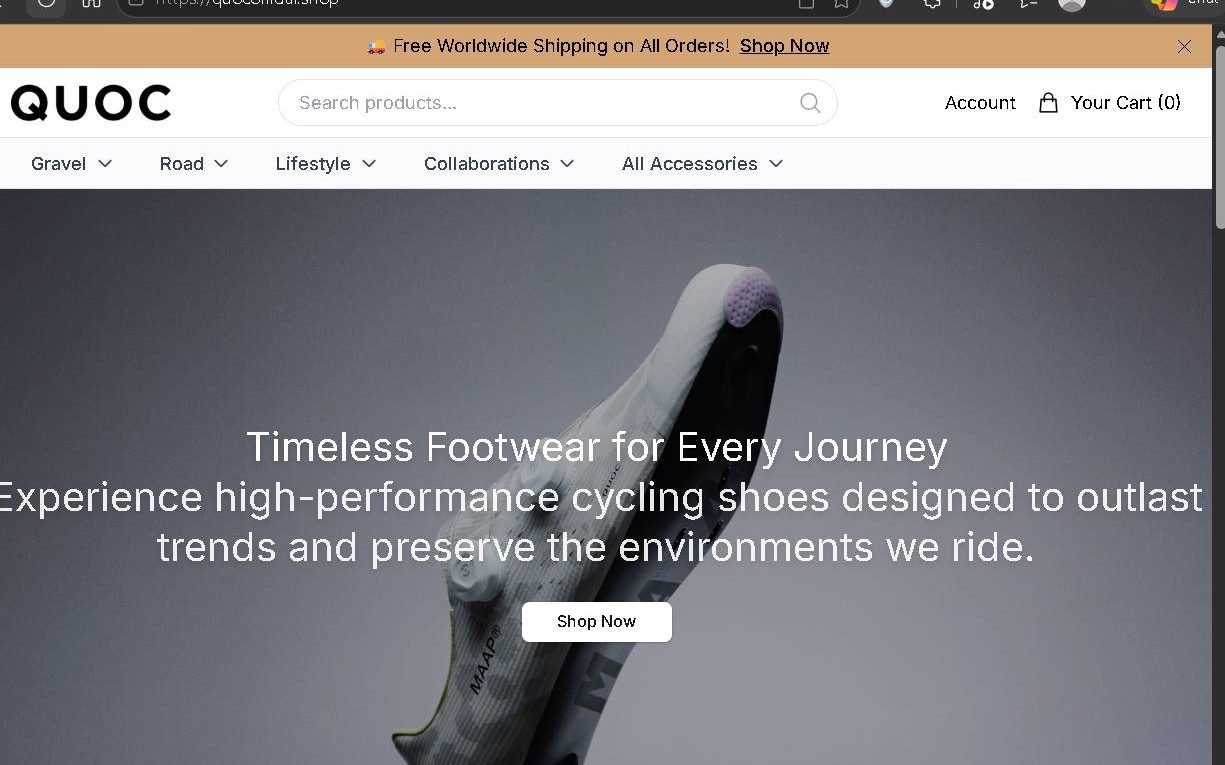
Quocofficial.shop Exposed: Slick Gear, Hidden Fear, and the Clone Store Snare
The surge in targeted online shopping scams has introduced sophisticated spoof portals targeting niche sporting gear, with Quocofficial.shop operating as a classic brand impersonation scam. By replicating the digital footprint and visual identity of the high-end British cycling shoe brand QUOC, this fraudulent platform misleads global shoppers into believing they are purchasing authentic gear from a factory-direct clearance channel.
Behind the sleek interface lies a predatory structure designed to harvest payment credentials and capture funds without fulfilling orders. This investigative guide breaks down the architecture of Quocofficial.shop, examines the mechanics of brand impersonation fraud, highlights critical red flags, and provides an immediate recovery playbook for affected consumers.
What Is a Brand Impersonation Scam?
A brand impersonation scam occurs when an unauthorized digital storefront copies the registered trademarks, proprietary media, product catalogs, and corporate aesthetics of a well-established company. Unlike traditional counterfeit vendors that sell imitation goods openly, impersonation portals deceive shoppers into believing they are dealing directly with the original manufacturer or an authorized liquidator.
Suspicious Link or Courier SMS?
Verify URLs, APKs, or parcel alerts against our threat database before clicking.
Scammers exploit consumer brand trust to lower checkout resistance. Because the victim assumes they are ordering directly from the brand, they are more willing to enter sensitive debit or credit card details on an unfamiliar domain. These fraudulent sites frequently rely on disposable top-level domains (such as .shop, .top, or .xyz) and leverage short-term paid advertising campaigns across social media to capture high conversion volumes before payment gateways or domain registrars shut them down.
Case Anatomy: How Quocofficial.shop Operates
The setup powering Quocofficial.shop mirrors the mechanics of contemporary e-commerce cloning networks:
    [ Legitimate Manufacturer: quoc.cc ]
                    │
         (Images, Copy & Assets Scraped)
                    ▼
  ┌──────────────────────────────────────────────┐
  │         Fraud Domain: quocofficial.shop       │
  │  • Stolen visual branding & marketing copy   │
  │  • Premium road/gravel shoe catalog          │
  │  • "Free Worldwide Shipping" banner          │
  │  • Fabricated factory clearance markdowns    │
  └──────────────────────────────────────────────┘
                    │
         (Social Ads & Direct Search)
                    ▼
      [ Victim Enters Checkout Portal ]
                    │
       ┌────────────┴────────────┐
       ▼                         ▼
 [ Card Harvesting ]      [ Financial Loss ]
 (CVV/Card Stolen)       (Ghost Non-Delivery)
- Automated Asset Extraction: Threat actors pull high-resolution product photography, lifestyle hero images, size guides, and exact marketing copy directly from the legitimate website,
quoc.cc. - Traffic Funnels: The domain is circulated through targeted search engine ads, sponsored posts on Instagram and Facebook, and low-cost shopping feeds targeting queries for discounted cycling gear.
- Checkout Manipulation: When a visitor places an item in their cart, the checkout interface operates through a standalone, unverified payment form rather than standard trusted payment gateways.
- Data Exfiltration and Non-Fulfillment: The checkout process captures the victim’s full credit card number, expiration date, security code (CVV), billing address, and phone number. The order is either completely abandoned (non-delivery) or assigned a fake third-party tracking code intended to exhaust the customer’s payment dispute timeframe.
E-Commerce Protection Checklist
-
1
Break the In-App Browser Funnel
Never check out inside Instagram or TikTok web-views. Copy the link and open a standalone browser to remove referral tracking tokens and inspect the real root domain.
-
2
Run a 60-Second Background Check
Look up the domain age via WHOIS (avoid sites under 6 months old) and reverse-search product imagery on Google Lens to verify whether cheap wholesale duplicates exist.
-
3
Verify Corporate Entity Details
Check the website footer for a registered legal company name, verifiable physical address on Google Maps, and dedicated phone support—not just an anonymous web form.
-
4
Demand Insulated Payment Options
Refuse direct bank deposits, UPI QR codes, crypto, or debit transfers. Use zero-liability credit cards or protected checkout channels like PayPal Goods & Services.
-
1
Stop Waiting for Merchant Email Replies
Do not waste dispute windows negotiating with automated helpdesks or generic tracking updates. Deceptive pop-up storefronts stall purposely to exhaust chargeback timelines.
-
2
Initiate a Bank Chargeback Within 24-48 Hours
Call the phone number printed on the back of your card. Request an immediate dispute categorized under Merchant Fraud, Goods Not Delivered, or Misrepresentation.
-
3
Freeze Billing and Replace Card Credentials
Instruct your bank’s fraud desk to block future merchant authorizations under that descriptor and re-issue a fresh card number to prevent hidden recurring subscription debits.
-
4
Preserve Order & Ad Evidence
Save full-page screenshots of the product page, transaction debit receipts, and tracking communications to upload directly into your card issuer’s dispute portal.
What Does Quocofficial.shop Claim and Offer?
The storefront attempts to establish credibility by presenting a comprehensive catalog of premium cycling gear that matches real-world collections:
- High-End Catalog Duplication: Features flagship footwear such as the Gran Tourer gravel line, M3 Pro carbon road models, and limited-edition collaborations (including MAAP x QUOC).
- Aggressive Markdown Pricing: Premium performance shoes that normally retail for upwards of $200 to $400 USD are listed at steep discounts, typically 65% to 80% below manufacturer minimum advertised pricing (MAP).
- Unrestricted Logistics Claims: Displays a top site-wide announcement promising “Free Worldwide Shipping on All Orders!” with no minimum order requirements.
- Stock Abundance: Fabricates abundant inventory across every single size, colorway, and limited-production edition, creating a false impression of availability for items that are sold out elsewhere.
5 Critical Red Flags: Detailed Investigation
1. Domain Name Typosquatting and Subversion
Authentic brands consolidate their digital authority on short, authoritative domains. QUOC exclusively runs direct digital retail through quoc.cc. The addition of generic qualifiers like “official” alongside cheap top-level domains like .shop is an established signal of brand spoofing. Scammers use these suffix patterns because the authentic brand name is already registered by the rightful owner.
2. Logistically Impossible Free Worldwide Delivery
Shipping specialized, boxed athletic gear internationally involves variable freight rates, fuel surcharges, and cross-border duties. Legitimate independent distributors must establish clear freight tiers or order minimums to remain solvent. Offering free global courier delivery on all orders, regardless of value, is an economic red flag designed to remove purchasing friction.
3. Full Availability of Sold-Out Collaborations
Production partnerships—such as the MAAP x QUOC series—are manufactured in strictly limited quantities and sell out rapidly through verified cycling networks. Any secondary digital outlet claiming deep stock across every shoe size at heavily marked-down clearance prices is presenting fabricated inventory.
4. Absent Corporate Governance and Ghost Contact Channels
Legitimate commercial enterprises display unambiguous business registrations, corporate entity names, tax identifiers, verifiable headquarters addresses, and active customer care lines. Clone platforms like Quocofficial.shop rely on anonymous contact web forms, free webmail addresses, and privacy-shielded WHOIS registrations that conceal the platform’s operators.
5. Suspicious Merchant Processing Channels
Legitimate online retailers rely on multi-factor authentication, verified merchant accounts, and trusted digital wallets such as Apple Pay, Google Pay, or verified 3D-Secure payment portals. Impersonation sites frequently route transactions through unvetted credit card forms designed to log card details directly into the scammer’s backend server.
Direct Action Plan: What to Do If You Interacted with This Site
If you submitted financial or personal data on Quocofficial.shop, act immediately to prevent financial loss and identity misuse:
- Request an Immediate Credit Card Chargeback: Contact your card-issuing bank’s fraud division right away. State that you made a purchase on an unauthorized merchant impersonation website and request a formal chargeback on the grounds of fraud and non-delivery.
- Cancel and Replace the Affected Card: Do not simply monitor the account. Because the checkout field harvested your card number, expiration date, and CVV, your payment details are compromised. Instruct your bank to cancel the card and issue a new one with an updated card number.
- Preserve Digital Evidence: Take complete screenshots of the transaction receipt, order confirmation emails, the website URL, and the checkout page. These records serve as evidence if your payment provider opens a dispute investigation.
- Be Vigilant Against Phishing Follow-Ups: Fraud rings often trade compromised contact databases. Watch out for unsolicited emails or text messages claiming that your parcel is held at customs pending extra fees, as these are designed to extract additional funds.
- Report the Fraudulent URL: Submit the web address to consumer protection agencies, such as the Federal Trade Commission (FTC) via ReportFraud.ftc.gov, econsumer.gov for international fraud, and Google’s Safe Browsing report tool to help take the fraudulent link offline.
Frequently Asked Questions
Is Quocofficial.shop scam?
Yes, Quocofficial.shop is a confirmed scam website. It uses stolen logos, photos, and branding from the legitimate cycling brand QUOC to harvest credit card data and collect payments without sending genuine products.
Is Quocofficial.shop legit?
No, Quocofficial.shop is not legit. It is an unauthorized, cloned domain operating entirely independently of the official company, which sells exclusively through its verified platform at quoc.cc.
What is the authentic website for QUOC cycling gear?
The official, authentic website for genuine QUOC cycling shoes, apparel, and accessories is quoc.cc. Any other domain using the brand name alongside words like “official” or “shop” should be treated as suspicious.
Can I get my money back after paying on a clone website?
Yes, if you completed the transaction using a credit card, you can dispute the charge with your financial institution by requesting a fraud-related chargeback. Debit card transactions and direct wire transfers have narrower dispute protections, making immediate contact with your bank critical.
Why does the website show a secure padlock if it is a scam?
The padlock symbol only confirms that the connection between your browser and the website server uses SSL encryption. It does not verify the integrity or legitimacy of the business operating the site, and scammers routinely obtain free SSL certificates to appear trustworthy.
What should I do if a fake site sends a package containing cheap junk?
Document the delivered package with clear photos of the parcel, shipping label, and contents. Provide these images directly to your bank during the chargeback dispute as concrete evidence that the seller engaged in counterfeit or bait-and-switch fraud.
How do scammers build high-ranking fake shopping sites so quickly?
Fraud networks use automated website scrapers to duplicate genuine product catalogs within minutes. They pair these cloned platforms with temporary paid ads and keyword-stuffed URLs to capture immediate search traffic before their domains get flagged.
How can I verify an unfamiliar sporting goods store before checking out?
Check the website’s creation date using an online WHOIS domain lookup tool. If a site offering deep brand discounts was created only a few weeks or months ago and lacks verifiable corporate contact information, avoid making a purchase.
Every safe click counts. If this post helped, a coffee gesture fuels more scam‑busting investigations.

For more shady sites exposed, check our Shopping Scam Directory — your quick guide to staying safe online.
Help Us Spread Awareness
Please share this article to spread awareness. Follow us on social media for more scam alerts.