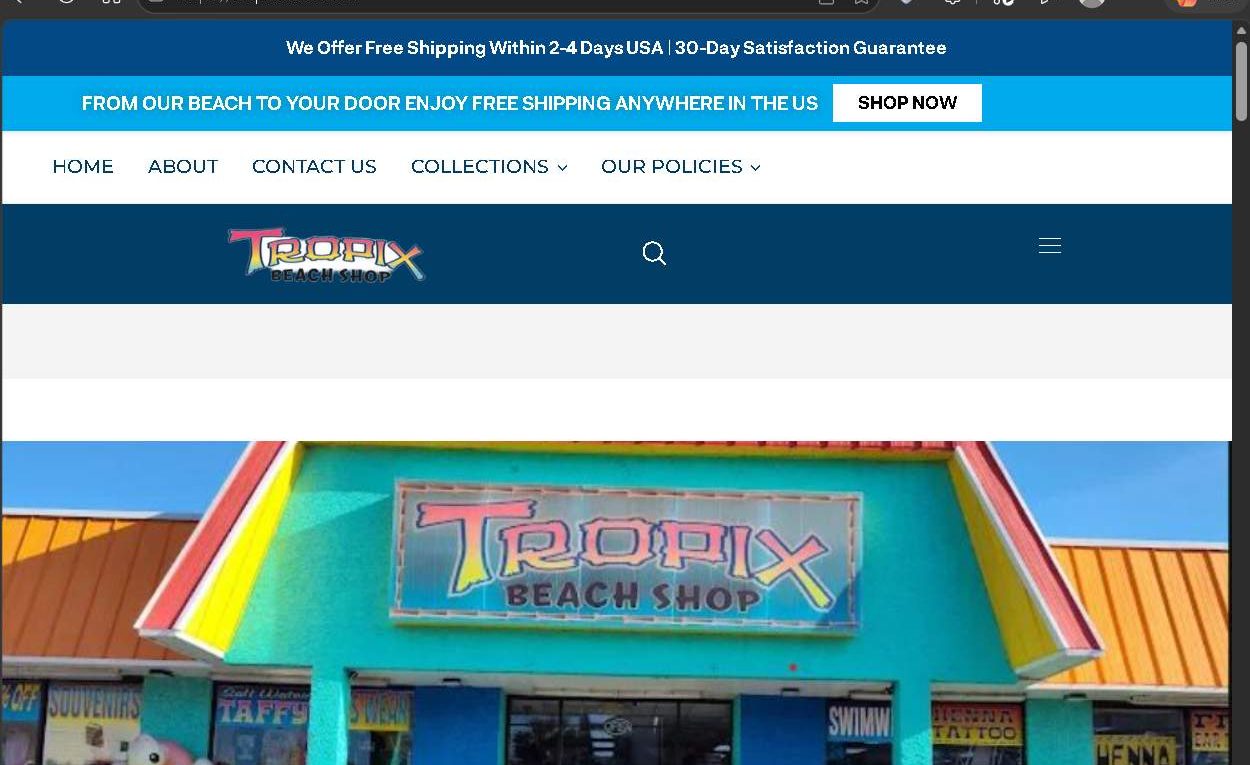
Tropixbeach Exposed: Inside the Dangerous “Store Cloaking” Scam Stealing Shopper Data
When bargain hunters search for high-ticket electronics, encountering a portal like Tropixbeach (hosted on tropixbeach.com) triggers an immediate suspicion of an organized “Store Cloaking” Scam. On the surface, the site markets itself as an everyday coastal outfitter, yet a quick dig into its backend product index reveals deep markdowns on gaming rigs, ultra-large 4K displays, and flagship mobile devices.
Navigating online retail requires understanding how cybercriminals hide high-value credit card fraud behind harmless, neighborhood storefront facades. Analyzing how the Tropixbeach platform operates illustrates the mechanics of the “Store Cloaking” scam model and details the exact steps consumers should take to safeguard their personal identity and banking accounts.
What Is a “Store Cloaking” Scam?
A “Store Cloaking” scam is an e-commerce fraud architecture where threat actors hijack the physical identity, registered business name, and local reputation of a genuine brick-and-mortar retailer to hide illicit data-harvesting or payment fraud operations.
In traditional affiliate SEO, “cloaking” refers to serving different content to search engine crawlers than to human visitors. In retail fraud, the term describes cloaking a criminal checkout portal behind a reputable real-world merchant’s identity.
Operators set up a generic e-commerce framework and populate the public footer, “About Us” section, and legal disclosures with real commercial credentials—such as a verified storefront address, an active municipal tax registration, or an existing Google Business profile.
When wary shoppers run a quick search on Google Maps or check municipal directories, the business appears authentic. Behind this shell, however, the real owners have no knowledge that their brand is running an illicit online operation.
The objective of store cloaking extends beyond simple dropshipping arbitrage. It facilitates payment card harvesting, identity theft, and unauthorized credit card processing. Scammers exploit the cloaked business profile to reduce initial bounce rates, bypass basic browser heuristic warnings, and keep merchant gateway accounts alive long enough to capture high-ticket transactions before banks flag the domain.
E-Commerce Protection Checklist
-
1
Break the In-App Browser Funnel
Never check out inside Instagram or TikTok web-views. Copy the link and open a standalone browser to remove referral tracking tokens and inspect the real root domain.
-
2
Run a 60-Second Background Check
Look up the domain age via WHOIS (avoid sites under 6 months old) and reverse-search product imagery on Google Lens to verify whether cheap wholesale duplicates exist.
-
3
Verify Corporate Entity Details
Check the website footer for a registered legal company name, verifiable physical address on Google Maps, and dedicated phone support—not just an anonymous web form.
-
4
Demand Insulated Payment Options
Refuse direct bank deposits, UPI QR codes, crypto, or debit transfers. Use zero-liability credit cards or protected checkout channels like PayPal Goods & Services.
-
1
Stop Waiting for Merchant Email Replies
Do not waste dispute windows negotiating with automated helpdesks or generic tracking updates. Deceptive pop-up storefronts stall purposely to exhaust chargeback timelines.
-
2
Initiate a Bank Chargeback Within 24-48 Hours
Call the phone number printed on the back of your card. Request an immediate dispute categorized under Merchant Fraud, Goods Not Delivered, or Misrepresentation.
-
3
Freeze Billing and Replace Card Credentials
Instruct your bank’s fraud desk to block future merchant authorizations under that descriptor and re-issue a fresh card number to prevent hidden recurring subscription debits.
-
4
Preserve Order & Ad Evidence
Save full-page screenshots of the product page, transaction debit receipts, and tracking communications to upload directly into your card issuer’s dispute portal.
Case Study: Deconstructing the Tropixbeach Operation
Applying forensic analysis to Tropixbeach reveals how this setup works in practice.
       [ Legitimate Florida Retailer ]
      (Tropix Beach Shop, Panama City Beach)
             │  (Identity & Address Hijacked)
             ▼
   ┌────────────────────────────────────────────────────────┐
   │         Illicit Storefront: Tropixbeach.com             │
   │  ┌─────────────────────────┐  ┌─────────────────────┐  │
   │  │ Public Facade / Home    │  │ Unlinked Deep Catalog│  │
   │  │ • Beachwear branding    │  │ • 116" Smart 4K TVs  │  │
   │  │ • Sun hats & Souvenirs  │  │ • PS5 / Xbox Bundles│  │
   │  │ • Stolen PCB address    │  │ • Flagship Phones   │  │
   │  └─────────────────────────┘  └─────────────────────┘  │
   └────────────────────────────────────────────────────────┘
             │                                    │
    (Innocent Google Traffic)            (Paid Ad / Direct Query)
             │                                    │
             ▼                                    ▼
   [ Maps Search Looks Valid ]           [ Fraudulent Checkout ]
   ("Real shop exists!")                 • Stolen Card Data
                                         • Bogus Tracking / Ghost Order
The Facade and Ingestion Mechanics
The platform operates as “Tropix Beach Shop,” complete with colorful coastal typography and beachwear categories. It targets consumer trust by borrowing the commercial identity of an authentic boutique on Front Beach Road in Panama City Beach, Florida. An unsuspecting visitor checking whether “Tropix Beach Shop” exists finds dozens of local travel guides and genuine tourist photos confirming the physical presence.
Behind that coastal facade, the scammers use automated catalog ingestors to pull thousands of high-demand consumer electronics listings into hidden site directories. Rather than browsing for these electronics through the beachwear homepage navigation, users land on these pages through shopping aggregates, paid social media promotions, and search engine results for model-specific electronics discounts.
Suspicious Link or Courier SMS?
Verify URLs, APKs, or parcel alerts against our threat database before clicking.
What the Site Claims and Offers
- Appealing Inventory: Features premium brands, high-end 85- to 116-inch smart TVs, PlayStation 5 consoles, handheld systems, and unlocked mobile devices marked down by 50% to 75% below manufacturer minimum advertised prices (MAP).
- Unrealistic Logistics: Guarantees “Free Shipping Within 2–4 Days USA” with unconditional 30-day satisfaction guarantees—even on heavy, oversized freight items that standard carriers charge hundreds of dollars to transport.
- Faux Security: Displays credit card issuer logos (Visa, Mastercard, Discover, Amex) and SSL encryption icons to reassure first-time shoppers during checkout.
5 Critical Red Flags on Tropixbeach
1. Catalog Disconnect
The presence of commercial-grade home theater setups, industrial appliances, and modern gaming tech inside a seaside souvenir store’s domain is an immediate indicator of a hijacked catalog. Legitimate niche retailers rarely stock off-brand inventories that completely diverge from their core business operations.
2. Deep-Discount Electronics Arbitrage
Listing premium hardware at steep price cuts targets impulsive bargain hunters. Major electronics manufacturers maintain strict pricing agreements with certified distributors; independent souvenir storefronts cannot legitimately sell these items below wholesale cost while offering free expedited freight.
3. Exposed Dropshipping and Scraping Metadata
Inspecting individual product listings reveals raw, unedited supplier metadata—such as wholesale alphanumeric codes from platforms like CJ Dropshipping—left in the product descriptions. Fraudulent storefronts running rapid ingestion scripts often fail to sanitize their backend inventory uploads.
4. Logistics Discrepancies
Delivering heavy consumer goods anywhere in the continental US within 2 to 4 days at zero cost is economically unfeasible for an independent retailer. Unrealistic delivery windows are often used to secure impulse sales before buyers can verify the vendor.
5. Domain Age vs. Brand History Mismatch
A WHOIS database lookup shows the web domain registration does not align with the long-standing physical footprint of the Florida store. Rogue operators register newer domains that mirror existing business names to leverage domain reputation algorithms before automated abuse monitors detect them.
What to Do If You Interacted with a Cloaked Store
- Initiate an Immediate Credit Card Chargeback: Contact the fraud prevention department of your credit card provider or financial institution. Inform them that the purchase was made through an unauthorized, identity-impersonating storefront and request a transaction reversal.
- Cancel and Replace Payment Cards: If you submitted your primary debit card, credit card, CVV code, or expiration date on the checkout form, assume those details were logged. Request a new account number immediately to prevent recurring unauthorized micro-transactions.
- Monitor Identity Theft Indicators: If you submitted your home address, full name, phone number, and email address, stay alert for secondary phishing attempts. Attackers frequently follow up with text messages or emails claiming “extra customs fees” or “shipping delivery holds” to capture additional banking data.
- Report the Fraudulent Domain: Submit the URL to official consumer protection channels, including the Federal Trade Commission (ReportFraud.ftc.gov), the FBI’s Internet Crime Complaint Center (IC3), and search engine safe-browsing registries.
Frequently Asked Questions
Is Tropixbeach scam?
Yes, Tropixbeach exhibits the operational patterns of a fraudulent storefront. It pairs an unrelated Florida souvenir shop’s identity with unverified, deeply discounted consumer electronics to harvest shopper payments.
Is Tropixbeach legit?
No, the website is not a legitimate or authorized distributor of electronics. While the physical Tropix Beach Shop in Florida is an actual brick-and-mortar boutique, the website using its branding for cheap tech deals operates without authorization.
What is a store cloaking scam in online retail?
A store cloaking scam occurs when a fraudulent website mimics a legitimate, established business—using its physical address, registered name, and contact details—to mask unauthorized catalog scrapers, card harvesting forms, or ghost inventories.
Can I recover my money from a fraudulent online shopping site?
If you paid using a credit card or established buyer-protection service, you can file a dispute or fraud report with your card issuer. Debit transactions and wire transfers carry fewer protections, so rapid communication with your bank is essential.
Why do fake stores offer free 2–4 day shipping on large appliances?
Fraudulent stores use rapid shipping promises and zero freight fees to eliminate checkout hesitation. Because there is no real inventory to ship, the scammers can promise impossible fulfillment timelines without incurring actual overhead.
How do scammers obtain real store addresses to display on their websites?
Scammers source addresses, registration numbers, and phone records from public online business directories, corporate registry databases, and Google Maps. They target local independent retailers that lack an extensive digital commerce presence.
What should I check before purchasing from an unfamiliar discount website?
Verify that the domain’s registration date matches the business’s claimed history, cross-reference contact details with independent business records, inspect return policies for realistic shipping logistics, and search fraud registries for domain-specific complaints.
Are SSL certificates proof that an online store is safe?
No. An SSL certificate (HTTPS) only encrypts communication between your browser and the website server. It does not verify the merchant’s business integrity or prevent bad actors from collecting payment card data entered on the page.
Every safe click counts. If this post helped, a coffee gesture fuels more scam‑busting investigations.

For more shady sites exposed, check our Shopping Scam Directory — your quick guide to staying safe online.
Help Us Spread Awareness
Please share this article to spread awareness. Follow us on social media for more scam alerts.