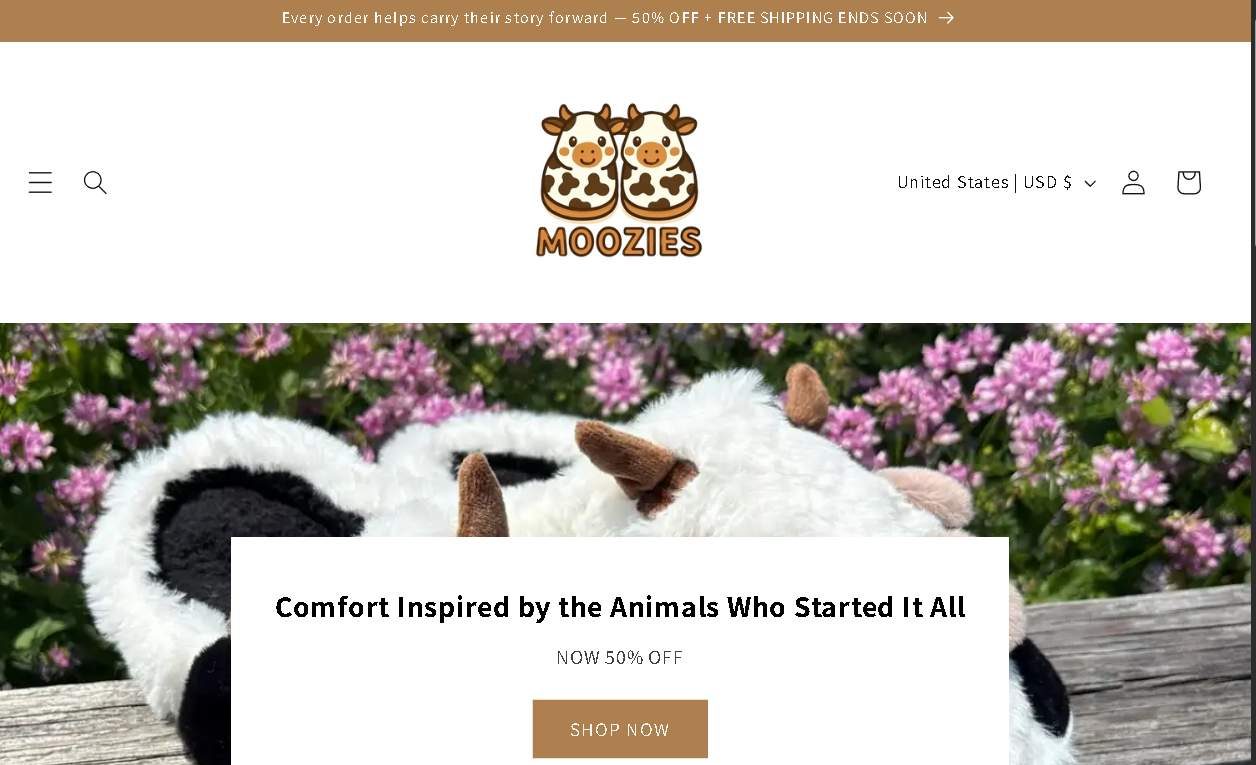
Moozies Review: Is Moozies.store Legit or a Cause-Bait Scam?
When evaluating viral retail storefronts like Moozies (moozies.store), shoppers are often drawn in by an emotion-driven / cause-bait hook that masks aggressive e-commerce arbitrage. What appears to be an earnest passion project or an ethical cause frequently turns out to be an opaque online shopping portal designed to extract premium pricing for commodity goods.
Before entering credit card information, exploring consumer fraud protection reports, or navigating unauthorized charge dispute workflows, buyers must understand the mechanics behind these viral funnels. Stripping away the heartwarming aesthetic reveals how modern social media ad networks are leveraged to resell factory inventory at substantial retail markups.
Anatomy of the Cause-Bait Phenomenon: How Manipulative Marketing Works
Modern online commerce relies heavily on affective influence—the practice of inducing an intense emotional state (sympathy, ethical solidarity, nostalgia, or animal compassion) to suppress rational price-checking. An emotion-driven or cause-bait hook operates on a multi-stage psychological blueprint:
- Empathy Hijacking: Rather than marketing product specs, durability, or material testing, the campaign frames the transaction as an act of altruism. Shoppers are made to feel that completing checkout directly supports living creatures, struggling artisans, or rescued farm animals.
- Manufactured Mission Statements: The branding employs poetic phrasing (“carrying a legacy,” “giving back,” “saving our family sanctuary”) without disclosing a registered 501(c)(3) entity, an employer identification number (EIN), or certified charitable allocation ratios.
- Suppression of Consumer Diligence: When a customer believes their purchase serves an ethical mission, they rarely perform reverse-image searches, verify supply chain provenance, or compare wholesale catalog pricing.
- Artificial Scarcity Acceleration: High-pressure purchase mechanisms—perpetual “flash sale” countdowns, fabricated inventory counters, and limited-time free freight offers—force immediate impulse buying.
By blending moral obligation with urgency, storefronts turn regular footwear into an emotional transaction, making buyers ignore basic merchant evaluation steps.
Suspicious Link or Courier SMS?
Verify URLs, APKs, or parcel alerts against our threat database before clicking.
Case Study: Analyzing the Moozies Storefront (moozies.store)
The website moozies.store serves as a textbook example of narrative-first drop-servicing. Built primarily around plush cow footwear, the storefront targets mobile users browsing TikTok, Instagram Reels, and YouTube Shorts.
What the Site Claims and Offers
Moozies claims to offer bespoke, ultra-cozy, animal-inspired cow plush slippers. Its marketing promises cloud-like memory foam, non-slip textured rubber soles, and an endearing tribute to farm animals.
The narrative hook states: “Comfort Inspired by the Animals Who Started It All” and “Every order helps carry their story forward.” These slogans imply an intimate bond between the business, animal welfare, and artisan manufacturing. The catalog presents the footwear at boutique pricing, framed as an exclusive designer lounge item discounted by 50% for a fleeting promotional window.
Email: ApexLegalSolutionsMumbai@gmail.com
The Underlying Operation: How the Funnel Works
Behind the cottage-core branding lies a standard direct-to-consumer dropshipping model:
- Ad Traffic Funnels: Short-form social media ads display emotive videos—frequently featuring cute farm cows, tearful rescue voiceovers, or cozy home aesthetics—driving high-intent impulse traffic straight to the checkout page.
- Third-Party Fulfillment Arbitrage: The business maintains zero physical warehouse infrastructure or domestic stock. When a consumer submits an order, the customer details are routed via an automated software connector directly to a wholesale exporter in East Asia (commonly found on AliExpress, Temu, or 1688).
- The Price Multiplier: Generic plush cow slippers manufactured for $2.50 to $4.00 are listed on the storefront for $25.00 to $40.00. The buyer covers both the ad spend and the seller’s profit margin under the illusion of acquiring exclusive, cause-aligned footwear.
- Logistics & Blind Dropshipping: The item travels via economy postal lines (such as YunExpress, Sunyou, or ePacket), taking 2 to 4 weeks to arrive in generic, unbranded plastic wrap.
Every safe click counts. If this post helped, a coffee gesture fuels more scam‑busting investigations.

Critical Red Flags Uncovered on Moozies
1. Ambiguous and Unverifiable Philanthropy
While the site proudly declares that “Every order helps carry their story forward,” nowhere on the legal terms, footer, or about pages does the company list an official non-profit partnership, verifiable charity registration, or specific percentage of proceeds donated. This unverified claim serves solely as a conversion lever.
2. Perpetual Urgency and Artificial Price Anchoring
The site constantly runs a sitewide “50% OFF + FREE SHIPPING ENDS SOON” announcement. These banners rely on automated scripts that refresh every session. The true regular price is simply the “discounted” price, creating artificial urgency to rush customers past checkout before they compare alternatives.
3. Image Sourcing from Wholesale Directories
Reverse-image indexing reveals that the exact product photographs and product dimensions correspond to mass-produced footwear listed across budget wholesale repositories. There is no custom pattern work, specialized tooling, or proprietary ergonomic design.
4. Disposable Domain Profile (.store)
The use of generic top-level domains like .store, combined with concealed WHOIS administrative records, is common among transient e-commerce ventures. These domains are cheap to register and easy to abandon once customer dispute rates climb, payment gateways freeze processing accounts, or advertising profiles accumulate negative sentiment.
5. Asymmetrical Return Policies and Sizing Disputes
Customer reports from similar viral footwear operations reveal that sizes run substantially smaller than standard US/EU sizing charts. When disappointed buyers request an exchange or refund under advertised “satisfaction guarantees,” customer support often stops responding, offers a partial 10% coupon, or demands the buyer pay high international return shipping fees back to an overseas depot.
Consumer Protection & Financial Recourse: What to Do If You Ordered
If you made a transaction on a viral storefront like Moozies and received substandard goods, mismatched sizing, or nothing at all, follow this recovery process:
- Document All Communications: Take screenshots of your original receipt, the website’s advertised refund policy, delivery tracking timelines, and all correspondence with customer support.
- Check Tracking Origin: Inspect the shipping carrier label. If the tracking originates from an international logistics sorting center despite domestic-sounding marketing, save this evidence.
- Contact Your Financial Institution: Reach out to your credit card issuer or payment gateway (PayPal, Apple Pay) to initiate an unauthorized charge dispute or “Item Not As Described” chargeback claim. State clearly that the merchant made misleading product claims and has not honored its advertised return policy.
- Report Misleading Advertising: Submit consumer fraud advisories to the Federal Trade Commission (FTC at reportfraud.ftc.gov), your regional consumer protection agency, and report the ad link directly to the social media platform hosting it.
Frequently Asked Questions
Is Moozies a scam?
While Moozies functions as an active storefront that processes online payments and often delivers a physical product, its use of misleading philanthropic phrasing, non-existent charity verification, and heavily marked-up generic inventory causes consumer advocates to classify it as a deceptive dropshipping funnel rather than a trustworthy retailer.
Is Moozies legit?
Moozies is technically an operating business, but it is not an original manufacturer or verified charitable initiative. It operates an arbitrage business model, reselling commodity items sourced from foreign wholesale marketplaces at inflated prices through emotional social media marketing.
What is an emotion-driven or cause-bait hook in e-commerce?
An emotion-driven or cause-bait hook is an advertising tactic where merchants craft narratives centered around animal rescue, family hardship, or ethical philanthropy to evoke sympathy. This emotional connection distracts consumers from spotting excessive markups, lack of verified charity credentials, and dropshipping business practices.
How do I return items to an online dropshipping store like Moozies?
Most viral storefronts introduce high friction into returns. You must email customer support requesting an RMA (Return Merchandise Authorization). If they demand you ship the goods back overseas at your own expense, take screenshots of their checkout guarantees and escalate the dispute through your credit card provider or PayPal buyer protection.
Are Moozies cow slippers made in the United States?
No. Despite domestic-looking marketing and US dollar pricing, these plush slippers are manufactured by mass-production footwear factories overseas and fulfilled through economy international freight consolidators.
How can I find the same cow slippers for a cheaper price?
Take a screenshot of the footwear from the ad and upload it to the image search feature on AliExpress, Temu, or Google Lens. You will frequently find the exact identical slippers listed for a fraction of the cost under generic wholesale listings.
How do I identify a dropshipping storefront before buying?
Look for countdown timers on landing pages, missing company street addresses, stock photo imagery, .store or .shop domain extensions, vague shipping windows of 10 to 25 business days, and generic “Contact Us” forms that lack direct phone support.
What should I do if my bank dispute is rejected?
Provide your card issuer with secondary documentation showing that the delivered item does not match the product described on the site (e.g., poor stitching, synthetic filler instead of memory foam, lack of brand tags, or completely inaccurate sizing), referencing FTC retail guidelines on deceptive advertising.
For more shady sites exposed, check our Shopping Scam Directory — your quick guide to staying safe online.
Help Us Spread Awareness
Please share this article to spread awareness. Follow us on social media for more scam alerts.