How Lis Hartel Turned Scars into Olympic Medals: Blueprint for the LA 2028 Olympics
The qualification standard for the LA 2028 Olympics does not lower its threshold because your body gave out, your surgery hit complications, or your four-year quadrennial cycle fell apart.
Elite sport demands an uncompromising psychological truth: human potential is never verified under ideal conditions. It is tested in the dark, isolated spaces where your career looks finished to the outside world, yet you decide to show up and execute anyway. If you are an athlete fighting to reach the LA 2028 Olympics while battling severe physical trauma, chronic fatigue, or self-doubt, the story of Lis Hartel is not just sports history—it is your masterclass in turning catastrophic scars into podium strength.
The Crucible: Lis Hartel and the Battle Against Total Paralysis
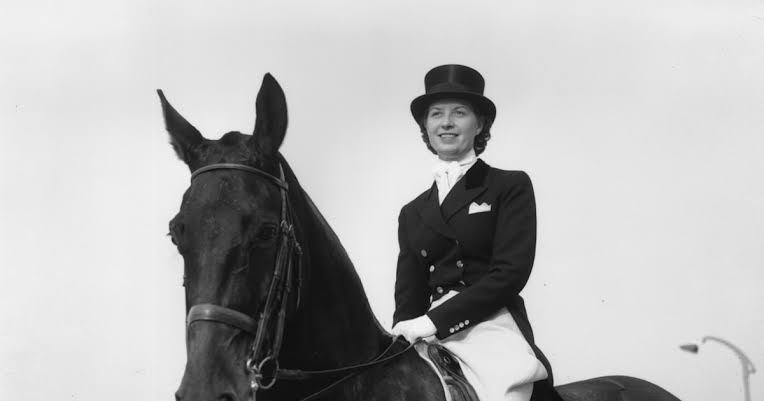
In the autumn of 1944, 23-year-old Danish dressage champion Lis Hartel was pregnant with her second child when she was diagnosed with polio. Within days, the virus caused near-total paralysis from the neck down.
Medical specialists delivered a verdict common for that era: walk again if you are fortunate, care for your child, but forget sport entirely. Hartel refused the sentence. After safely delivering a healthy daughter, she began rehabilitation with an obsessive daily work ethic. She clawed back control over her arms and upper torso millimeter by millimeter, yet polio left her permanently paralyzed below both knees. Her calves, ankles, and feet possessed zero functional motor control.
In classical dressage, the rider’s lower legs are the primary communication channel—delivering micro-pressures, heel cues, and balance adjustments to control a 1,200-pound animal. Hartel had none of them. She could not walk without crutches, let alone independently hoist herself into a saddle.
Instead of conceding, Lis Hartel built a completely new biomechanical framework in total secrecy:
- She had her team manually lift her onto her horse, Jubilee, because she could not use the stirrup to mount.
- Stripped of traditional calf aids, she learned to communicate through subtle pelvic tilts, deep adductor engagement, and precise shifts in core balance.
- She conditioned her upper body and back muscles to absorb the seismic shock of the horse’s gait without losing posture.
Eight years after total paralysis, Lis Hartel entered the 1952 Helsinki Olympic Games—the first Olympics where women were allowed to compete against men in individual dressage. Helped into the saddle before entering the ring, she out-performed the world’s elite male riders to secure the Olympic Silver medal. She repeated the feat four years later at the 1956 Games, proving that when legacy tools fail, disciplined adaptation creates new pathways to the podium.
From Helsinki to the LA 2028 Olympics: 3 Mindset Shifts to Reclaim Peak Form
For any contender targeting the LA 2028 Olympics while navigating reconstructed ligaments, long recovery timelines, or crushing self-doubt, Lis Hartel provides three actionable principles:
1. Execute Asset Optimization Over Deficit Mourning
Injuries force athletes into mental despair by constantly highlighting lost metrics—slower sprint times, lower wattage, or reduced joint mobility. Elite performance psychology flips this immediately. Hartel did not waste cognitive bandwidth mourning her deadened calves; she maximized the sensory acuity of her thighs and core. If an injury takes away your explosive power today, make your conditioning, technique, or tactical IQ world-class tomorrow.
2. Embrace the Anonymity of the Rehabilitation Shadows
The podium at the LA 2028 Olympics will be won on unrecorded Tuesday mornings in rehabilitation clinics and empty gyms where no cameras exist. Hartel worked for years in a dusty stable with no media fanfare, guided solely by personal standards. Build non-negotiable process habits that operate independently of public validation:
- Complete every mobility and isometric rep with clinical precision.
- Track physiological recovery data with total honesty.
- Eliminate the emotional highs and lows of single training sessions.
3. Treat Catastrophe as High-Resolution Diagnostic Data
A broken bone, torn muscle, or botched qualifying cycle is a brutal event, but it is not a career death sentence. In elite sport, every disruption reveals structural weak points in your mechanics, nutrition, or recovery protocols. Athletes who dominate the LA 2028 Olympics will be those who look at their deepest scars, extract every piece of diagnostic truth, and rebuild an unshakeable platform.
The podium at the LA 2028 Olympics is not reserved for the unscarred who enjoyed an easy ride. It belongs to those who, like Lis Hartel, look at physical ruin and refuse to back down.
Pick up your gear, step back into the facility, and turn your scars into the very foundation of your strength.
Frequently Asked Questions
Who was Lis Hartel, and why is her Olympic story significant?
Lis Hartel was a Danish equestrian athlete who became the first woman to win an individual Olympic medal in dressage, earning silver at both the 1952 Helsinki and 1956 Stockholm Games. Her achievement was historic because she competed with permanent paralysis below both knees caused by polio, riding at an elite level entirely through core strength and pelvic balance.
How did Lis Hartel ride a horse while paralyzed?
Because polio left her without muscular control in her calves, ankles, and feet, Hartel had to be helped onto her horse, Jubilee. Instead of relying on traditional lower-leg and stirrup cues, she developed an innovative riding technique centered on subtle pelvic weight shifts, adductor pressure from her thighs, and strict core engagement.
How can elite athletes preparing for the LA 2028 Olympics overcome major injuries?
Contenders training for the LA 2028 Olympics can adopt Lis Hartel’s asset-optimization approach:
- Redirect focus to intact capacities: If a lower-limb trauma limits power output, prioritize metabolic conditioning, core mechanics, and technical analysis.
- Anchor to solitary rehab standards: Build measurable, daily recovery metrics that execute consistently without public applause.
- Treat setbacks as diagnostic data: View an injury or botched qualifying window as an operational stress test to reveal and correct mechanical or systemic weaknesses.
How does Lis Hartel’s rehabilitation mindset apply to modern athletic burnout and mental strain?
Hartel spent years rebuilding her strength in total obscurity with zero guarantee of an Olympic return. For athletes facing mental fatigue, financial strain, or qualification pressure during the 4-year LA 2028 quadrennial cycle, her story highlights the importance of intrinsic motivation—focusing on daily mastery of controllable processes rather than obsessing over external podium pressure.
Can athletes with severe physical setbacks qualify for the Olympic Games instead of the Paralympics?
Yes. While the Paralympic Games provide elite competition specifically for athletes with physical impairments, athletes who meet the qualifying thresholds set by international federations can compete in the Olympic Games. Lis Hartel proved this in 1952 by competing against able-bodied male competitors in Helsinki, establishing a benchmark for adaptive mastery on the Olympic stage.
What’s Your Take on Lis Hartel’s Journey?
Drop a comment below—share your perspective on overcoming setbacks, building mental resilience, or your road to LA 2028.