Hwanprotocol.io Review: Unmasking the Korean-Themed DeFi Drainer Trap
If you have spent any time navigating decentralized finance forums, Telegram groups, or crypto social media channels recently, you may have encountered promotional pushes for Hwanprotocol.io. Operating under the banner of Hwanprotocol.io, the project presents itself as a next-generation decentralized finance (DeFi) breakthrough that merges time-honored cultural branding with cutting-edge automated wealth mechanics.
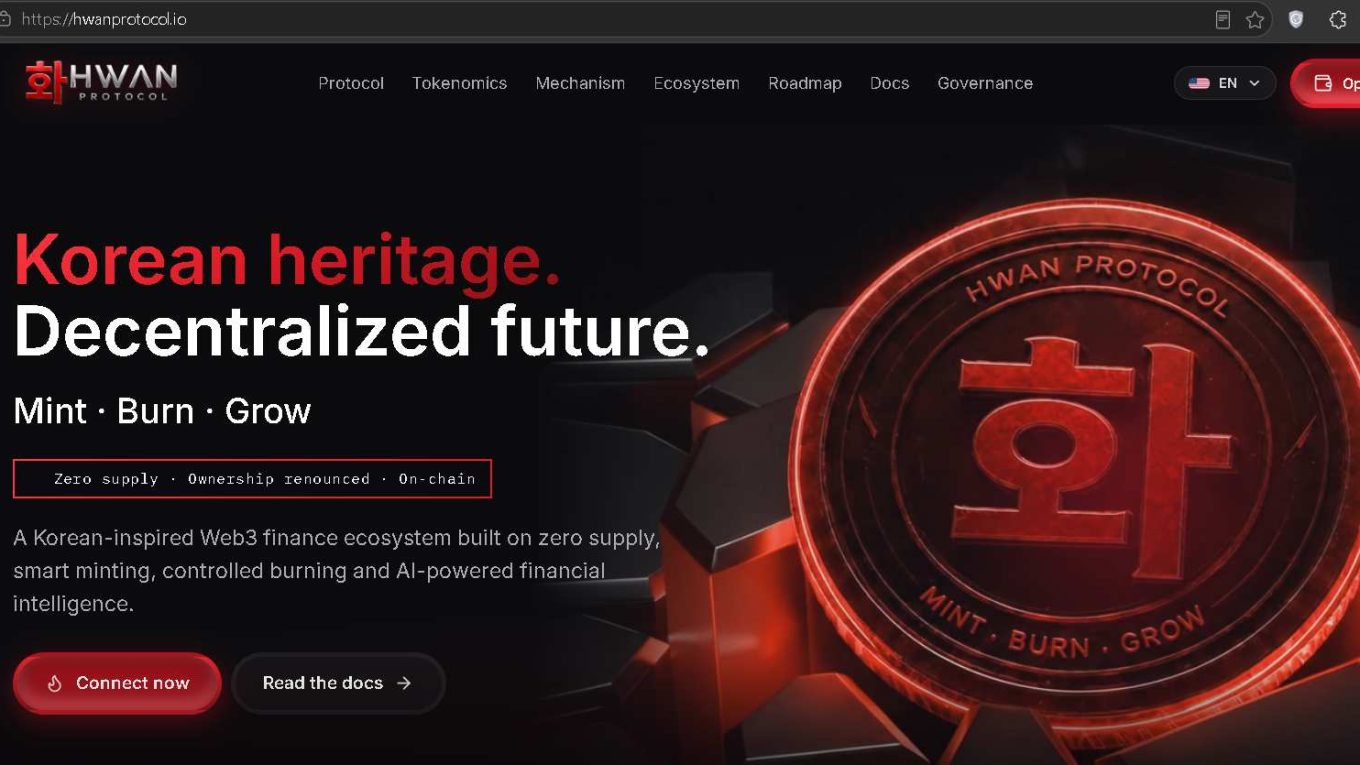
The platform boasts a striking, dark-mode cyberpunk aesthetic centered around the Korean Hangul character for “fire” or “change” (화), promising participants a self-sustaining ecosystem powered by artificial intelligence and algorithmic tokenomics.
Behind this slick, high-tech veneer, however, lies an operation that exhibits all the classic warning signs of a predatory Web3 trap. Rather than delivering a viable decentralized protocol, the infrastructure surrounding this project mirrors malicious decentralized application (dApp) frameworks engineered to drain user wallets and extract liquidity through opaque, unverifiable token contracts.
Before you click that glowing connection button or authorize any contract interactions in your non-custodial wallet, let us examine how these Web3 schemes work and what our investigation into this platform revealed.
The Fundamentals of Malicious dApp and Wallet Drainer Scams
Navigating Web3 requires understanding that smart contract interactions are fundamentally different from traditional web browsing. In Web2, clicking a bad link might expose you to adware or phishing forms. In Web3, clicking a bad link and confirming a transaction prompt in your wallet can instantly strip your balance of every digital asset you own.
       [ User Visits Deceptive DeFi dApp Landing Page ]
                               │
                               ▼
        ┌──────────────────────────────────────────────┐
        │       "Connect Now" / "Claim Airdrop"        │
        └──────────────────────┬───────────────────────┘
                               │
                               ▼
        ┌──────────────────────────────────────────────┐
        │   Deceptive Signature / Permit Requested     │
        │ • eth_sign / personal_sign                   │
        │ • setApprovalForAll (ERC-721 / ERC-1155)     │
        │ • Unlimited Token Approvals (ERC-20)         │
        └──────────────────────┬───────────────────────┘
                               │
                ┌──────────────┴──────────────┐
                ▼                             ▼
       [ User Approves ]             [ User Declines ]
                │                             │
                ▼                             ▼
   ┌───────────────────────────┐      [ Wallet Remains Safe ]
   │ Automated Sweeper Script  │
   │ Drains Crypto & NFTs to   │
   │ Scammer's Private Address │
   └───────────────────────────┘
1. The Weaponization of Smart Contract Permissions
Every time you interact with a legitimate DeFi protocol—such as Uniswap, Aave, or Curve—you grant that protocol’s smart contract permission to handle a specific amount of tokens. Malicious developers manipulate this exact mechanism using tools known across cybersecurity circles as wallet drainers.
Instead of requesting a benign read-only connection, a malicious dApp prompts your wallet to sign an off-chain permit or approve a deceptive transaction:
- Unlimited ERC-20 Approvals: The contract requests permission to spend an infinite allowance of your USDT, USDC, ETH, or BNB.
setApprovalForAllExploits: Typically used in NFT marketplaces, this function grants an external address unilateral control to transfer every NFT inside your connected collection without requiring individual authorizations.- Opaque Off-Chain Signatures: Exploiting standards like
eth_signor manipulatedPermit2messages, attackers disguise wallet-emptying commands as harmless “login” or “identity verification” requests.
2. Automated Sweepers
Once an unsuspecting user signs the authorization, the scam does not wait for a human to manually move assets. Automated scripts, known as “sweeper bots,” detect the approved allowance on-chain in real time and execute bundled transactions, sweeping the victim’s tokens and high-value NFTs into private, mixer-routed addresses within seconds.
📧 Need Legal Assistance?
Contact the author for legal consultations, case evaluations, and professional inquiries.
Case Study: Investigating Hwanprotocol.io
A forensic evaluation of Hwanprotocol.io reveals an environment carefully constructed to project technical sophistication while avoiding verifiable transparency.
  ┌────────────────────────────────────────────────────────────┐
  │                      Hwanprotocol.io                       │
  │ • Cultural Motif: "Korean heritage. Decentralized future." │
  │ • Buzzwords: "Zero supply • Ownership renounced • On-chain"│
  │ • Hooks: "Smart minting • Controlled burning • AI engine"  │
  └─────────────────────────────┬──────────────────────────────┘
                                │
         ┌──────────────────────┴──────────────────────┐
         ▼                                             ▼
┌──────────────────────────────┐        ┌──────────────────────────────┐
│  Aggressive Wallet Triggers  │        │   Zero Proven Transparency   │
│ • Prominent "Connect now"    │        │ • No Doxxed Core Team        │
│ • Direct "Open App" Prompt   │        │ • Anonymous WHOIS Domain     │
│ • Risk of Allowance Siphons  │        │ • Unverified Math Models     │
└──────────────────────────────┘        └──────────────────────────────┘
The Stated Product and Marketing Pitch
The homepage presents a dramatic visual stage: an embossed metallic medallion stamped with the Korean character 화 surrounded by mechanical gears and neon-red lighting. Across the viewport, large typography announces:
“Korean heritage. Decentralized future. Mint • Burn • Grow.”
Beneath this branding, the site presents a curated list of popular Web3 buzzwords framed inside glowing pill badges: “Zero supply,” “Ownership renounced,” and “On-chain.” The core marketing copy claims:
“A Korean-inspired Web3 finance ecosystem built on zero supply, smart minting, controlled burning and AI-powered financial intelligence.”
The user interface provides only two primary paths for visitors: an auxiliary link to read basic documentation, and two prominent red call-to-action buttons labeled “Connect now” and “Open App.”
Modus Operandi: How the Scam Funnel Traps Investors
The operational strategy behind platforms of this nature unfolds across distinct psychological and technical stages:
1. The Cultural Affinity Hook
By anchoring the project in “Korean heritage,” the promoters tap into the massive global enthusiasm surrounding South Korean pop culture, technological innovation, and its vibrant retail cryptocurrency trading market. This creates an immediate aura of institutional credibility and cultural legitimacy, disarming the natural skepticism of retail investors.
2. The Buzzword Smokescreen
The platform promises a financial mechanism driven by “smart minting,” “controlled burning,” and “AI-powered predictive intelligence.” In reality, stacking disparate buzzwords without mathematical proofs, detailed code repositories, or peer-reviewed tokenomic models is a standard tactic used to overwhelm non-technical investors. It sounds sophisticated, but conceals an economic model that is either mathematically unviable or entirely non-existent.
3. The dApp Signature Trap
When a user clicks “Connect now” or “Open App,” their browser wallet extension opens. If the interface is running malicious dApp drainer scripts, the prompt presented to the user is not a harmless read request, but an asset-approval contract call or a deceptive signature. The moment the user confirms, the script siphons accessible assets directly out of the wallet.
4. The Algorithmic Rug Pull Alternative
Even if the front-end operates without an outright drainer, projects structured around “zero supply,” custom minting functions, and aggressive referral distribution frequently operate as multi-level marketing (MLM) schemes or algorithmic pump-and-dump setups. Early promoters hype a token from pennies to inflated valuations on social platforms, encouraging retail participants to lock up capital, before developers pull underlying liquidity or dump newly minted tokens, leaving external holders with worthless digital dust.
Critical Red Flags Uncovered on Hwanprotocol.io
| Security Checkpoint | Observation on Hwanprotocol.io | Risk Level |
| Domain Registration History | Registered very recently (late May 2026) with ownership details fully masked behind proxy services. | High |
| Independent Trust Ratings | Flagged by automated cybersecurity scanners with extremely low trust scores (~20–29/100). | Critical |
| Team Transparency | Completely anonymous creators; zero public engineering identities, LinkedIn profiles, or legal corporate entities. | Critical |
| Smart Contract Audits | Absence of verifiable audit reports from recognized Tier-1 security firms (e.g., CertiK, OpenZeppelin). | Critical |
| Technical Whitepaper Substance | Heavy reliance on marketing slogans and buzzwords without formal economic proofs or public GitHub code repositories. | High |
- Anonymous Origins and Disposable Registration: Domain registry queries reveal that the domain was purchased recently through Namecheap and shielded using Icelandic privacy proxies. Legitimate financial protocols building foundational decentralized infrastructure maintain transparent corporate foundations, public developer hubs, and verifiable registries.
- Low Independent Security Scoring: Security diagnostic engines—including Scam Detector and Gridinsoft—assign the domain bottom-tier ratings, citing proximity to suspicious web hosts, high spam indicators, and characteristics common to phishing setups.
- Zero Verifiable Code Repositories: Genuine Web3 protocols pride themselves on open-source code hosted on public GitHub or GitLab profiles, allowing third-party developers to inspect minting parameters and contract permissions. The platform provides no transparent, auditable smart contract addresses for public review.
Final Verdict: Avoid Interacting with Hwanprotocol.io
Hwanprotocol.io exhibits all the hallmarks of a high-risk Web3 trap and should be avoided entirely.
Whether functioning as an automated wallet drainer designed to harvest permissions or a speculative token ecosystem poised for an algorithmic rug pull, connecting your wallet to this platform places your digital assets in direct jeopardy.
If you have already interacted with the site:
- Revoke Approvals Immediately: Navigate to trusted permission management tools like Revoke.cash or Etherscan Token Approval Checker and revoke every active allowance granted to unknown contracts.
- Migrate Remaining Assets: If you signed ambiguous off-chain messages or permits, assume the connected wallet address is compromised. Generate a completely new seed phrase on a separate device and transfer your remaining funds immediately.
- Disregard “Recovery” Offers: Beware of private messages on Discord, Telegram, or X claiming that recovery agents can hack the protocol to return lost assets. These are secondary recovery scams targeting already vulnerable victims.
Frequently Asked Questions (FAQ)
Is Hwanprotocol.io Scam?
Yes, Hwanprotocol.io carries overwhelming indicators of being a fraudulent Web3 operation. It relies on anonymous ownership, low domain trust scores, and aggressive wallet connection prompts typical of drainer platforms and speculative token traps.
Is Hwanprotocol.io Legit?
No, Hwanprotocol.io is not legit. The project lacks verified smart contract security audits, maintains no public corporate standing or legal registrations, and conceals the true identities of its developers behind privacy proxies.
What is a Web3 wallet drainer scam?
A wallet drainer is a malicious script embedded into a fake or compromised dApp. When a visitor connects their crypto wallet, the script prompts them to sign a deceptive transaction or contract approval (such as an unlimited ERC-20 token allowance or a setApprovalForAll NFT request), allowing the attacker to instantly sweep all assets from the victim’s wallet.
Can connecting my crypto wallet to Hwanprotocol steal my funds?
Simply reading public blockchain data does not compromise a wallet, but clicking “Connect now” on an untrusted platform often triggers secondary permission prompts. If you approve a malicious contract interaction, signature request, or token spending limit, the site can drain your assets immediately.
What does “zero supply and smart minting” mean in crypto?
While marketed as an innovative deflationary model, “zero supply” projects often mean that tokens do not exist until users deposit funds or trigger minting functions. If the underlying contract contains unrestricted owner minting permissions or lacks liquidity lock-ins, developers can mint infinite tokens to dump on buyers or drain the liquidity pool entirely.
How do I revoke malicious smart contract approvals?
To revoke permissions, connect your wallet to an established tool like Revoke.cash or the official approval checker on Etherscan, Polygonscan, or BscScan. Locate any unknown contract allowances with “Unlimited” spend limits and execute a revoke transaction to reset the allowance to zero.
What should I do if a dApp drained my crypto wallet?
Once a blockchain transaction is confirmed, it cannot be reversed. Immediately transfer any unaffected tokens or NFTs to a newly generated wallet with an entirely different recovery phrase, revoke all existing permissions on the old address, and report the malicious URL to browser security databases and crypto threat registries like PhishFort.
For more shady sites exposed, check our Shopping Scam Directory — your quick guide to staying safe online.
Every safe click counts. If this post helped, a coffee gesture fuels more scam‑busting investigations.

Help Us Spread Awareness
Please share this article to spread awareness. Follow us on social media for more scam alerts.