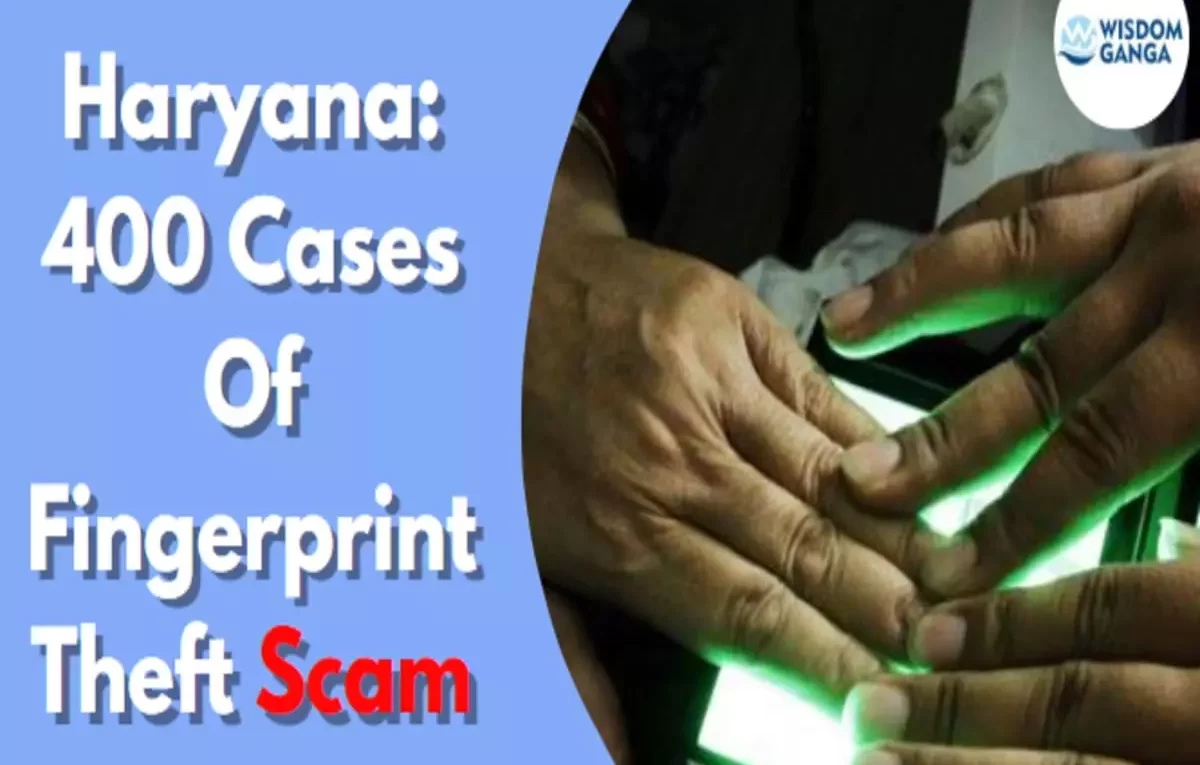
Haryana: 400 Cases Of Fingerprint Theft Scam
The Haryana Police Crime Branch has raised a red flag on the Aadhaar-Enabled Payment System (AEPS). Haryana police are claiming that cybercriminals are committing Fingerprint theft scams by stealing people’s vital data from the system.
Scammers later clone stolen fingerprints available on documents on the government website. The Crime Branch’s cyber cell is currently investigating over 400 complaints involving Fingerprint theft scams.
Investigators discovered that Fingerprint theft scammers are withdrawing money by forging biometric thumbprints and abusing AEPS.
Crime Branch’s Additional Director General O P Singh described it as a “Fingerprint theft scam with silicone thumb” and said that investigators had discovered that scammers were using fake biometric thumb impressions and AEPS to withdraw money.
What Is AEPS?
AEPS, or Aadhaar Enabled Payments Systems, aims to promote financial inclusion through the establishment of Micro ATMs or Point of Services through the business correspondent of any bank using Aadhaar-based authentication.
An individual may conduct six different types of transactions using the AePS. Customers must provide the following information under this AePS in order to conduct transactions:
- Aadhaar Number
- Knowing which Bank the customer is connected to
- Fingerprints are taken during their enrollment.
The Crime Branch has advised people to avoid registering their fingerprints on any websites and to deactivate the AEPS facility from their accounts if they are not regularly using them.
In order to assist police in stopping the transfer of the stolen funds to the accounts of the cybercriminals, it has asked the public to immediately report any act or attempted act of cybercrime to the number “1930” within an hour of such an activity.
The investigators have now requested that intermediaries and state departments conduct a safety audit and close any gaps that could allow the leakage of personal information like thumbprints and expose it to misuse by cybercriminals.
How Does The Fingerprint Theft Scam Work?
To make fake silicone thumbs, cybercriminals copy thumb impressions on butter paper from various websites. They then determine if a bank account is connected to the Aadhaar number.
The Aadhaar card-linked bank accounts are then selected by fraudsters, who then use fake documents to register for online accounts on any platform.
Once the online account has been created, the Fingerprint theft scammer logs in to any app on the platform for electronic transaction processing to start transactions using the cloned rubber fingerprint and the biometric device.
What Are Fingerprints Worth to Scammers?
Everyone has heard About the fact that each fingerprint is distinctive. The fingerprint pattern of two different individuals can never be the same.
Therefore, it stands to reason that we would use them to protect our most private devices and data against the Fingerprint theft scam.
People utilise biometric security when they fingerprint to unlock their phones. Biometric data is much more difficult to steal than a password, which can be cracked, divulged during a phishing scam, or stolen and leaked to the Dark Web.
Fingerprint hacking is one of the more challenging forms of identity theft. It’s not likely, though.Hackers have developed techniques to get around biometric authentication, even stealing fingerprints.
When they succeed, they have access to the most private and vulnerable data. This includes bank accounts and digital wallets, birthdates, and other information that could be used for identity theft.
This guide will go over how fingerprints are stolen by hackers, what can happen if they are stolen, and how to keep devices and accounts safe.
How To Prevent The Silicone thumb Print Scam?
Fingerprint-based ID can still increase the security of devices and accounts even though it is hackable. Here are some strategies for utilising biometrics to protect data and accounts from hackers:
1.Utilize multiple forms of identity verification methods (2FA/MFA).
The majority of us are accustomed to using one of these identifiers (like a password or a fingerprint). For instance, faces or fingerprints can be scanned to unlock an iPhone or an Android device.
However, using multiple forms of identity verification (like a fingerprint and a password) makes devices and accounts much more difficult to hack. Two-factor or multifactor authentication is what this is.
Even if a hacker gains access to any phone and manages to bypass its PIN, it will be difficult for them to get past a further step that either uses fingerprint or a unique code that is sent to a registered email and requires their user to verify it.
- AI Recruiting Tools Review: A Comprehensive Guide for Modern Hiring Teams

- Best Washing Machines in India (2026): Front Load vs Top Load, Hard Water Traps & Direct Drive Tested
- Best Soundbars for TV in India (2026): Fake Dolby Atmos, Dialogue Traps & Subwoofer Reality
- Top 5 Payroll Software in India (2026): A Complete Guide for Businesses
- Captain Smit Machchhar: Inside the Mid-Air Cockpit Fight on Flydubai Flight FZ1073
- Best ATS Software for Small Businesses in 2026: A Practical Guide for Growing Companies






2. Don’t Disclose Biometric Data To Organisations
Fingerprints and other biometric information are only as secure as the facility where they are kept. Fingerprints or facial ID may end up for sale on the Dark Web if a company that stores them is breached or subject to a cyber attack.
Ask the company why they need biometric data. Local storage of this data is much safer. For example, Apple’s computers and iPhones store fingerprint information locally rather than on a central server to avoid fingerprint theft scams.
3. Use a Privacy Screen On Devices.
In many situations, fingerprints and other biometric data can be more secure than passwords and PINs. Someone can watch a user enter their passcode if they’re using their phone or laptop in public and typing it in.
Make sure to keep passwords private along with fingerprints. Use a privacy screen on devices to prevent others from seeing sensitive information on the screen.
4. Activate Identity Theft Monitoring
Devices and accounts cannot be completely protected from hackers. And if they succeed in breaking in, they could seriously harm a victim’s identity and financial accounts.
A service that guards against identity theft keeps an eye on a user’s data and accounts for indications of Fingerprint theft scams It also helps users identify other scams online.
End Note
Scams in various forms are always around us. The authorities too have been working to protect people from them. Fingerprint theft scams have now become way more common. It Is high time to fight back against this scam.
For that, we must ensure our own protection and do the needful.
Wisdom Ganga is a Blogging Site that Aims to Make People Aware of Online Scam and other Digital Knowledge.

Scam Topics are very sensitive issues that have taken the shape of Crime. The majority of people are not aware of such things.

Please help us to make people aware of Scam and Cyber Crime by sharing this knowledge and article with others.
Also Help Us by following us on Instgram, Facebook and Twitter.

Our team at Wisdomganga is constantly working to recognize all the possible scams and is focused on making everyone aware of them. If you find this article useful, you can now order a cup of coffee for our team as a token of appreciation.