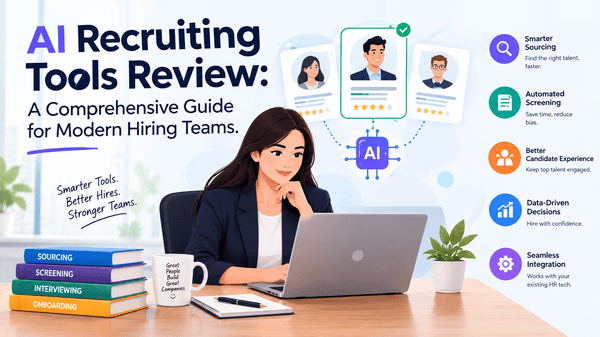
AI Recruiting Tools Review: A Comprehensive Guide for Modern Hiring Teams
Artificial Intelligence (AI) has transformed nearly every aspect of business operations, and recruitment is no exception. As organizations compete for top talent in an increasingly digital world, AI recruiting tools have emerged as indispensable assets for streamlining hiring processes, improving candidate quality, and reducing time-to-hire.
From automated resume screening and candidate sourcing to interview scheduling and predictive analytics, AI-powered recruitment platforms are helping recruiters make smarter and faster decisions. According to industry reports, organizations that leverage AI in recruitment often experience enhanced hiring efficiency, improved candidate engagement, and reduced recruitment costs.
This comprehensive review explores the leading AI recruiting tools, their features, benefits, limitations, and how businesses can choose the right solution for their talent acquisition needs.
What Are AI Recruiting Tools?
AI recruiting tools are software solutions that utilize artificial intelligence, machine learning (ML), natural language processing (NLP), and predictive analytics to automate and optimize recruitment activities.
These tools assist recruiters in:
- Candidate sourcing
- Resume screening
- Job matching
- Interview scheduling
- Skills assessment
- Candidate engagement
- Diversity hiring initiatives
- Recruitment analytics
Rather than replacing recruiters, AI tools act as intelligent assistants, enabling talent acquisition professionals to focus on strategic decision-making and relationship building.
Why AI Recruiting Tools Are Gaining Popularity
Modern recruitment presents numerous challenges:
- High application volumes
- Long hiring cycles
- Limited recruiter bandwidth
- Unconscious bias
- Poor candidate experience
- Talent shortages in competitive industries
AI addresses these issues by processing large volumes of data quickly and identifying qualified candidates more efficiently than traditional methods.
Key Benefits
1. Faster Screening: AI can review thousands of resumes within minutes and shortlist candidates based on predefined criteria.
2. Improved Candidate Matching: Machine learning algorithms compare candidate profiles with job requirements, increasing hiring accuracy.
3. Enhanced Candidate Experience: Chatbots and automated communication tools keep applicants informed throughout the hiring journey.
4. Data-Driven Recruitment: Recruiters gain access to insights and hiring trends that support better decision-making.
5. Reduced Administrative Work: Automated scheduling and workflow management save valuable recruiter time.
Top AI Recruiting Tools Reviewed
1. LinkedIn Recruiter AI
LinkedIn Recruiter AI leverages LinkedIn’s vast professional network to help recruiters discover talent quickly and accurately.
Key Features
- AI-powered candidate recommendations
- Talent pool analytics
- Advanced search filters
- Automated outreach suggestions
- Skills-based candidate matching
Pros
✅ Massive talent database
✅ Strong employer branding opportunities
✅ Excellent passive candidate sourcing
✅ User-friendly interface
Cons
❌ Premium pricing
❌ Limited customization for smaller businesses
Best For
Medium to large organizations seeking access to active and passive talent pools.
2. HireVue
HireVue combines AI-driven assessments and video interviewing capabilities to streamline candidate evaluation.
Key Features
- On-demand video interviews
- Skills-based assessments
- Interview scheduling automation
- Structured evaluation frameworks
- Candidate analytics
Pros
✅ Reduces interview scheduling complexity
✅ Scalable for high-volume hiring
✅ Consistent candidate evaluation
Cons
❌ Learning curve for some users
❌ Candidates may feel uncomfortable with recorded interviews
Best For
Enterprise organizations and high-volume recruitment environments.
3. Eightfold AI
Eightfold AI is one of the most advanced talent intelligence platforms focusing on candidate potential rather than just experience.
Key Features
- Deep-learning talent matching
- Internal mobility recommendations
- Workforce planning analytics
- Diversity hiring support
- Predictive talent acquisition
Pros
✅ Highly sophisticated AI engine
✅ Excellent workforce intelligence
✅ Strong diversity and inclusion features
Cons
❌ Higher implementation cost
❌ May require dedicated onboarding
Best For
Large enterprises looking for strategic talent management solutions.
4. Paradox (Olivia)
Paradox uses conversational AI through its virtual assistant, Olivia, to automate candidate interactions.
Key Features
- AI chatbot
- Interview scheduling
- Candidate screening
- FAQ automation
- Mobile-first recruiting experience
Pros
✅ Exceptional candidate engagement
✅ Significant recruiter time savings
✅ Fast implementation
Cons
❌ Not ideal as a standalone ATS
❌ Customizations can be complex
Best For
Companies with high-volume hiring needs, including retail, hospitality, and healthcare.
5. SeekOut
SeekOut specializes in AI-driven talent sourcing and diversity recruiting.
Key Features
- Advanced talent search
- Diversity sourcing filters
- Market intelligence
- Talent rediscovery
- Competitive hiring insights
Pros
✅ Strong sourcing capabilities
✅ Excellent diversity recruitment support
✅ Rich talent intelligence data
Cons
❌ More sourcing-focused than full-cycle recruiting
❌ Premium features can be expensive
Best For
Organizations prioritizing proactive talent sourcing.
6. Fetcher
Fetcher combines AI automation with human oversight to identify and engage potential candidates.
Key Features
- Candidate sourcing automation
- Outreach campaign management
- Talent pipeline development
- Diversity recruitment tools
- Response tracking
Pros
✅ User-friendly interface
✅ Effective talent outreach
✅ Good balance of automation and personalization
Cons
❌ Limited functionality beyond sourcing
❌ Smaller candidate database than major competitors
Best For
Growing startups and mid-sized companies.
7. TurboHire
TurboHire is gaining popularity among organizations looking for an end-to-end AI recruitment platform.
Key Features
- Resume parsing
- Candidate ranking
- Recruitment analytics
- Interview management
- Hiring workflow automation
Pros
✅ Comprehensive recruitment suite
✅ Strong AI-powered insights
✅ Suitable for global teams
Cons
❌ Feature-rich interface may feel overwhelming initially
Best For
Companies seeking a complete recruitment technology ecosystem.
Essential Features to Look for in AI Recruiting Tools
Not every recruitment platform offers the same capabilities. Organizations should evaluate solutions based on the following criteria:
Resume Screening: Look for AI that accurately identifies relevant qualifications, skills, and experience.
Candidate Matching: Advanced matching algorithms improve hiring quality by assessing candidate suitability beyond keywords.
Interview Automation: Scheduling and coordination tools reduce administrative burdens.
Analytics and Reporting: Recruitment metrics help organizations track hiring effectiveness.
Diversity and Inclusion Support: Modern AI systems should support unbiased candidate evaluation and inclusive hiring practices.
ATS Integration: Compatibility with existing Applicant Tracking Systems (ATS) is critical for seamless workflows.
Candidate Engagement: Chatbots, automated follow-ups, and personalized communication improve the candidate experience.
Challenges and Limitations of AI Recruiting Tools
While AI offers numerous advantages, organizations should remain aware of potential concerns.
Bias in AI Models:
AI systems learn from historical data. If past hiring practices contained biases, the AI may unintentionally replicate them.
Solution: Regular audits and diverse training datasets help minimize bias
Over-Reliance on Automation
Recruitment remains a human-centered process. Excessive automation can create impersonal hiring experiences.
Solution: Combine AI efficiency with recruiter judgment and empathy.
Data Privacy Concerns
Recruiters handle significant amounts of candidate information.
Solution: Choose vendors with strong compliance standards, including GDPR and other applicable data protection regulations.
Implementation Costs
Advanced AI platforms can require significant investment, especially for large-scale deployment.
Solution: Evaluate ROI based on hiring volume, efficiency gains, and recruiter productivity.
AI Recruiting Trends for 2026 and Beyond
The recruitment technology landscape continues to evolve rapidly.
Hyper-Personalized Candidate Experiences: AI will increasingly tailor communication and job recommendations based on individual preferences and career goals.
Skills-Based Hiring: Organizations are moving away from degree-focused hiring toward skills and competency assessments.
Predictive Workforce Planning: AI will help businesses forecast talent needs and identify skill gaps before they impact operations.
Generative AI Recruiting Assistants: Recruiters will use generative AI to draft job descriptions, outreach messages, interview questions, and candidate evaluations.
Internal Talent Marketplaces: Companies will prioritize existing employees by using AI to identify internal mobility opportunities.
How to Choose the Right AI Recruiting Tool
When selecting an AI recruitment platform, consider:
1. Hiring Volume
Large organizations may benefit from enterprise solutions like Eightfold AI or HireVue, while startups may find Fetcher or TurboHire more practical.
2. Recruitment Goals
Determine whether your primary objective is sourcing, screening, engagement, or end-to-end hiring.
3. Budget
Evaluate both upfront and long-term costs, including implementation, training, and support.
4. Integration Requirements
Ensure compatibility with current HR systems and ATS platforms.
5. User Experience
Recruiters and hiring managers should find the platform intuitive and easy to adopt.
6. Scalability
Choose a solution capable of supporting future organizational growth.
Final Verdict
AI recruiting tools are revolutionizing talent acquisition by helping organizations hire smarter, faster, and more efficiently. Whether the goal is sourcing hard-to-find talent, improving candidate engagement, reducing time-to-hire, or leveraging predictive workforce analytics, AI-powered recruitment platforms offer compelling advantages.
Platforms such as LinkedIn Recruiter AI, HireVue, Eightfold AI, Paradox, SeekOut, Fetcher, and TurboHire each bring unique strengths to the recruitment process. The ideal solution depends on organizational size, hiring objectives, budget, and technology infrastructure.
The future of recruitment is not human versus AI but rather human recruiters empowered by AI. Organizations that successfully combine technology with human expertise will be best positioned to attract, engage, and retain top talent in an increasingly competitive market.
Sweta Rawat is an HR professional with over 2.5 years of experience and an MBA in Human Resources. She writes on modern HR practices, employee engagement, and workplace culture, blending professional expertise with creative insight.