Unmasking Megawine.lat: A Deep Dive into Brand Deception and Online Impersonation Tactics
When navigating the digital landscape, encountering a domain like Megawine.lat might initially trick the eye into expecting an e-commerce storefront for vineyards, spirits, or wholesale beverage distribution. However, a closer look at the digital architecture beneath the surface reveals a completely different reality—one that serves as a classic textbook example of Brand Deception / Impersonation Risks Scam.
Rather than offering fine wines or cellar selections, this portal operates as an unauthorized offshore gaming front, leveraging cognitive dissonance and deceptive branding to capture unsuspecting web traffic. In an era where digital safety directly impacts personal financial security, understanding how these misleading domains manipulate expectations is crucial for every internet user.
The primary objective of this investigative analysis is to dissect the operational mechanisms of Megawine.lat, clarify the underlying mechanics of online brand deception, and provide readers with actionable intelligence to protect themselves from high-risk digital traps.
By examining how misleading domains disguise high-risk wagering portals behind benign storefront nomenclature, we can expose the structural red flags that separate legitimate online commerce from predatory networks.
Whether you arrived here via a stray backlink, social media redirection, or search engine curiosity, this breakdown will equip you with the critical insights needed to navigate deceptive web ecosystems safely.
Understanding the Fundamentals of Brand Deception and Impersonation Risks
Digital brand deception and impersonation risks refer to deceptive tactics where malicious operators or unlicensed entities usurp established brand identities, visual motifs, or semantic cues to mislead consumers about their true nature.
In the broader ecosystem of cybersecurity threats, impersonation scams rarely rely on sophisticated technical malware; instead, they exploit human psychology. By choosing a domain name that implies a mundane, trustworthy consumer business—such as wine retail, software utilities, or lifestyle blogs—operators lower the visitor’s initial psychological guard.
When a user lands on a site expecting one type of service (like buying groceries or specialty beverages) only to be confronted with high-risk financial platforms, online casinos, or aggressive cryptocurrency funnels, cognitive bias often delays skepticism.
Impersonation frameworks frequently cross-contaminate multiple brand registries, blending unrelated names (such as unauthorized references to external networks like “OLX123” or hidden financial processing gateways) onto a single landing page.
This confusion makes it difficult for automated search crawlers and casual web users to trace liability, ultimately insulating shady operators while exposing visitors to severe privacy and financial risks.
Player Safety Blueprint: Prevention Rules & Actionable Solutions
Protect your digital assets before interacting with unverified gambling mirrors, or follow the mitigation sequence if you have already shared data.
Never pay secondary “clearance taxes,” “unlock fees,” or “verification deposits.” Unregulated syndicates use these requests to extract extra funds before blocking your account.
Uninstall any browser-downloaded package immediately. Reboot into Safe Mode, run an updated antivirus scan, and revoke any suspicious SMS or Accessibility permissions.
Reset passwords on any email accounts, crypto wallets, or payment platforms that shared login credentials with the mirror site. Turn on app-based 2FA (e.g., Google Authenticator).
If you deposited using debit or credit rails, call your issuing bank’s dispute desk immediately to file a chargeback under merchant fraud or failure of service delivery.
Report and block WhatsApp or Telegram spam numbers. Ignore third-party “fund recovery agents” claiming they can hack back your balance for an upfront retainer.
Case Study: How Megawine.lat Masks Its Operations
To fully grasp how modern impersonation tactics manifest online, Megawine.lat serves as an ideal investigative case study. A surface-level evaluation of its domain structure and front-facing interface demonstrates a stark contradiction between its nomenclature and its actual utility.
What the Site Claims and Offers
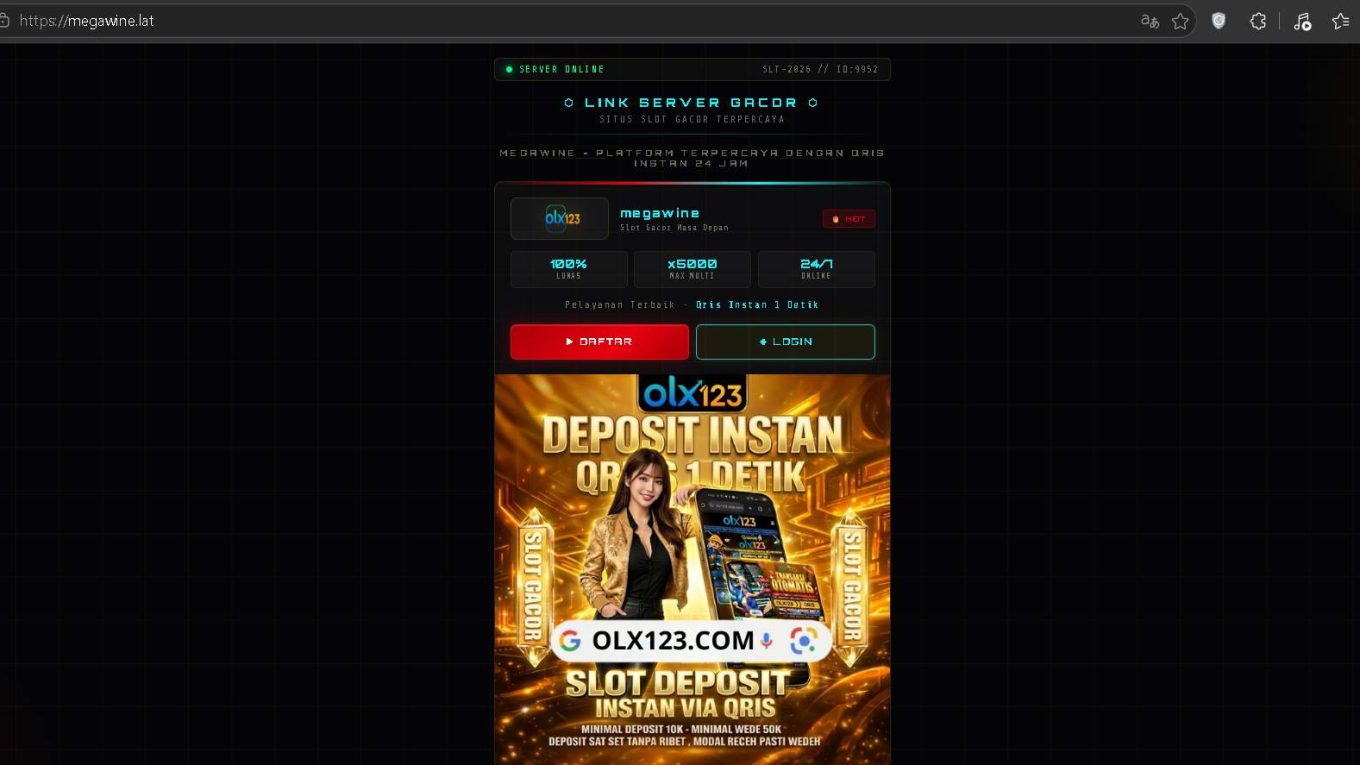
Upon arrival, the platform greets visitors with bold, flashing headers declaring phrases like “Server Online,” “Link Server Gacor,” and promises of 24/7 instant automated processing through localized payment gateways like QRIS. The text layout heavily promotes high-multiplier digital slot machines, instant deposits starting at minimal local currency thresholds (such as 10k), and rapid payout promises. It markets itself as an elite, high-speed digital entertainment hub where users can supposedly multiply small stakes instantly without bureaucratic friction.
Suspicious Link or Courier SMS?
Verify URLs, APKs, or parcel alerts against our threat database before clicking.
The Operational Mechanics: Behind the Neon Facade
Mechanically, the site functions as a classic “funnel landing page” designed for offshore gambling syndicates. It does not sell goods, ship products, or provide legitimate entertainment services. Instead, its sole operational purpose is user acquisition for unregulated wagering platforms.
- Traffic Ingestion: The domain catches long-tail search queries or referral traffic from dubious ad networks.
- Semantic Bait-and-Switch: By utilizing a completely misleading domain name (megawine), it bypasses casual content filters that might otherwise flag explicit gambling keywords at the domain entry level.
- The Gateway Hand-off: Once the user visits, aggressive promotional banners and embedded links instantly transition them away from any pretense of retail browsing and directly into depositing funds via third-party digital wallets or instant QR codes.
- Capital Retention: Because these setups operate outside established financial regulatory frameworks, deposited capital enters opaque merchant channels with zero consumer protection guarantees, chargeback rights, or regulatory oversight.
5 Critical Red Flags on Megawine.lat
Navigating unverified internet domains requires sharp pattern recognition. Identifying structural anomalies can prevent financial loss and data compromise. The following five red flags highlight the inherent dangers associated with this portal:
- Severe Semantic Mismatch: The domain name strongly implies a wine or beverage merchant, yet the actual web content exclusively promotes high-risk online gambling and digital slot games.
- Complete Lack of Regulatory Licensing: There are no verifiable corporate registration details, physical headquarters addresses, gaming commission licenses, or legal compliance disclosures anywhere on the platform.
- Aggressive Financial Deposition Funnels: The interface prioritizes instant, frictionless cash deposits via automated QR codes while completely omitting transparent terms of service, withdrawal restrictions, or user agreements.
- Cross-Brand Impersonation Artifacts: The page displays mismatched brand insignia and external references (such as unrelated directory or classified terms like olx123), indicating a hastily assembled, template-driven clone site.
- Anonymous Infrastructure and Domain Obfuscation: Registered on high-risk or privacy-shielded top-level extensions (
.lat), the site hides its true administrative ownership behind proxy shields, preventing accountability if financial disputes arise.
Frequently Asked Questions (FAQs)
1. Is Megawine.lat a scam?
While definitions vary depending on local legal interpretations of offshore wagering, Megawine.lat exhibits multiple characteristics commonly associated with deceptive web operations, including misleading domain naming conventions, hidden administrative ownership, and a complete absence of consumer protection standards. Engaging with such unverified platforms carries an extremely high risk of financial loss.
2. Is Megawine.lat legit?
No. The platform is not a legitimate e-commerce store or licensed wine merchant, nor does it possess valid regulatory credentials or consumer trust markers. Its deceptive presentation classifies it as an untrustworthy, high-risk destination.
3. What should I do if I already visited or deposited money on Megawine.lat?
If you have interacted with the platform, immediately disconnect any linked digital wallets, monitor your primary bank and UPI accounts for unauthorized transactions, and consider notifying your financial institution or cybercrime reporting authorities if you transferred funds.
4. Why do sites use deceptive names like Megawine.lat for gambling portals?
Operators use misleading or completely unrelated names to bypass automated ad blockers, evade keyword blacklists, mask their digital footprints from search engines, and trick unsuspecting users into clicking links under false pretenses.
5. How can I spot brand impersonation and fake websites?
Always verify the domain against official corporate registries, look for SSL security certificates that match recognized business entities, check for transparent physical contact details, and remain skeptical of sites where the domain name bears no logical relation to the on-page content.
6. Are QRIS and instant payment options safe on sites like this?
While QRIS is a legitimate payment standard in specific regional markets, using it on unverified, anonymous gambling portals strips away standard buyer protection, making it virtually impossible to recover funds once a transfer is authorized.
7. Can search engines protect me from domains like Megawine.lat?
Major search engines continuously update algorithms to penalize deceptive SEO tactics and brand impersonation, but new domains frequently emerge faster than they can be cataloged. Users must maintain personal vigilance and rely on critical analysis before entering data or funds online.
8. Where can I report deceptive websites or online fraud?
You can report fraudulent portals, phishing attempts, and digital scams through your country’s official cybercrime reporting portal (such as the National Cyber Crime Reporting Portal in India or equivalent consumer protection agencies in your jurisdiction).
Every safe click counts. If this post helped, a coffee gesture fuels more scam‑busting investigations.

Help Us Spread Awareness
Please share this article to spread awareness. Follow us on social media for more scam alerts.