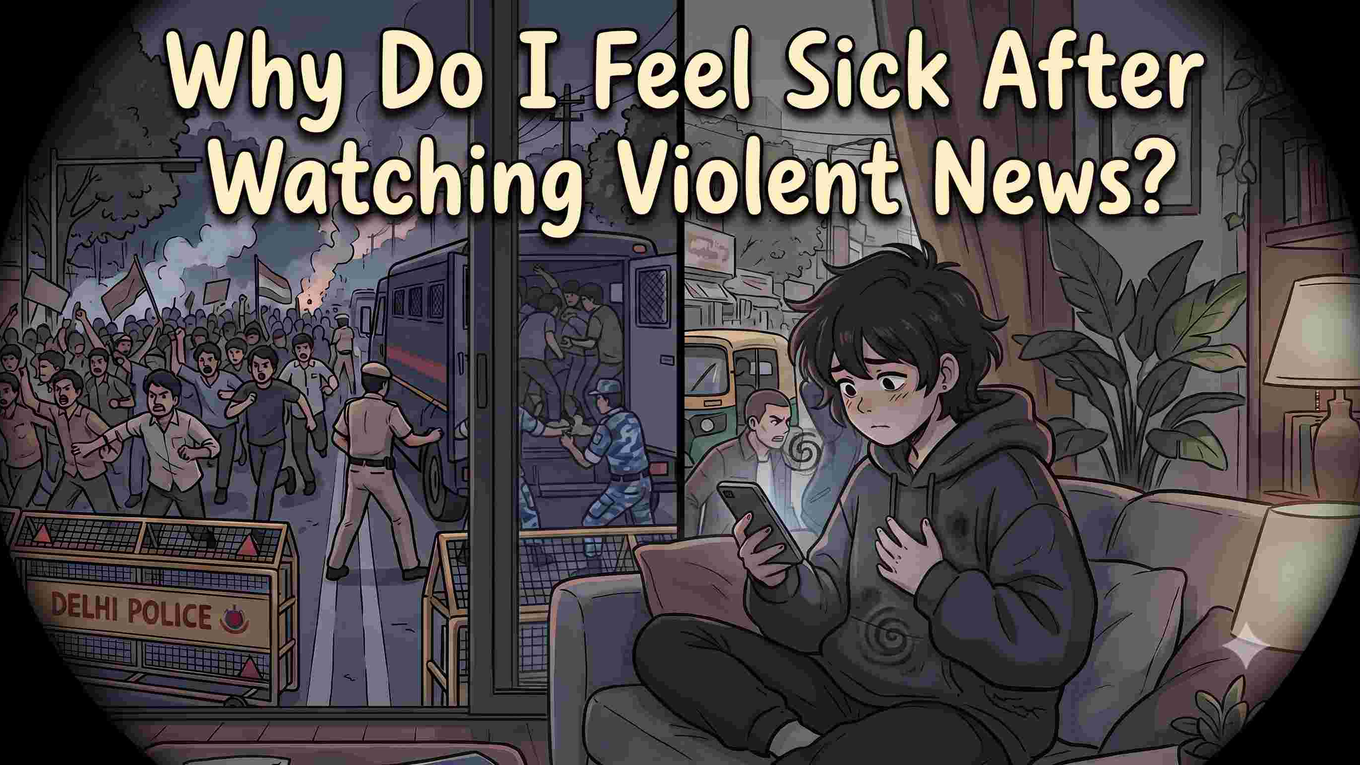
Why Do I Feel Sick After Watching Violent News?
Summary: Why Do I Feel Sick After Watching Violent News? – Watching graphic violence online tricks your brain into sensing immediate physical danger, triggering a fight-or-flight surge. This redirects blood away from digestion, causing stomach knots and nausea known as vicarious trauma. Setting strict media boundaries and practicing sensory grounding restores nervous system balance, helping you regain personal safety and peace.
On the afternoon of October 10, central Delhi turned into an armed fortress. What began as a planned mobilization at Jantar Mantar quickly dissolved into open confrontation as multi-tier iron barricades sealed off key corridors and security forces moved in to contain CJP protestors.
Within hours, the demonstration fractured into chaos: slogans gave way to scuffles, police detention vans lined the perimeter packing in protesters, and nearby commuter routes ground to a halt under strict cordons. Before the dust had even settled on the pavement, the scene had already migrated from the streets directly into millions of palms.
You unlock your phone while taking a break from work, and a bad video suddenly pops up on your screen.
It might be a clip from recent street clashes or protests in Delhi, like the tense CJP demonstrations. You see barricades blocking roads, people running, shouting, and police vans packing in crowds. In another video, a group of bullies beats up an innocent person in broad daylight, and nobody steps in to help.
You lock your phone and set it face down. But your chest still feels tight. Your stomach turns into a heavy, sour knot. You feel uneasy, tired, and maybe a little shaky. Later, when you step out of your house to buy milk or catch a bus, you catch yourself looking over your shoulder.
A quiet fear sneaks in: “Why do I feel sick after watching violent news? Am I just weak?”
The short answer is: No, you are not weak. What you are feeling is a very real reaction called vicarious trauma. It simply means your mind and body are hurting because you witnessed someone else’s pain.
When you feel sick after watching a bad video, you might tell yourself: “Why am I scared? I’m sitting safely in my room. Nothing happened to me.”
Your brain doesn’t see it that way.
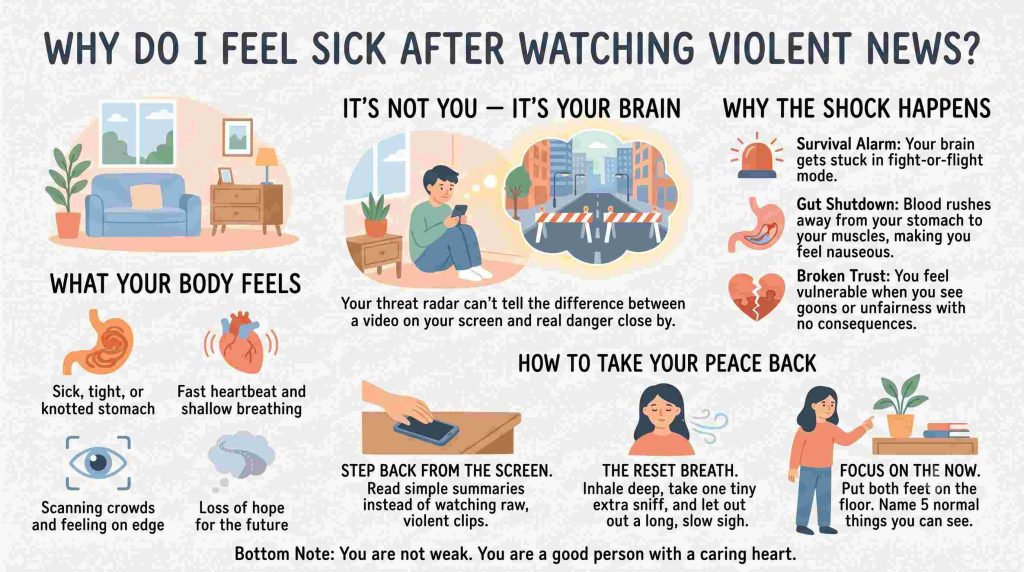
Thousands of years ago, humans survived by spotting real, physical danger—like a wild animal or an attacking enemy. Your brain’s danger alarm does not know the difference between a fight happening right in front of you and a fight playing on your phone screen.
When you watch people getting hurt or bullies getting away with cruelty, your brain hits the panic button:
- The Alarm Goes Off: Your body releases strong stress chemicals to help you run away or fight back.
- Your Stomach Shuts Down: Because your body thinks you are in real physical danger, it stops digesting food and sends all your blood to your arms and legs. This sudden shift is the exact reason your stomach knots up, churns, or makes you feel like throwing up.
- Your Trust in the World Breaks: We all grow up believing a simple rule: if I follow the rules and mind my own business, good things happen and the police will keep me safe. Watching bad people break the law without any punishment breaks that rule. It makes you feel that safety is just good luck, not a guarantee.
What People Actually Feel Inside
You are not the only person who feels like this. When bad news floods the internet, thousands of normal people experience the exact same things:
- The Nervous Stomach: Waking up with a pit in your stomach, losing your appetite, or feeling sick after reading the morning updates.
- Always on Guard: Feeling jumpy when you hear a sudden loud noise, or scanning strangers’ faces anxiously while riding the metro, bus, or walking down an alley.
- Anger Mixed with Sadness: Feeling furious at the bullies one minute, crying for the victims the next, and then feeling completely useless because you cannot stop it.
- Loss of Hope: Thinking thoughts like, “What is the point of studying hard, getting a job, or dreaming about the future if everything can fall apart so easily?”
Why Other People Seem So Calm
When you walk outside, life seems normal. People are drinking tea at stalls, chatting, and laughing in traffic. It is easy to think: “Everyone else is fine. What is wrong with me?”
Nothing is wrong with you. Most people aren’t truly relaxed—they are just numb. When bad news happens every day, the brain often shuts down its emotions just to get through school or a shift at work.
Underneath that calm face, many people are quietly dealing with the same worry and heavy heart.
3 Simple Ways to Feel Better Today
You cannot fix the city’s problems or stop every fight on the streets by yourself. But you don’t have to let the news ruin your life or your health. Here is how to take your peace back:
1. Stop Watching Raw Violence
Being aware of what is happening around you does not mean you have to watch every beating, fight, or riot on video.
- Don’t watch clips of people suffering.
- If you want to know what happened, read a simple, two-minute written summary.
- If a piece of news makes you shake and lose sleep, it isn’t giving you knowledge—it is just hurting you.
2. Focus on What You Can Actually Touch
When you spend all day worrying about national politics, street goons, and court cases, you will feel completely helpless. Why? Because you cannot control them right now.
Instead, pull your mind back to your own life: your studies, your daily routine, your friends, and taking care of your family. Looking after your own home and doing your work well is the best way to stay strong.
3. Calm Your Body First, Thoughts Later
When your body feels scared, thinking positive thoughts won’t make your heartbeat slow down. You have to show your body that it is safe right now:
- The Reset Breath: Take a deep breath in through your nose, then immediately take one more tiny sniff of air at the top, and let out a long, slow sigh through your mouth. Doing this twice directly slows down your racing heart.
- Look Around You: Put both feet flat on the floor. Look around the room and name five normal things you can see—a notebook, a pen, a water bottle, a fan, a door. Tell yourself: Right here, right now, in this room, I am safe.
The Bottom Line
Feeling sick after watching violence doesn’t mean you are a coward. It means you are a good human being with a kind heart and a conscience that cares about right and wrong.
Don’t let ugly videos steal your sleep, your peace of mind, or your dreams for the future. Take a break from the screen, take a deep breath, and protect your own world.
Frequently Asked Questions
1. Why do I feel sick after watching violent news?
When you see violent footage or street clashes on your phone, your brain’s alarm system treats the threat as real and nearby. To prepare you to fight or run away, your body floods with stress hormones and diverts blood away from your stomach to your arms and legs. This sudden disruption in digestion is why you feel a tight knot, churning, or nausea in your stomach.
2. What are the common vicarious trauma symptoms from social media exposure?
Indirect trauma from viewing violence online often shows up as:
- Physical signs like nausea, headaches, or a racing heartbeat.
- Hypervigilance, such as constantly scanning streets, crowds, or public transport for danger.
- Moral fatigue—feeling intense anger at bullies followed by emotional numbness.
- A sense of dread or hopelessness about the future and safety in society.
3. Am I weak or oversensitive if violent protest videos make me anxious?
No, feeling anxious or unwell does not mean you are weak. It is a completely natural biological reaction showing that your empathy and conscience are working properly. Your nervous system is simply reacting to unfairness and distress that it has no immediate power to stop.
4. How can I stop feeling constantly on edge after seeing street unrest online?
To calm your nervous system quickly, focus on your body before trying to reason with anxious thoughts:
- Use the physiological sigh: Take two quick sniffs in through your nose, followed by one long, slow exhale through your mouth.
- Use the 5-object grounding method: Put your phone face down, plant both feet flat on the floor, and name five ordinary objects you can see around your room to remind your brain that you are physically safe right now.
5. How can I stay informed about current events without feeling traumatized?
You do not need to watch raw, graphic videos to stay informed as a citizen. Turn off auto-playing videos and alerts on social media apps, and switch to reading brief, factual news summaries. If a post or clip makes you feel sick or robs you of sleep, it has stopped giving you information and is simply straining your mental health.
What’s Your Take on This Story?
Drop a comment below—share your perspective on overcoming setbacks, building resilience, or navigating the grind. Join the conversation and connect with us on social media!