Vivifyra Review: Is This “QVC Outlet” Storefront a Fake Liquidation Trap?
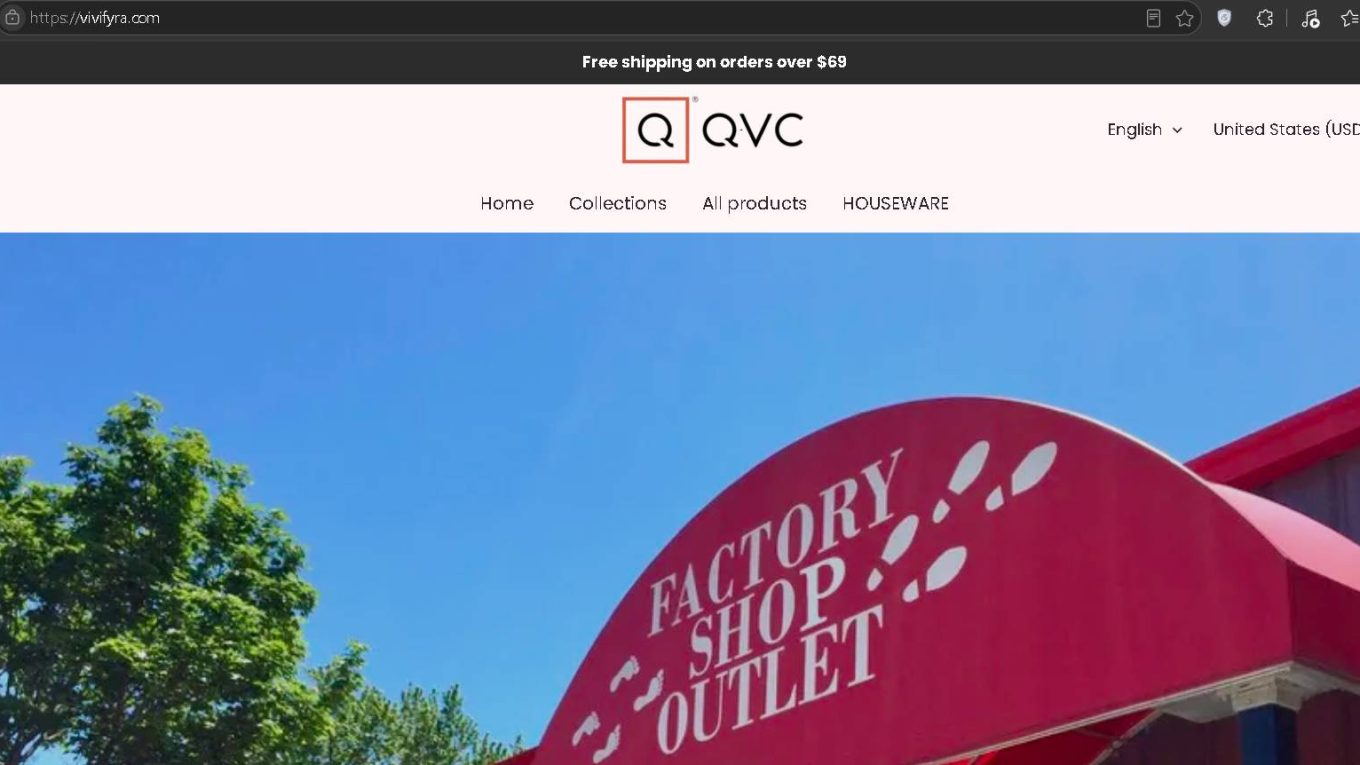
Social media platforms like Facebook, Instagram, and TikTok frequently feature sponsored ads advertising massive warehouse clearance sales. A storefront currently drawing consumer attention is Vivifyra, which displays the official QVC logo alongside “Factory Shop Outlet” banners, promising premium outdoor furniture, housewares, and home decor at fractions of original retail prices.
The offers look compelling: luxury patio sets, modular sectional sofas, and designer home items slashed down to twenty or thirty dollars. But before you enter your payment details, it is critical to verify who is actually behind this website.
Below is an independent investigation of Vivifyra—examining domain mismatches, brand impersonation risks, impossible discount mechanics, and the steps to take if you have already submitted an order.
Technical & Credibility Scorecard
| Assessment Dimension | Finding on Vivifyra | Practical Risk Level |
| Domain vs. Brand Name | URL is vivifyra.com, but page displays the QVC logo | Critical (Direct trademark impersonation) |
| Pricing Realism | $300–$600 patio sets listed for $19–$39 | Critical (Economically impossible clearance claims) |
| Discount Promotions | “Buy 2 Get 2 Free” / “Free shipping over $69” | High (Standard deceptive cart-inflation hook) |
| Corporate Affiliation | Zero legal link to Qurate Retail Group (QVC) | Critical (Unauthorized third-party entity) |
| SSL / Transport Security | Active HTTPS certificate | Baseline (Encrypts data in transit; does not certify legitimacy) |
| Fulfillment Outcome | High risk of non-delivery or bait-and-switch items | Critical (Typical brushing/junk item delivery) |
E-Commerce Protection Checklist
-
1
Break the In-App Browser Funnel
Never check out inside Instagram or TikTok web-views. Copy the link and open a standalone browser to remove referral tracking tokens and inspect the real root domain.
-
2
Run a 60-Second Background Check
Look up the domain age via WHOIS (avoid sites under 6 months old) and reverse-search product imagery on Google Lens to verify whether cheap wholesale duplicates exist.
-
3
Verify Corporate Entity Details
Check the website footer for a registered legal company name, verifiable physical address on Google Maps, and dedicated phone support—not just an anonymous web form.
-
4
Demand Insulated Payment Options
Refuse direct bank deposits, UPI QR codes, crypto, or debit transfers. Use zero-liability credit cards or protected checkout channels like PayPal Goods & Services.
-
1
Stop Waiting for Merchant Email Replies
Do not waste dispute windows negotiating with automated helpdesks or generic tracking updates. Deceptive pop-up storefronts stall purposely to exhaust chargeback timelines.
-
2
Initiate a Bank Chargeback Within 24-48 Hours
Call the phone number printed on the back of your card. Request an immediate dispute categorized under Merchant Fraud, Goods Not Delivered, or Misrepresentation.
-
3
Freeze Billing and Replace Card Credentials
Instruct your bank’s fraud desk to block future merchant authorizations under that descriptor and re-issue a fresh card number to prevent hidden recurring subscription debits.
-
4
Preserve Order & Ad Evidence
Save full-page screenshots of the product page, transaction debit receipts, and tracking communications to upload directly into your card issuer’s dispute portal.
How the Vivifyra Operation Works
Vivifyra does not operate as an authentic liquidation clearinghouse. Instead, it uses a recognizable brand-spoofing funnel designed to exploit brand recognition:
   [Social Media Clearance Ad]
               │
               ▼
   [Vivifyra.com Landing Page] ──► Displays stolen QVC branding & "Factory Outlet" signs
               │
               ▼
   [Unrealistic Deals: $29 Sofas] ──► "Buy 2 Get 2 Free" triggers impulse checkout
               │
               ▼
   [Payment Processing] ──► Captures card numbers and billing addresses
               │
               ▼
   [The Aftermath] ──► Fake postal tracking, total non-delivery,
                       or cheap trinkets sent to confirm delivery
The Sourcing and Display Mirage
- Content Scraping: The product images, product descriptions, and promotional graphics featured on the site are copied from legitimate commercial home goods catalogs and actual QVC television broadcast clips.
- No Real Warehouses: While photos show physical “Factory Shop Outlet” buildings, Vivifyra does not own or operate any physical warehouse network.
- Cart-Inflation Hooks: The website incorporates stacking discount promotions like “Buy 2 Get 2 Free” or thresholds like “Free shipping on orders over $69” to encourage buyers to spend larger sums on single transactions.
Suspicious Link or Courier SMS?
Verify URLs, APKs, or parcel alerts against our threat database before clicking.
5 Major Red Flags on Vivifyra
While the website maintains an active HTTPS connection to pass basic browser checks, multiple operational markers indicate a high financial risk:
1. The Domain Name vs. Brand Identity Mismatch
The primary red flag is the complete disconnect between the web address and the branding.
- The address in the browser bar is Vivifyra.
- The top header prominently displays the trademarked QVC logo alongside category tabs like Home, Collections, All products, and Houseware.
Legitimate retail brands do not run official clearance operations on unrelated, random domains. QVC’s genuine digital operations run exclusively on qvc.com and its verified regional subsidiaries. The name “Vivifyra” appears nowhere in QVC’s corporate directory or licensing portfolio.
2. Absurd, Below-Cost Pricing
On Vivifyra, large outdoor patio conversation sets, heavy wooden kitchen islands, and multi-piece modular sectionals are priced between $19 and $40.
From an e-commerce logistics perspective, domestic or international freight shipping for heavy furniture items routinely costs between $80 and $200 per parcel alone. Offering full patio furniture with international or domestic home delivery for $29 is economically unviable. These prices are designed to trigger rapid, unverified impulse checkouts.
3. Stacking Promotional Pressure
The storefront layers multiple artificial discount tiers:
- Permanent banners advertising
"Free shipping on orders over $69". - Stacking quantity incentives (such as Buy 2 Get 2 Free or Buy 3 Get 3 Free).
These mechanics encourage shoppers who might otherwise hesitate over a $25 purchase to add three or four items to their cart to qualify for bonus units or free shipping thresholds.
4. Recycled Store Templates and Artifacts
Scam syndicates frequently generate dozens of identical e-commerce fronts using automated scripts. When one domain is flagged and blacklisted by security vendors, the database is simply mirrored onto a new domain.
Product page footers and system emails across these networks often contain references to other previously shut-down domains (such as Hearthsglow or DealsOutlet), showing the cloned nature of the template.
5. High Risk of Non-Delivery or “Brushing” Schemes
Shoppers who order from counterfeit brand liquidation portals typically experience one of two outcomes:
- Total Non-Delivery: The customer receives a fabricated tracking code from an obscure logistics aggregator showing normal progress until it marks the item as “delivered” to a different postal code.
- Bait-and-Switch (Brush Items): To generate a legitimate delivery confirmation number from postal carriers like USPS, the merchant ships a lightweight, cheap item—such as an unbranded ring, a pair of counterfeit sunglasses, or a cleaning rag—instead of the furniture ordered. When the buyer complains, support delays until the chargeback window expires.
Action Plan: What to Do if You Placed an Order on Vivifyra
If you submitted payment details or completed a purchase on Vivifyra, take these protective measures immediately:
- Contact Your Bank or Card Issuer Immediately: Call the customer service number on the back of your card. Inform the fraud department that you made a purchase on a website impersonating a major retailer (
QVC) and request a chargeback for fraudulent misrepresentation. - Cancel and Replace the Payment Card: Because untrusted checkout portals can store card numbers, expiration dates, and CVVs on unsecured servers, request that your bank cancel the card and issue a new one with a fresh account number to prevent recurring unauthorized charges.
- Never Settle for Partial Refund Offers: If you contact the website’s support email, fraudulent storefront operators routinely offer a “20% or 30% partial refund” while asking you to wait longer for shipping. This is a delaying tactic intended to push you past your bank’s dispute window. Refuse partial offers and escalate through your card provider.
- Monitor Personal Information: If you created an account and used a password shared with your personal email, banking, or social accounts, change those passwords immediately and enable multi-factor authentication (2FA).
- Report the Scam Portal: File reports with consumer protection entities such as the Federal Trade Commission (FTC at reportfraud.ftc.gov), the FBI’s Internet Crime Complaint Center (ic3.gov), or national cybercrime reporting portals in your region to assist in taking down the domain.
Frequently Asked Questions (FAQs)
Is Vivifyra the official outlet or liquidation store for QVC?
No. Vivifyra has no formal association, business partnership, or licensing arrangement with QVC or its parent firm, Qurate Retail Group. It is an independent, unauthorized domain using stolen brand logos.
Why is the website domain different from the brand shown on the page?
The domain name is Vivifyra, while the site displays QVC branding because it is a clone site. Syndicates register unrelated, disposable domain names to host copied content, evading automated copyright takedowns and trademark enforcement.
Will I actually receive the furniture or houseware ordered from Vivifyra?
It is extremely unlikely. Standard outcomes from fake liquidation websites range from receiving no package at all to receiving an inexpensive, unrelated trinket (such as a cheap ring or small plastic accessory) shipped solely to generate a tracking delivery record.
Can an HTTPS / SSL padlock prove that a store is safe to shop on?
No. An SSL certificate (HTTPS) only encrypts the transmission of data between your browser and the website’s server. It confirms that third parties cannot intercept data in transit, but it does not authenticate the legal legitimacy or business practices of the merchant running the site.
How can I verify real QVC clearance deals safely?
Authentic QVC clearances, outlet offers, and seasonal sales are hosted exclusively on their primary web portal at qvc.com. Always check the browser address bar to ensure the root domain is legitimate before entering payment credentials.
Vivifyra displays classic indicators of a fraudulent clearance scam[cite: 4]. The site uses copied brand imagery, mismatched domain registration, and unrealistic product pricing designed to exploit consumer trust[cite: 4]. To protect your personal finances, avoid interacting with the site and purchase home goods only through authorized, verified retail channels.
Every safe click counts. If this post helped, a coffee gesture fuels more scam‑busting investigations.

For more shady sites exposed, check our Shopping Scam Directory — your quick guide to staying safe online.
Help Us Spread Awareness
Please share this article to spread awareness. Follow us on social media for more scam alerts.