Inside Themooncatbeauty.shop: The Raw Chemistry, Stolen Swatches, and Dark Risks of a Fake Lacquer Outlet
Specialty cosmetic chemistry has real manufacturing costs, which makes the storefront at Themooncatbeauty.shop an immediate impossibility. Raw materials like cosmetic-grade suspension bases, multi-angle refractive optical flakies, and micronized rare-earth magnetic powders carry substantial formulation expenses that simply do not vanish. Yet searchers looking for The mooncat beauty shop, Mooncatbeauty store, Themooncatbeauty, Mooncat nail polish sale shop, Mooncat official store scam, or Themooncat.shop are being funneled straight into a domain masquerading as an authorized clearance hub.
The hook arrives via high-gloss video reels and paid placements across social networks, displaying fluid velvet effects and liquid chrome transitions paired with massive liquidation markdowns. But beneath the hypnotic shimmer lies an unauthorized setup. This investigation pulls apart the technical and chemical reality of this storefront, showing why placing an order exposes you to financial theft, compromised accounts, and hazardous counterfeit formulations.
The Economics of Luxury Polish vs. The Knockoff Syndicate
Indie cosmetics brands like Mooncat occupy a specialized niche within beauty manufacturing. Creating high-performance nail lacquers requires bespoke tooling: custom rectangular glass molds, weighted caps with tactile brand crests, precision curved flat brushes, and stringent 10-free non-toxic formulas free of harmful carcinogens like formaldehyde, toluene, and dibutyl phthalate. Authentic bottles command $14 to $16+ each because of small-batch quality control and complex physical pigments that shift under magnetic fields.
Counterfeit syndicates target this premium price floor through systematic brand theft:
- Scraping High-Value Media: Fraudulent operators capture macro swatch photography, dynamic video swatches, and colorway portfolios directly from independent content creators and official channels.
- Disposable Namespace Deployment: Scammers avoid accountable infrastructure by securing generic top-level domains like
.shopthrough registrar privacy proxies. By affixing decorative modifiers like “the” and “beauty” to the primary trademark, they confuse casual mobile shoppers who do not inspect browser address bars. - Saturating Algorithmic Ad Funnels: Using low-budget digital ad campaigns, the network targets indie nail enthusiasts, gothic fashion demographics, and gift shoppers. Because their cost of customer acquisition is funded by fraudulent proceeds, they can afford to churn through banned ad accounts continuously.
- Unregulated Chemical Alternatives: Legitimate artisanal formulas are replaced with cheap, mass-manufactured chemical solvents sourced from unlicensed overseas industrial chemical yards, cutting every safety protocol to simulate the original aesthetic.
📧 Need Legal Assistance?
Contact the author for legal consultations, case evaluations, and professional inquiries.
Dissecting the Storefront: Pricing, Cloned Assets, and Checkout Gaps
The Visual Illusion
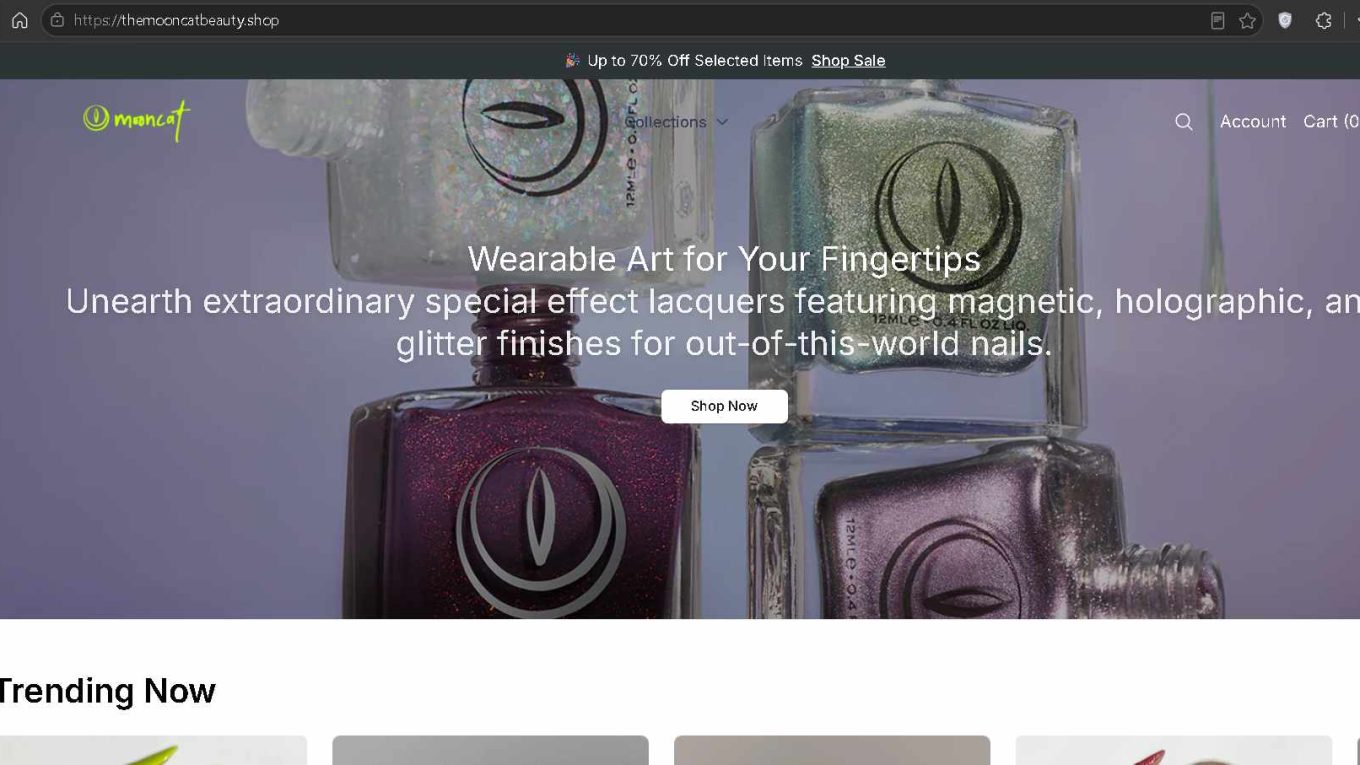
Entering Themooncatbeauty.shop presents a mirrored visual environment modeled on authentic indie-glam branding. The design adopts an identical midnight-aesthetic backdrop, using the brand’s lowercase insignia and typography. Across the primary display, visitors are greeted with official copy: “Wearable Art for Your Fingertips – Unearth extraordinary special effect lacquers featuring magnetic, holographic, and glitter finishes for out-of-this-world nails.”
From trending multichromes to specialty limited-edition collections, the entire product catalog appears ready to purchase, complete with high-resolution studio stills and shade descriptions.
The Margin Reality
The core deception centers on the top promotional banner: “Up to 70% Off Selected Items – Shop Sale.”
Under this banner, complex artisan lacquers that sell out at full price on authentic platforms are marked down to $3.50 to $5.00 per bottle, with full boxed vault sets listed under $30. When factoring in the baseline costs of raw solvent, colored mica, magnetic iron oxides, custom glass, international air freight, and warehouse handling, these prices are mathematically unviable. The margins do not represent a liquidation sale; they represent bait structured to stay just low enough to prevent immediate bank fraud alerts while maximizing total basket volume.
The Modus Operandi
The operational setup of Themooncatbeauty.shop reveals a clear data-capture architecture:
- Detached Payment Gateways: Proceeding through the shopping cart bypasses established, highly regulated checkout tools (such as Shop Pay, PayPal Verified Merchant, or direct Apple Pay). Instead, transactions are forced through obscure third-party processors or raw payment collection forms that log unencrypted cardholder data.
- Aggressive Data Ingestion: The payment screen demands unmasked 16-digit primary account numbers, card expiration months, CVV security codes, complete billing names, primary telephone numbers, and physical residential addresses.
- No-Shipment Cycles & Counterfeit Distribution: Post-transaction events follow two paths: either complete electronic silence where the buyer receives nothing, or the dispatch of an unverified mini-parcel carrying a fake customs tracking slip from an overseas transshipment depot. In the latter case, the contents are not genuine non-toxic lacquers, but generic, unbranded chemical vials meant to counter merchant chargeback claims.
5-Point Rapid Forensic Security Audit
To see past the cosmetic facade of Themooncatbeauty.shop, run through this five-point infrastructure checklist:
- Top-Level Domain (TLD) Discrepancy: The verified, real home of the brand is hosted exclusively on
mooncat.com. The destinationthemooncatbeauty.shopuses an inexpensive, bulk-registered.shopextension favored by disposable retail operations. - Missing Corporate Attribution: The site provides zero operational registrations, tax identifiers, corporate entity names, or physical corporate facilities. Its “About Us” and terms pages use generic boilerplate text with missing operational disclosures.
- WHOIS Registration Freshness: Domain query registries show this URL was initialized recently through anonymity masks, leaving no verified administrative identity behind. Genuine international cosmetic houses do not establish secondary consumer shops on anonymous, newly registered URLs.
- Dead Social Navigation: Clicking the footer icons for Instagram, TikTok, or YouTube either leads nowhere or refreshes the active webpage. The operators cannot link to real community channels where scammed consumers can leave public feedback.
- Toxic Chemical Exposure Risks: Unlike certified 10-free formulas, gray-market and counterfeit cosmetic batches routinely test positive for banned industrial toxins, including elevated lead traces, benzene, toluene, and irritants that cause nail plate damage, severe chemical burns, or systemic allergic contact dermatitis.
Financial Lockdown: What to Do If You Paid
If you submitted banking information or personal data to Themooncatbeauty.shop, treat it as an active breach. Execute this recovery sequence immediately:
1. File a Precision Bank Dispute
Bypass email communication with the storefront entirely. Dial the fraud department number on the reverse of your payment card:
- Terminate the Account: Demand an immediate card cancellation and reissue. Having your raw CVV and expiration date logged on an insecure server exposes your account to recurring unauthorized debits months later.
- Invoke FCBA Zero-Liability Codes: Under the Fair Credit Billing Act (or your local consumer credit protections), you are shielded from fraudulent charges.
- If no physical tracking updates or items appear: Request a chargeback under Dispute Code 13.1 (“Merchandise Not Received”).
- If you receive an unbranded bottle containing foul-smelling, unverified chemicals: File under Dispute Code 13.3 (“Significantly Not as Described / Counterfeit Goods”). Provide your bank with screenshots showing the authentic brand claims versus the unregulated counterfeit item delivered.
2. Safeguard Your Personal Identity Profile
Entering your physical address, phone number, and name alongside financial credentials leaves an exploitable identity trail.
- Initiate Credit Bureau Alerts: Place a free, one-year initial fraud alert on your profiles with Equifax, Experian, and TransUnion. This prevents unauthorized loan originations or card applications by requiring lenders to verify your identity via phone before extending credit.
- Scan for Credential Exposure: Run an identity monitoring check to ensure the email and password combinations entered on the scam site are not cross-referenced against your other active web accounts.
- Watch for Secondary Phishing (Smishing): Scammers frequently target known victims with follow-up notifications. Treat any text message or email claiming your cosmetic package is held at a postal terminal pending an extra “$1.40 customs handling fee” as an outright attempt to steal your replacement card.
3. Deploy Virtual Card Controls for Future Purchases
When checking out on unfamiliar indie shopping platforms, protect your primary bank account with virtual payment tools:
- Use masking tools such as Privacy.com or virtual payment cards issued through digital banking applications (like Revolut or Capital One Eno).
- Lock the card strictly to a single merchant and cap the transaction limit to the exact cart amount. If an unauthorized merchant attempts secondary billings or subscription transfers, the charge declines instantly.
Definitive Final Verdict
Themooncatbeauty.shop is a confirmed imposter site built to execute credit card theft and traffic uncertified cosmetic knockoffs. It has no relationship with the real Mooncat brand or its manufacturing partners.
The 70% discount claims are structurally impossible, the product swatches are stolen, and purchasing exposes you to financial compromise as well as hazardous chemical formulations. Keep your wallet closed. Buy authentic, safe, and certified nail lacquers exclusively through mooncat.com.
Every safe click counts. If this post helped, a coffee gesture fuels more scam‑busting investigations.

Frequently Asked Questions (FAQ)
Is Themooncatbeauty.shop Scam?
Yes, Themooncatbeauty.shop is a scam. It operates as an unauthorized clone platform impersonating the official Mooncat indie beauty brand. The site copies trademarked imagery, shade descriptions, and brand logos to harvest payment data and personal information through fake clearance sales.
Is Themooncatbeauty.shop Legit?
No, Themooncatbeauty.shop is not legit. It is an anonymous website built on a disposable .shop top-level domain without business licensing, verified physical headquarters, or brand authorization. Legitimate Mooncat lacquers are sold solely via their primary web property.
Fraud operations purchase sponsored placements on Meta and TikTok because short-form social feeds encourage rapid, visual purchases. By showing mesmerizing application clips to targeted beauty audiences, scammers draw shoppers straight into cloned checkout funnels before they take the time to inspect the website address.
Can I get my money back if I paid Themooncatbeauty.shop?
Yes, as long as you used a credit card or a debit card with zero-liability consumer purchase protections. Contact your bank’s fraud line immediately, report that you transacted on a fraudulent brand-impersonation website, close the compromised card, and submit a formal chargeback dispute for non-delivery or fraudulent merchandise.
What are the identity theft risks of buying from this site?
Typing your information into this site compromises your legal name, physical delivery location, direct phone line, and raw payment card details. Fraud networks regularly compile these compromised records into credential lists that are shared or sold on dark web marketplaces, triggering secondary spam, smishing, and targeted phishing attacks.
How can I check the true domain age of Themooncatbeauty.shop?
You can query any web address using public WHOIS directories (such as Whois.com or the ICANN registration lookup). Deceptive storefronts like this one almost always show creation dates that are only a few days or weeks old, short single-year registration cycles, and ownership details obscured behind third-party proxy shields.
Why do clone scam websites disappear after a few weeks?
These platforms operate on short, disposable lifecycles. Once customer fraud reports accumulate, banks initiate chargebacks, and domain registrars receive abuse notices, the payment processors cut off the merchant account and web hosts suspend the servers. Rather than fight the flags, scammers abandon the burned domain and immediately deploy a newly registered URL using the same pre-built retail template.
For more shady sites exposed, check our Shopping Scam Directory — your quick guide to staying safe online.
Help Us Spread Awareness
Please share this article to spread awareness. Follow us on social media for more scam alerts.