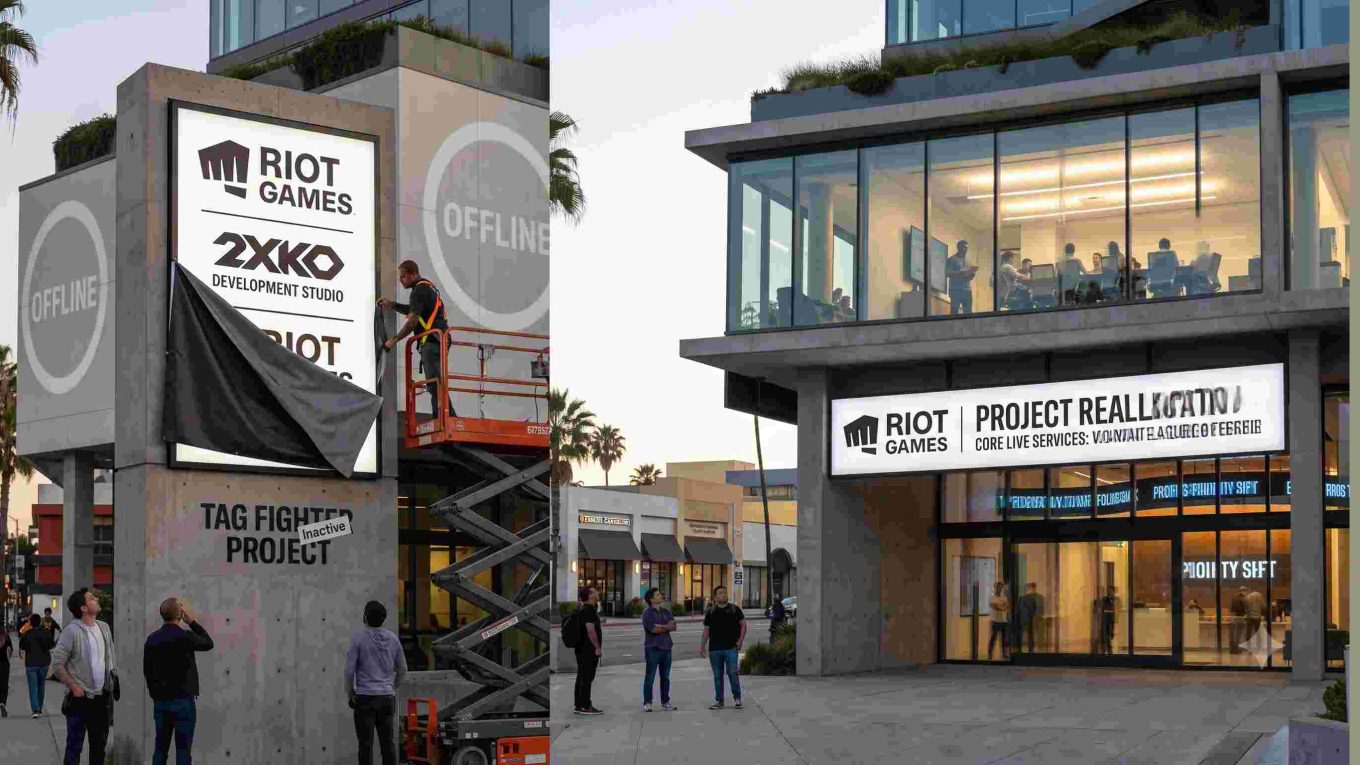
Riot Hits the Brakes on 2XKO: Active Development to Conclude in December as Studio Pivots Back to Core Pillars
LOS ANGELES — In a sudden shift that has sent shockwaves through the Fighting Game Community (FGC), Riot Games has announced it will halt active development on its highly anticipated 2v2 tag fighter, 2XKO, this coming December. While servers will remain live and scheduled content will be unlocked for the player base, the studio is reallocating its core development firepower back to its foundational flagship titles: League of Legends and VALORANT.
The Final Round for 2XKO
Originally unveiled as Project L, 2XKO was designed to bridge the gap between Riot’s massive Runeterra universe and the high-execution, frame-tight world of competitive fighting games. Built from the ground up as an accessible yet high-skill-ceiling tag fighter featuring champions like Ahri, Darius, Ekko, and Yasuo, the project generated massive hype across playtests and major fighting game tournament showcases.
However, Riot has decided to sunset active post-launch support before the title could establish a long-term esports circuit.
According to Riot’s official update:
- Server Status: Online match servers and netcode infrastructure will remain active indefinitely, ensuring players can still queue for casual and ranked sets.
- Content Unlocks: Remaining in-development skins, cosmetics, and unreleased roster additions will be unlocked directly for players over the coming months rather than gated behind seasonal battle passes or microtransactions.
- Feature Pipeline: Future balance patches, seasonal character roadmaps, and competitive circuit integrations have been shelved as the development cycle winds down.
Re-Allocating Dev Resources to the Big Two
The move reflects a calculated pivot in Riot’s broader live-service strategy. Rather than continuing to sink resources into carving out market share in a notoriously niche, high-churn genre, Riot is doubling down on the games that drive the vast majority of its daily active users (DAUs) and esports viewership.
Engineers, designers, and production leads previously dedicated to 2XKO are being folded back into the active pipelines of VALORANT and League of Legends. Both titles have seen aggressive patch cycles, expanding competitive ecosystems with the VCT and global LoL leagues, and an increasing demand for sustained content drops, engine optimizations, and anti-cheat updates.
FGC Reaction and the Live-Service Tag Dilemma
For the FGC, the announcement is a bitter pill to swallow. While 2XKO delivered crisp rollback netcode, fluid assist mechanics, and a fresh take on dual-player co-op tagging, breaking into the modern fighting game pantheon has proven to be an uphill battle against established powerhouses like Street Fighter 6, Tekken 8, and Guilty Gear -Strive-.
Competitive fighting games rely heavily on consistent community buy-in, local tournament scenes, and constant meta-tuning. Without a dedicated balance team tweaking frame data, hitbox interactions, and assist synergies, high-level competitors will likely treat 2XKO as a finished, static sandbox rather than a long-term tournament main-stage title.
What’s Next for Players?
Players jumping into 2XKO over the next few months will still be able to grind ranked queues, lab out complex assist combos in training mode, and enjoy the remaining content drops before the dev team takes its final bow in December. For Riot, the pivot marks a defensive consolidation: securing the lanes in its biggest arenas rather than risking an extended war of attrition in the tag-fighter arena.