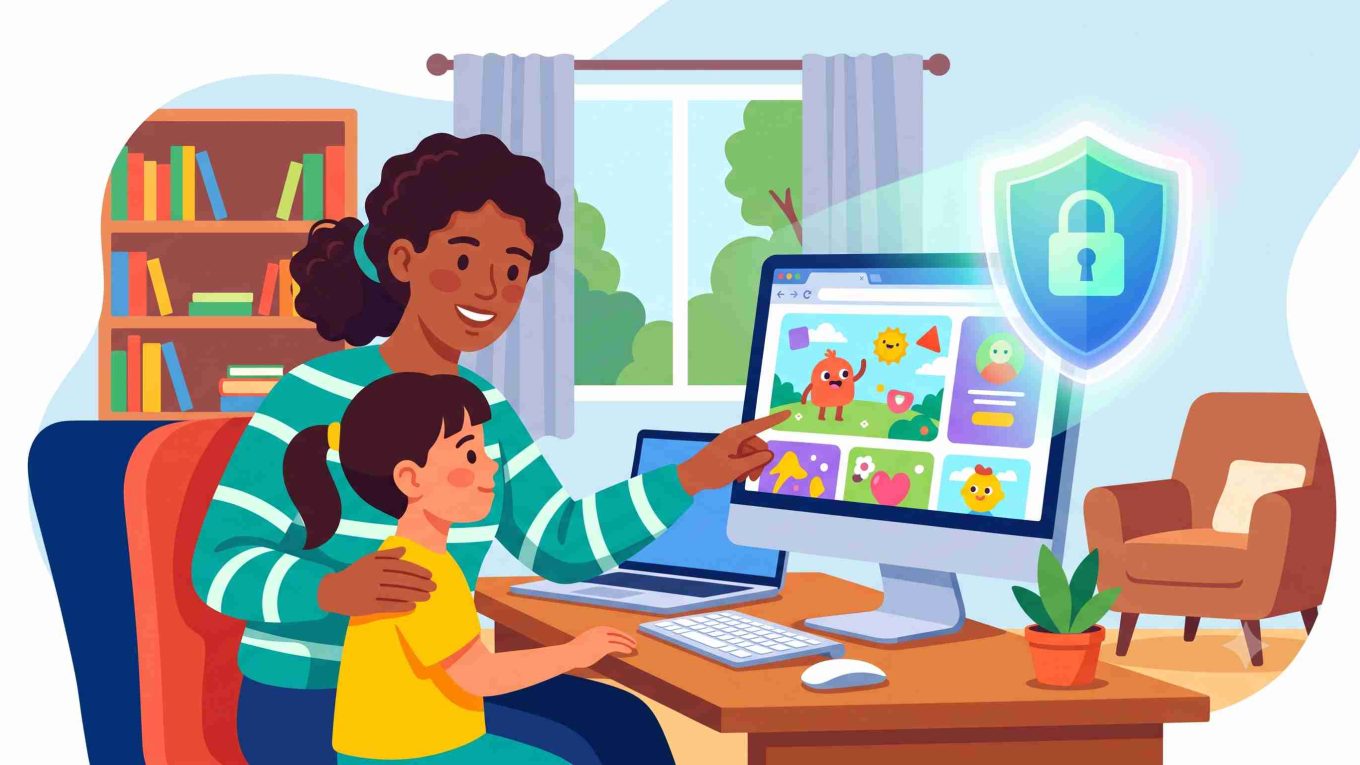
Is Poki Safe for Kids? A Parent’s Guide to Browser Games
For parents monitoring their family internet security, browser-based gaming portals often raise immediate red flags. Poki has become one of the most popular gaming platforms in the world, heavily trafficked by students and children because it requires no app installations or downloads.
If your child is spending their screen time on Poki, the platform is technically legitimate and secure from a software standpoint. However, because the main site relies on an ad-supported model and lacks robust age-gating, safety is highly conditional on active parental supervision. According to Poki’s terms of service, their games are intended for users 16 and older.
This consumer protection guide breaks down the data privacy policies, chat functionalities, and advertising mechanisms of the platform to help you make informed decisions about your child’s digital footprint.
Our First-Hand Safety Test
To evaluate the platform’s safety protocols, we spent time testing both the core Poki.com site and the Poki Kids subdomain. On the main site, we noted that while the games loaded securely in the browser without triggering antivirus software, the frequency of third-party advertisements requires active parental monitoring to prevent accidental external clicks. Conversely, our testing of Poki Kids confirmed a completely enclosed, ad-free environment.
Device Security: Can Poki Give You a Virus?
The most immediate concern for parents is whether clicking on a free game will infect the family computer. On this front, Poki is exceptionally safe.
Because the platform relies entirely on HTML5 and WebGL, all gameplay executes directly within the web browser’s local cache. None of the games ever download or install .exe or .apk files onto your hard drive. This browser sandboxing effectively eliminates the risk of downloading malware or ransomware directly from the games themselves.
Data Privacy: COPPA, GDPR, and Child Identity Protection
Understanding how a platform handles user data is critical for child identity protection. Poki operates without requiring user registration, meaning children can play without submitting an email address, name, or phone number.
However, the site does automatically collect technical telemetry and browsing activity—such as IP addresses and session IDs—to optimize gameplay and serve targeted advertisements.
- GDPR vs. COPPA Compliance: Poki is based in the Netherlands and largely abides by European GDPR digital rights. However, on its core site (poki.com), it does not explicitly enforce the US Children’s Online Privacy Protection Act (COPPA) rules for users under 13, and there is no mandatory age verification upon entry.
- Account Safety: If you or your child choose to create an optional Poki account to save progress across devices, the company states it uses this data strictly for saving in-game collectibles and answering support tickets, rather than selling profiles to third parties.
The Advertising Model and Content Risks
Poki is entirely free to play because it generates revenue through advertising. While the games themselves might be child-friendly, the ad-supported environment introduces specific risks.
- Age-Inappropriate Ads: The advertisements on the core Poki site cannot be turned off, meaning you cannot control which ads show up while your child is playing. Children might be exposed to promotional videos that do not match the age rating of the game they are currently playing.
- Content Restrictions: The platform features thousands of games, and not all of them are kid-friendly. There are violent games involving guns and gore, as well as horror and NSFW games.
- External Redirects: When a player clicks on a game, they are redirected to an internet browser, giving kids the ability to browse the web and potentially access dangerous messaging sites. Teaching children not to click on deceptive banners or unknown links is a mandatory component of safe browsing.
Multiplayer Chat and Content Moderation
Unmoderated chat rooms are a primary vector for predatory behavior in online gaming. Fortunately, Poki takes a highly restrictive approach to communication.
Most games on the platform do not feature chat functionalities at all. For the few multiplayer titles that do allow communication, Poki utilizes a “Safe Chat” system. This system restricts players to a set of predefined messages, making it impossible to type custom text or share personal information with strangers. However, parents should still remain vigilant, as some reviewers note a high risk of predation due to chat features offered in certain specific games where kids can talk to strangers.
The Solution for Younger Players: Poki Kids
If you have children or pre-teens, the safest alternative is to bypass the main site entirely and use Poki Kids (kids.poki.com).
Poki Kids is a dedicated, heavily curated subdomain built specifically for safe and educational play. It eliminates the primary risks associated with the core platform:
- Zero Advertisements: The interface is completely ad-free, ensuring a clean browsing experience without the risk of external redirects or mature ad content.
- No Chat Features: Poki Kids does not have a chat feature, protecting children from interacting with strangers.
- Strict Curation: Games are vetted for developmental appropriateness, featuring sections for math games, word games, and problem-solving activities.
Actionable Steps for Family Internet Security
To lock down the experience on the main Poki site and ensure your child’s screen time remains safe, implement these technical safeguards:
- Deploy Parental Control Software: Utilize device-level restrictions or apps like Kiddoware to block the Poki website entirely if needed, or to monitor screen time and enforce web access limits.
- Utilize Ad-Blockers: Installing a reputable browser ad-blocker can significantly reduce exposure to third-party tracking cookies and deceptive banner ads.
- Co-Play and Verify: Before granting full access, open the specific game your child wants to play. Parents should review each game individually since age suitability varies greatly.
For a broader look at how this platform operates, including a technical breakdown of its architecture and our top game recommendations, return to our master guide: [The Ultimate Guide to Poki Games: What It Is, Is It Safe, and the Best Games to Play].
Frequently Asked Questions
Are Poki games safe for kids?
Technically, yes. Poki is a legitimate website and does not contain malicious downloads or obvious phishing exploits. However, because the main site features unmoderated ads, parental supervision is highly recommended.
Does Poki have inappropriate games?
While Poki exercises simple moderation, it does not guarantee every game is entirely child-friendly. Some titles may include minor cartoon violence, horror themes, or mature language.
Is there a safer version of Poki for younger children?
Yes. Kids.Poki.com is a dedicated, ad-free subdomain featuring stricter curation and age-appropriate content without chat features.