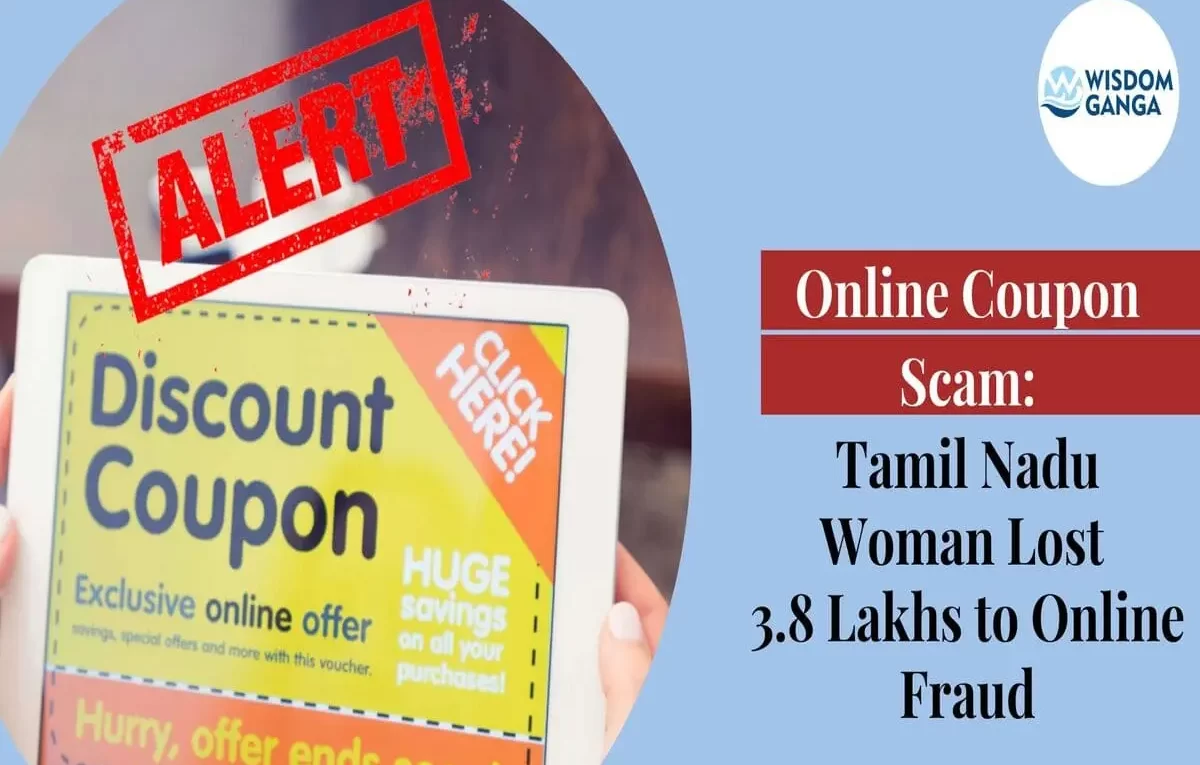
Online Coupon Scam: Tamil Nadu Woman Lost 3.8 Lakhs to Online Fraud
Tamil Nadu: A woman in Thittagudi, Cuddalore district, was duped out of 3.79 lakh by two online coupon scammers who sent her a prize coupon with the name of Meesho, a social commerce platform, claiming she had won a prize of 8.40 lakh for an online purchase.
Modus Operandi of the Online Coupon Scam
The Cuddalore Cyber Crime Police claims that after the online coupon scam victim made an online purchase, she was given an 8.40 lakh rupee prize coupon.
The woman contacted the two WhatsApp numbers listed on the coupon, and two online coupon scammers—Sunil Kumar and Prem Kumar—who claimed to be them—confirmed that she had won the prize.
The online fraud victim was then asked to pay taxes, GST, processing fees, and other miscellaneous charges on different occasions, amounting to ₹3.79 lakhs to avail of the prize.
She kept paying the money till November 2022. However, when the fraudsters asked for additional money to release the prize amount, she realised that she had been cheated.
Following a complaint lodged by the woman, the Cyber Crime Police have booked a case under section 420 of the Indian Penal Code read with 66 D of the Information Technology Act, 2008.
Online fraud awareness campaigns are being carried out by the police, according to Cyber Crime Police Inspector P. Kavitha.
Unfortunately, individuals were becoming victims of online coupon scams and other online scams, losing thousands of rupees. She said, “We’ve started an investigation.
The online coupon scam is one of the new age scams and a prime example of Phishing Attacks. You can read about Phishing Attacks on our website and share it with your friends and family. Here are a few tips to Avoid Phishing Attacks
Tips to Protect Against a Phishing Attack
- Open e-mails from unknown senders with caution.
- Never click on a link inside an e-mail unless you know exactly where it will take you.
- To add another layer of security, if you receive an e-mail from an unknown source, navigate to the provided link manually by entering the legitimate website address into your browser.
- Look for a website’s digital certificate.
- If you are asked to provide sensitive information, make sure the URL begins with “HTTPS” rather than “HTTP.” The “S” represents “secure.” Although HTTPS is not a guarantee that a site is legitimate, most legitimate sites use it because it is more secure. HTTP sites, even those that are legitimate, are vulnerable to hackers.
- If you suspect an e-mail is fraudulent, enter a name or some text from the message into a search engine to see if any known phishing attacks using the same methods exist.
Wisdom Ganga is a Blogging Site that Aims to Make People Aware of Online Scam and other Digital Knowledge.

Scam Topics are very sensitive issues that have taken the shape of Crime. The majority of people are not aware of such things.

Please help us to make people aware of Scam and Cyber Crime by sharing this knowledge and article with others.
Also Help Us by following us on Instgram, Facebook and Twitter.

Our team at Wisdomganga is constantly working to recognize all the possible scams and is focused on making everyone aware of them. If you find this article useful then you can now order a cup of coffee for our team as a token of appreciation.