Nestmiro Review: Is This Cozy Home Decor Boutique Legit or a Dropshipping Trap?
The modern home decor market has exploded on digital channels, driven by the enduring popularity of rustic farmhouses, “cottagecore” aesthetics, and warm, minimalist living spaces. Homeowners and apartment dwellers alike frequently browse online looking for distinctive centerpieces—such as rustic coffee tables, hand-thrown ceramic vases, and bespoke lighting fixtures—to create a comfortable, magazine-worthy sanctuary.
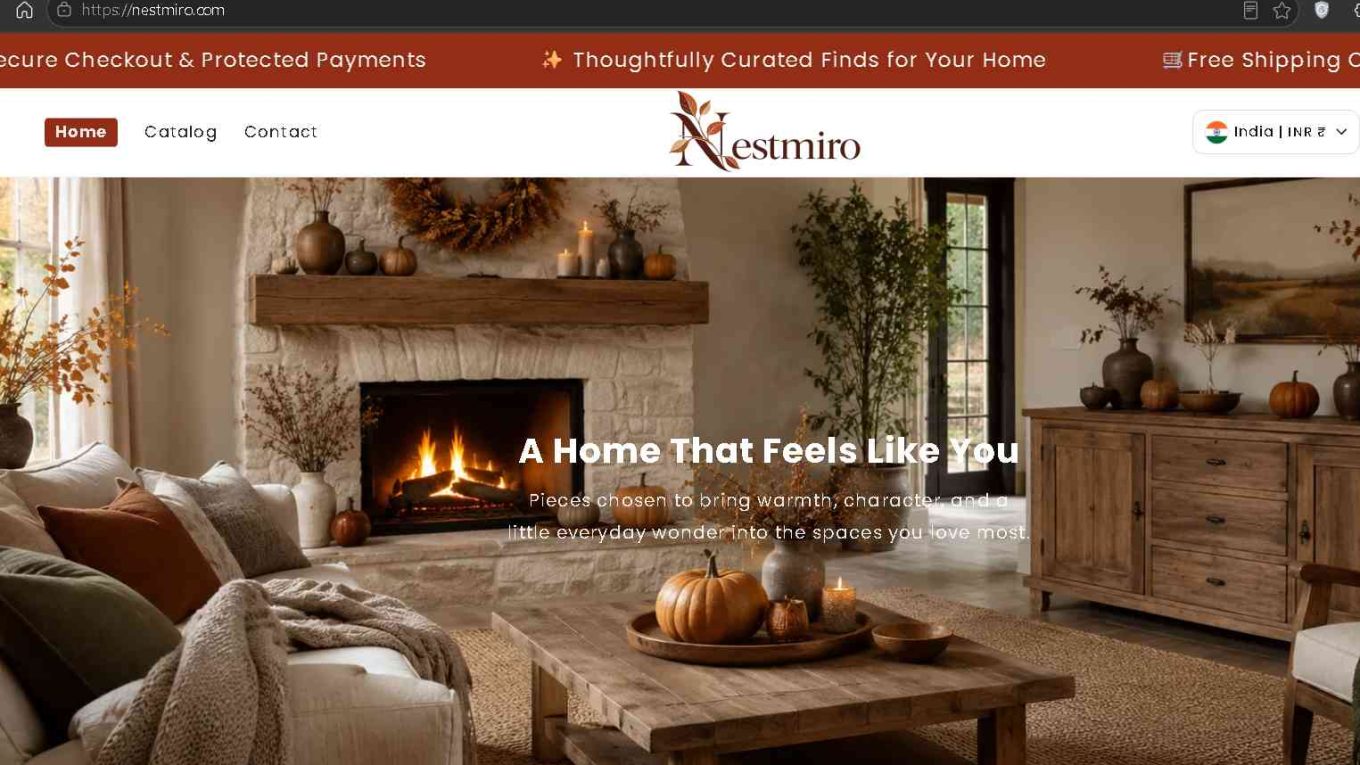
However, the surge in consumer demand for cozy home accents has created an opening for low-effort, high-margin e-commerce operations. A storefront drawing attention across social media feeds and search inquiries is Nestmiro (operating simply as Nestmiro). Featuring imagery of rustic stone fireplaces, plush ivory sofas, and curated wooden furnishings under the slogan “A Home That Feels Like You,” the site attempts to position itself as a boutique interior haven.
Behind the styled photography and artisanal copywriting, however, lies an operation exhibiting the telltale signs of an unvetted dropshipping intermediary. This comprehensive review examines the mechanics of Nestmiro, dissects its operational red flags, and outlines the practical risks of purchasing home furnishings through unverified storefronts.
What Is Nestmiro Doing?
Nestmiro operates as an unverified dropshipping storefront built on standard e-commerce software. Rather than functioning as a genuine design studio, artisanal workshop, or stocking retailer with its own warehouse logistics, the platform serves as an automated digital sales funnel.
The website operators populate the storefront by sourcing low-cost, mass-produced home accessories, novelty lamps, and decor accents from third-party wholesale manufacturing directories located overseas (principally across mainland China). To make these commodity goods appealing to Western consumers willing to pay boutique prices, the store wraps them in high-end design aesthetics.
When an unsuspecting buyer places an order on Nestmiro, the store’s backend routes the order details directly to overseas factory suppliers. The supplier then packages the item in low-grade international postal wrapping and dispatches it via slow bulk freight consolidators. The operators never handle, inspect, or quality-test the physical goods they sell.
What Nestmiro Selling?
The catalog on Nestmiro focuses on broad home decor, ambient lighting, and decorative living room accents designed to evoke warmth and rustic charm:
- Decorative Tabletop Accents: Faux ceramic vases, decorative ceramic pumpkins, rustic wooden trays, and assorted mantelpiece trinkets designed for seasonal styling.
- Ambient Lighting & Lamps: Novelty mood lights, minimalist LED desk lamps, and faux-vintage lighting fixtures designed to mimic designer architectural accents.
- Textiles & Soft Furnishings: Throw pillow covers, decorative knitted blankets, and accent rugs marketed under neutral, earthy palettes.
- Wall Decor & Art Prints: Framed prints, bohemian wall hangings, and decorative mirrors designed to complement modern rustic interiors.
To capture impulse buys, the site displays top announcement banners advertising “Secure Checkout & Protected Payments” alongside promotional hooks like “Thoughtfully Curated Finds for Your Home” and “Free Shipping” thresholds.
Major Red Flags Identified on Nestmiro
A forensic analysis of the storefront’s layout, visual assets, and operational transparency reveals several critical vulnerabilities:
1. Scraped Interior Design Photography
The most striking visual element on Nestmiro is its hero image: a luxurious living room featuring an exposed stone fireplace, natural timber mantel, cozy textured seating, and rustic autumn centerpieces. This photograph is not an original staging of Nestmiro’s proprietary inventory. Instead, it is scraped directly from professional interior design portfolios and high-end furniture staging lookbooks. Using stolen lifestyle imagery creates an intentional illusion of luxury, leading shoppers to assume they are purchasing the heirloom-quality pieces depicted in the scene.
2. Stripped-Down, Disposable Website Architecture
Legitimate furniture and home decor brands maintain detailed website navigation structures that include category drill-downs, room guides, dimension specifications, material care instructions, and customer design galleries. In contrast, Nestmiro uses a minimal navigation bar featuring only Home, Catalog, and Contact. This bare-bones framework is typical of low-investment, churn-and-burn Shopify stores that are engineered to launch quickly, run ad traffic until payment accounts get frozen, and shut down without substantial technical overhead.
3. Missing Corporate Governance and Physical Footprint
Trustworthy home furnishing retailers are backed by registered corporate entities, physical office headquarters, and verifiable domestic return depots where bulky furniture can be received. Nestmiro provides no registered company name, no corporate filing or registration number, and no physical showroom address. Inquiries are funneled through generic web forms or untracked email addresses, leaving consumers with zero legal recourse or real-time telephone assistance if an order goes missing.
4. Severe Fragility and Shipping Damage Hazards
Home decor items—particularly ceramics, glassware, lamps, and framed mirrors—require specialized protective packaging, reinforced corners, and shock-absorbent cushioning. Overseas dropshipping suppliers rarely invest in proper crate packaging for economy postal routes. Consequently, home decor ordered from unvetted dropshipping sites frequently arrives cracked, shattered, dented, or warped after weeks in international transit.
5. The Hostile International Return Trap
Like many overseas dropshipping operations, Nestmiro relies on restrictive return terms to neutralize refund requests. While the site may advertise a “hassle-free return policy,” the actual instructions often demand that items be shipped back to an overseas fulfillment warehouse in mainland China at the customer’s expense via tracked international postage. Because international shipping fees for bulky or heavy decor often exceed the original purchase price, consumers find themselves trapped with defective goods while being offered meager partial refunds (such as 10% to 15%) to simply keep the item.
What to Do If You Placed an Order on Nestmiro
If you have entered your financial information or submitted an order on Nestmiro, take these protective steps immediately:
- Document the Listing Details: Save full screenshots of the product pages you purchased, including advertised material specifications, dimensions, shipping estimates, and your order confirmation receipt.
- Inspect Delivered Items Thoroughly: If a package arrives, record an unboxing video. Carefully inspect the item against the website photos, checking for cheap plastic substitutions, broken ceramics, missing electrical certifications, or inferior craftsmanship.
- Reject Unreasonable Partial Refund Offers: If the product arrives broken or fails to match the website description, contact the merchant via email. If they attempt to stall by offering a negligible store credit or asking you to pay international return shipping, decline their offer in writing.
- Initiate a Chargeback Dispute: Contact your bank or credit card company’s fraud department. Explain that the merchant engaged in deceptive trade practices, delivered misrepresented or damaged goods (Significantly Not As Described), and refused to provide a valid domestic return resolution.
- Monitor Your Payment Accounts: Watch your bank statements over subsequent billing cycles to ensure no unauthorized secondary charges or recurring subscription fees appear.
Frequently Asked Questions (FAQ)
Is Nestmiro a legitimate home decor brand or an unvetted dropshipping store?
Nestmiro is not a legitimate, independent home decor design studio or established furniture manufacturer. It operates as an unverified dropshipping storefront that resells mass-produced, commodity household goods sourced from third-party wholesale suppliers in Asia. The site lacks verifiable corporate filings, authorized domestic warehouse facilities, or proprietary design patents, relying instead on scraped professional interior photography to project an upscale boutique identity.
What are the main risks of buying home furnishings and decor from Nestmiro?
The primary risks involve significant product misrepresentation, shipping damage, and financial loss. Because items are fulfilled directly by third-party overseas suppliers using minimal protective packaging, fragile items like lamps, ceramics, and glassware frequently arrive broken or scratched. Additionally, the materials delivered often consist of cheap synthetics, lightweight plastics, or thin veneers rather than the solid hardwoods, linen, or natural stone implied by the curated lifestyle imagery.
Why does Nestmiro feature a luxury living room photo on its homepage?
The high-end autumn living room image featuring an exposed stone fireplace and plush sectional sofa is scraped marketing photography taken from professional interior lookbooks. Low-tier dropshipping operators routinely lift luxury architectural and design photos to mask the generic nature of their catalog. By creating an impression of warmth, comfort, and architectural elegance, the operators entice shoppers into assuming the website manufactures premium home goods.
How do returns and refunds work on Nestmiro?
Returning merchandise to stores like Nestmiro is typically structured to discourage customers from recovering their money. When a buyer requests a return due to poor quality or damage, customer support often reveals that items must be shipped back to an overseas depot in mainland China at the customer’s expense. Because tracked international shipping for bulky decor packages can easily cost $40 to $70, returning the package is often economically irrational, leaving the customer out of pocket.
Can I get my money back if my order from Nestmiro arrives damaged or never shows up?
Yes, but you will likely need to resolve the matter through your payment provider rather than relying on the website’s support channels. If your parcel arrives broken, fails to match the advertised listing, or is never delivered, gather photographic evidence and your order receipts. Submit a formal dispute or chargeback claim with your credit card issuer or PayPal under their buyer protection policies, citing non-delivery or “Significantly Not As Described” merchandise.
For more shady sites exposed, check our Shopping Scam Directory — your quick guide to staying safe online.
Every safe click counts. If this post helped, a coffee gesture fuels more scam‑busting investigations.

Call to Action
Please share this article to spread awareness. Follow us on Facebook, Twitter, and Instagram for more scam alerts. If you doubt the legitimacy of any website or investment plan, DM us on social media — we’ll help you verify.