Mithi River Scam ED Probe: PMLA Case, Asset Attachment Risks & The Sandesara Precedent
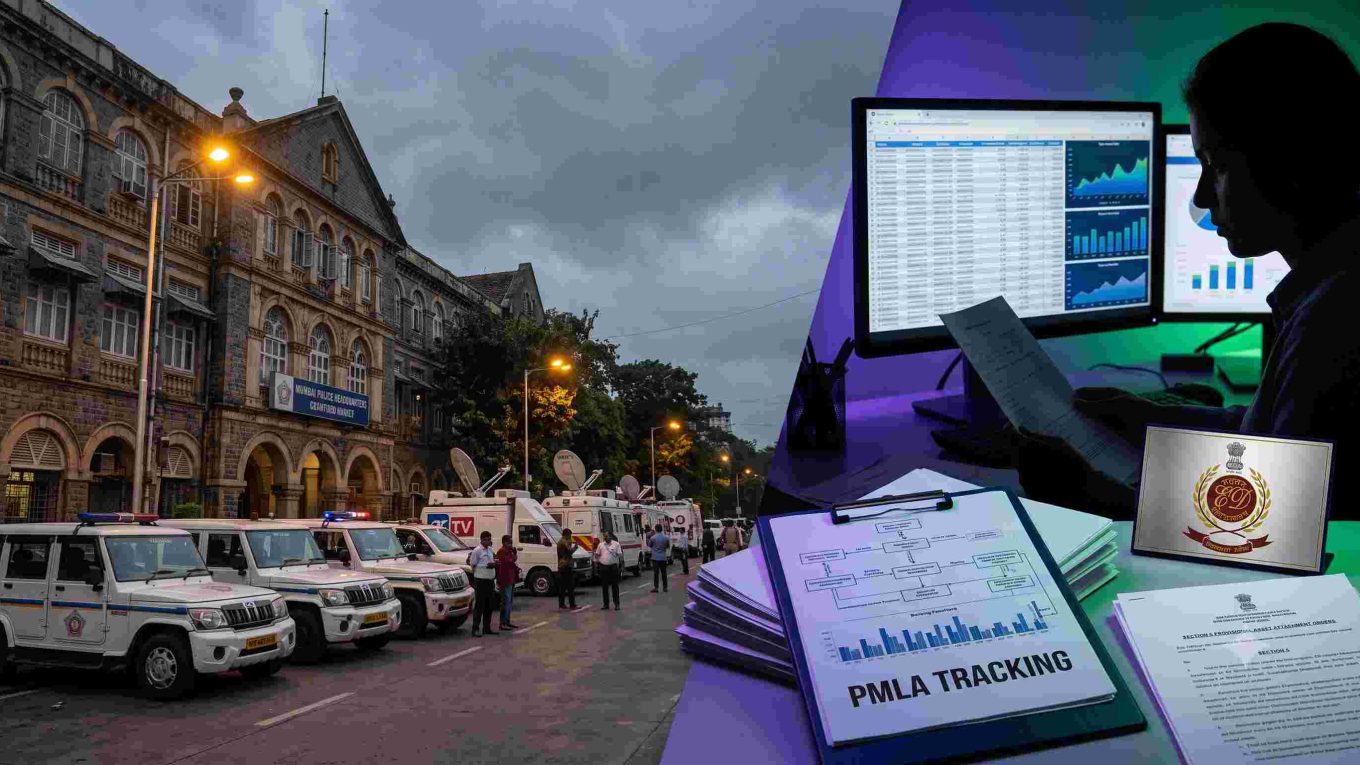
The Mithi River scam ED probe marks the federal transition of the ₹65.54-crore municipal desilting inquiry into anti-money laundering enforcement under the Prevention of Money Laundering Act (PMLA). Following the Mumbai Police EOW’s predicate FIRs, the Enforcement Directorate (ED) has registered an ECIR to trace how kickback margins from rigged machinery contracts were layered through entities like Vodar India into ventures such as UBO Ridez Pvt Ltd. For corporate associates and questioned public figures, the critical exposure centers on Section 5 provisional asset attachments—mirroring the precedent set during the 2021 Sandesara (Sterling Biotech) case.
The Sandesara Precedent: Federal scrutiny mirrors the ED’s July 2021 attachment of ₹1.4 crore in Dino Morea’s assets during the Sterling Biotech probe, demonstrating how third-party corporate recipients face statutory freezing if commercial funds are traced to an illicit source.
The ongoing financial investigation into the Mithi River scam ED probe marks a critical transition from local municipal policing to federal anti-money-laundering enforcement. While initial investigations were driven by the Mumbai Police’s Economic Offences Wing (EOW), the entry of the Enforcement Directorate (ED) under the Prevention of Money Laundering Act (PMLA), 2002 has shifted the focus toward tracing the ultimate beneficiaries of the ₹65.54-crore financial drain.
Beyond municipal tender irregularities and the Mithi River scam tender rigging, federal investigators are reconstructing the illicit cash and banking flows. At the center of this financial mapping are shell company balances, high-value corporate investments, and banking channels linking arrested middleman Ketan Kadam with commercial partners—including entities associated with actor Dino Morea and his brother Santino Morea.
With federal sleuths executing searches and auditing ledger entries, the investigation now faces a pivotal legal phase: determining whether commercial balances can be provisionally frozen as “proceeds of crime” under Section 5 of the PMLA, echoing past financial precedents like the Sandesara (Sterling Biotech) case.
1. Statutory Architecture: How the EOW FIR Triggered the ED ECIR
Under Indian jurisprudence, the Enforcement Directorate cannot initiate a money-laundering inquiry in isolation. It requires a “scheduled offence” (predicate offence) registered by a recognized policing or anti-corruption authority.
How the EOW FIR Triggered the ED ECIR Under PMLA
- Summons under Section 50 of PMLA: Admissible evidence and statement recording.
- Provisional Attachment under Section 5: 180-day freeze on tainted bank balances, equity, and property.
- The Predicate Anchor: The Mumbai Police EOW registered formal FIRs under Sections 420 (cheating), 465/468/471 (forgery of valuable security/documents), and 120B (criminal conspiracy) of the Indian Penal Code against contractors and middlemen Ketan Kadam and Jayesh Joshi.
- The ECIR Initiation: Because IPC 420 and 120B are designated scheduled offences under Paragraph 1 of the PMLA Schedule, the ED formally recorded an Enforcement Case Information Report (ECIR).
- Bifurcated Mandates: While the EOW focuses on physical acts of fraud—such as manipulated weighbridge slips, forged landfill permissions, and tailored machinery specifications—the ED’s mandate is strictly financial: locating, freezing, and confiscating every rupee generated through municipal extraction.
2. Tracing the Capital Flow: Placement, Layering, and Integration
Forensic teams embedded within the Mithi River scam ED probe have documented a systematic three-stage money-laundering topology used to absorb civic disbursements:
The Rental Tollgate as a Laundering Conduit
As detailed in the forensic breakdown of Mithi River scam tender rigging, the rigged tender specifications forced participating contractors to sublease Matprop sludge pushers from Ketan Kadam and Jayesh Joshi at 300%+ inflated rates.
From an anti-money laundering perspective, this pricing disparity is significant: it allowed the syndicate to convert municipal treasury payments into seemingly legitimate inter-corporate operational expenses.
The Corporate Cross-Holdings
Once funds arrived inside intermediary accounts—such as Vodar India—they did not remain static. Auditors identified outgoing transfers categorized as commercial loans, director advances, and working capital infusions routed into consumer ventures.
The most scrutinized of these is UBO Ridez Private Limited, an electric mobility and logistics venture where Santino Morea (brother of Dino Morea) served as co-director alongside Punita Kadam (spouse of prime accused Ketan Kadam).
The ED’s current audit centers on whether capital introduced into UBO Ridez represented clean equity from legitimate business ventures or whether municipal funds were integrated into the enterprise.
3. The Sandesara Case Precedent: Why Dino Morea Faces Heightened Audit
A critical factor driving national media coverage of the Mithi River scam ED probe is actor Dino Morea’s prior encounter with federal anti-money-laundering proceedings.
In July 2021, the Enforcement Directorate issued a high-profile provisional attachment order under Section 5 of the PMLA in connection with the ₹14,500-crore bank-loan fraud perpetrated by Gujarat-based Sterling Biotech and the Sandesara Group (promoted by absconding fugitives Nitin and Chetan Sandesara).
The Mechanism of the 2021 Attachment
In the Sandesara probe, investigators found that funds siphoned from public sector banks were routed through hundreds of shell entities and disbursed to several entertainment and high-profile figures for event management, celebrity endorsements, and commercial contracts.
The ED attached ₹1.4 crore worth of Morea’s assets, alongside properties belonging to DJ Aqeel and veteran actor Sanjay Khan, under the principle that funds received from a tainted source remain tainted, regardless of whether the recipient participated in the underlying bank fraud.
The Impact on the Mithi River Inquiry
Because of this history, financial investigators are reviewing Morea’s financial relationships with extra scrutiny. When call records and corporate registries showed continuous interaction between Morea and Ketan Kadam, the agency initiated inquiries to verify whether similar commercial arrangements existed.
However, as confirmed during his six-hour statement recording by the EOW on October 2, 2026, Dino Morea was not arrested, and he maintains that his dealings with Kadam were confined to arms-length business propositions unconnected to BMC civic contracts.
4. Understanding Section 5: The Real Legal Risk Under PMLA
For corporate directors, investors, and associates caught within the periphery of an ED investigation, the primary statutory risk often lies outside immediate criminal arrest: Section 5 Provisional Asset Attachment.
Under Section 5(1) of the PMLA, if the investigating officer has “reason to believe” (recorded in writing) on the basis of material in possession that:
- Any person is in possession of any proceeds of crime, and
- Such proceeds are likely to be concealed, transferred, or dealt with in any manner that may frustrate proceedings,
The agency may issue an order provisionally attaching the property for a period up to 180 days.
Crucially, mens rea (criminal intent) is not required for an asset attachment. Even if an associate received funds in good faith as an investment or consulting fee, if those funds are forensically traced back to the ₹65.54-crore municipal siphoning pool, the ED has the statutory mandate to attach equivalent properties or bank balances.
5. What Comes Next in the Federal Investigation?
As the Special Investigation Team (SIT) of the Mumbai Police EOW prepares its comprehensive charge sheet for the Sessions Court, the Enforcement Directorate’s parallel inquiry is advancing through several milestones:
- Forensic Reconciliation of Accounts: Auditors are matching the dates of municipal warrant disbursements to prime contractors with outbound RTGS/NEFT transfers to Vodar India, Virgo Specialties, and personal beneficiary ledgers.
- Adjudication of Inter-Corporate Balances: Directors of companies that received capital from Ketan Kadam are submitting audited balance sheets, tax returns, and board resolutions to demonstrate that incoming funds were legitimate commercial capital.
- Supplementary Summonses: If forensic reconciliation identifies discrepancies between statement records and bank statements, investigators may issue summonses under Section 50 of the PMLA. Section 50 statements carry statutory weight, as statements made before an ED officer are admissible in judicial proceedings, unlike standard police statements under CrPC Section 161.
The investigation continues to emphasize a central reality: while tender manipulation begins on civic work sites, its legal resolution is decided in corporate bank accounts and federal tribunals.
Frequently Asked Questions
What is the role of the ED in the Mithi River scam?
The Enforcement Directorate (ED) is investigating the case under the Prevention of Money Laundering Act (PMLA). While the Mumbai Police EOW investigates the predicate offences of fraud, forgery, and tender rigging, the ED’s mandate is to trace, freeze, and attach the ₹65.54 crore in illicit proceeds generated from the BMC contracts.
Why is the Sandesara case cited in connection with Dino Morea?
In July 2021, the ED provisionally attached ₹1.4 crore worth of Dino Morea’s assets in the ₹14,500-crore Sterling Biotech/Sandesara Group bank loan fraud case. The precedent is relevant because it demonstrated the ED’s practice of attaching assets that receive tainted funds, explaining the close scrutiny applied to his transactions with Mithi River accused Ketan Kadam.
Has the ED attached any properties in the Mithi River scam?
As of current proceedings, the ED is conducting forensic audits of bank accounts and corporate entities linked to Ketan Kadam, Jayesh Joshi, and related companies. While official search operations and summonses have been conducted, formal provisional attachment orders under Section 5 of the PMLA are pending final reconciliation of the financial trails.
Can an associate’s assets be attached even if they are not arrested?
Yes. Under Section 5 of the PMLA, the ED has the statutory authority to provisionally attach any property considered “proceeds of crime,” regardless of whether the property owner is criminally charged or arrested. The focus of an attachment proceeding is the origin and trail of the capital, not personal culpability.
For more shady sites exposed, check our Shopping Scam Directory — your quick guide to staying safe online.
Help Us Spread Awareness
Please share this article to spread awareness. Follow us on social media for more scam alerts.