Mefij.shop Review: How to Spot a Fraudulent Clone Website Scam and Protect Your Wallet
If you are shopping online and stumble upon Mefij.shop, you might wonder if this fraudulent clone website scam is worth trusting or if it is an outright trap. With ham radio gear and specialty electronics becoming harder to find, deal hunters are constantly searching for legitimate bargains, but clicking the wrong link can lead directly to unauthorized credit card charges and financial identity theft.
Online shopping should never feel like a high-stakes gamble. In this guide, we break down everything you need to know about counterfeit storefronts, walk through Mefij.shop as a real-world case study, highlight critical safety warnings, and share practical ways to safeguard your hard-earned money.
Understanding the Fundamentals: What Is a Fraudulent Clone Website Scam?
A fraudulent clone website scam is an online deception where threat actors create an unauthorized duplicate of a well-established retail business. The goal is straightforward: trick shoppers into believing they are ordering from the original manufacturer or an authorized distributor.
To pull this off, operators copy the target brand’s official logos, promotional banners, product descriptions, model numbers, and even return policy text. Unlike traditional counterfeiters who manufacture physical knockoff goods, clone website operators often do not hold any inventory at all. Instead, they use digital retail templates to collect credit card information, bank routing details, and personal identity data under the guise of an ordinary checkout process.
In recent years, bad actors have leaned heavily into domain typosquatting and low-cost top-level domains (such as .shop, .top, or .xyz) to catch consumers who mistype a URL or click through an unchecked social media advertisement. These websites appear overnight, run for a few weeks or months, collect customer funds, and disappear before regulatory agencies or credit card fraud departments can catch up.
Suspicious Link or Courier SMS?
Verify URLs, APKs, or parcel alerts against our threat database before clicking.
Case Study: Analyzing Mefij.shop
To see how these deceptive techniques function in the wild, let’s examine Mefij.shop as a clear example of the modern fake storefront phenomenon.
  Scammer Strategy: The Anatomy of a Clone Portal
  ┌───────────────────────┐      ┌────────────────────────┐      ┌───────────────────────┐
  │ Brand Impersonation   │ ───► │ Scraped Product Stash  │ ───► │ Checkout Harvesting   │
  │ • Stolen MFJ branding │      │ • Discontinued tuners  │      │ • Payment card data   │
  │ • Deceptive .shop URL │      │ • Deep fake discounts  │      │ • Zero item delivery  │
  └───────────────────────┘      └────────────────────────┘      └───────────────────────┘
What Is the Site Claiming and Offering?
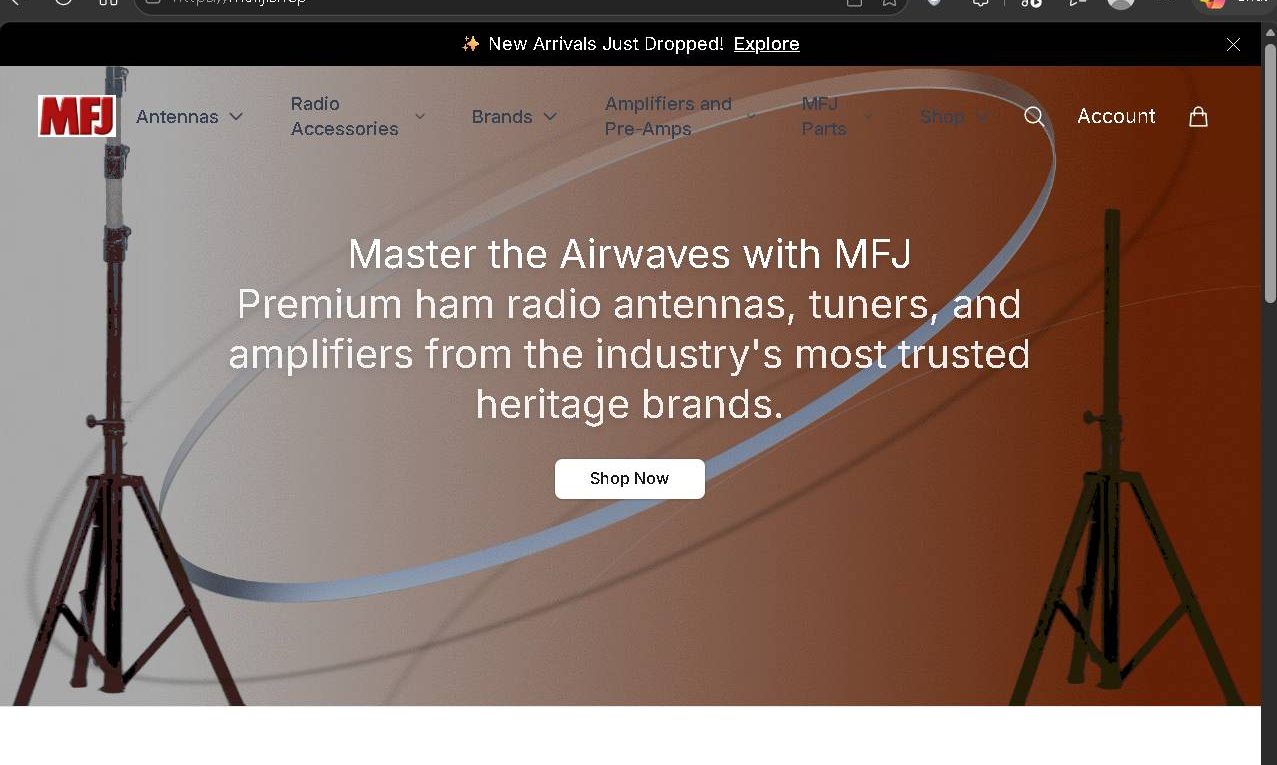
When you open Mefij.shop, the landing page presents itself as a dedicated hub for MFJ Enterprises—a world-famous brand known for amateur radio equipment. The site prominently displays the trademarked red MFJ logo and presents marketing slogans like “Master the Airwaves with MFJ” alongside a clean, modern layout.
The store offers an extensive range of niche radio hardware:
- High-frequency (HF) vertical, wire, and portable antennas
- Manual and automatic antenna tuners
- Linear amplifiers, preamps, and SWR analyzers
- Specialized ham radio accessories and power supply replacement parts
Beyond the catalog, the portal claims to have immediate, ready-to-dispatch warehouse inventory for models that are backordered or completely out of production across legitimate worldwide suppliers. To make the offer irresistible, it pairs these rare items with heavy price cuts, appealing directly to operators hoping to score a bargain.
How Does the Site Actually Work?
Behind the polished aesthetic, the website operates on a four-stage harvesting funnel:
- Catalog Harvesting: The operators copy high-resolution product photography, technical spec sheets, and marketing manuals directly from the original manufacturer’s historical catalog or authorized seller listings.
- Impulse Price Anchoring: Prices are marked down significantly below verified secondary-market rates to trigger quick checkout decisions before buyers take time to inspect the URL.
- Information Capture: Shoppers proceed to a checkout page where they input full billing addresses, phone numbers, and payment card details. Because legitimate payment gateways require strict business verification, clone portals often direct payments into unauthorized merchant merchant aggregators or insecure web forms.
- Fulfillment Absence: Once payment clears, the consumer either receives nothing, receives a bogus tracking link from an untraceable shipping portal, or receives a completely unrelated item of negligible value (such as a generic plastic key ring) to show proof of postal delivery against credit card chargeback requests.
5 Critical Red Flags on Mefij.shop
Spotting an illegitimate shop is straightforward once you know which red flags to look for. Here are the five key warning signs associated with Mefij.shop:
1. Typosquatting Domain Architecture: The legitimate, historical brand portal for MFJ Enterprises is mfjenterprises.com. The domain mefij.shop inserts an extra letter (“e”) and adopts a disposable .shop extension—a textbook typosquatting trick designed to mislead hurried visitors.
2. “Ghost Inventory” for Discontinued Hardware: MFJ ceased on-site manufacturing at its Starkville facility, causing genuine stocks of new tuners and amplifiers to dry up globally. Any unverified website claiming to possess endless brand-new warehouse stock at massive discounts is misrepresenting its supply.
3. Absence of Verifiable Corporate Contact Information: Legitimate electronics distributors provide transparent physical business addresses, verifiable tax identification numbers, and responsive customer service telephone lines. Questionable platforms conceal physical ownership behind web privacy proxies and provide only generic email web forms.
4. Template-Based Legal and Policy Pages: Cloned storefronts frequently feature “About Us,” “Return Policy,” and “Terms of Service” documents copied wholesale from pre-made website themes. These pages frequently leave blank placeholder fields or reference return conditions for unrelated goods like clothing or shoes.
5. Unrealistic Payment Protections: Secure platforms process transactions through established merchant processors and support reputable consumer protections like PayPal Goods and Services. Clone portals tend to avoid escrow methods, pushing direct card entry on unverified forms.
Email: ApexLegalSolutionsMumbai@gmail.com
Direct Steps to Take If You Already Made a Purchase
If you have already entered personal details or submitted payment on Mefij.shop, do not panic. Taking immediate action helps minimize potential financial damage:
- Call Your Bank Immediately: Contact your bank or credit card company using the fraud hotline number printed on the back of your card. Notify them of an unauthorized or deceptive transaction and request a card cancellation alongside a chargeback dispute.
- Secure Your Online Accounts: If you registered an account on the store using an email and password you share with other services, change those passwords immediately. Enable two-factor authentication (2FA) across your primary email and financial platforms.
- Monitor Your Statements Closely: Watch your monthly accounts for unexplained micro-transactions or recurring subscription charges that scammers occasionally slip through.
- Report the Portal: File a formal cyber fraud complaint with relevant consumer bodies—such as the Internet Crime Complaint Center (IC3) or Federal Trade Commission (FTC) in the United States, Action Fraud in the United Kingdom, or the National Cyber Crime Reporting Portal in India.
Safe Sourcing: Where to Buy Genuine Radio Equipment
Instead of risking transactions on unvetted online stores, stick to dependable channels when buying ham radio gear and replacement components:
- Authorized Distributors: Well-established retailers such as DX Engineering, Ham Radio Outlet (HRO), GigaParts, and Martin Lynch & Sons work directly with equipment manufacturers and supply genuine warranties.
- Established Secondary Communities: Reliable platforms like eHam.net classifieds, QRZ.com swap meets, and eBay allow you to connect with verified amateur operators, provided you make purchases through protected payment options like PayPal Goods and Services.
- Recognized Alternative Manufacturers: If specific vintage units are no longer available, explore trusted alternatives from established brands like LDG Electronics, Comet, Diamond Antenna, or Palstar.
Frequently Asked Questions (FAQs)
1. Is Mefij.shop scam or legit?
Mefij.shop displays all the characteristics of an unauthorized fake storefront rather than a verified distributor. It uses copied brand identity materials to collect customer funds without legitimate fulfillment backing.
2. Is Mefij.shop legit for ordering ham radio gear?
No, Mefij.shop is not a legitimate source for purchasing ham radio gear. The official manufacturer portal is mfjenterprises.com, and Mefij.shop has no verified association with the genuine brand.
3. How does a fraudulent clone website scam steal money from shoppers?
These platforms list high-demand items at low prices to attract orders. Once you complete checkout, they charge your payment card, often fail to dispatch the item, and may expose your payment details to additional unauthorized transactions.
4. Why are rare radio tuners listed so cheaply on Mefij.shop?
Artificially low pricing is used as clickbait. Scammers recognize that amateur radio enthusiasts are actively seeking discontinued MFJ tuners, so they create the illusion of a warehouse clearance sale to prompt impulsive purchases.
5. What should I do if my credit card was charged by Mefij.shop?
Contact your card issuer right away, report the charge as fraudulent, request a chargeback, and ask for a replacement card with a new account number.
6. Can I safely track a shipment provided by Mefij.shop?
Tracking numbers provided by imitation sites often route through fake third-party tracking portals designed to falsely show movement. Do not trust tracking updates from unverified logistics portals provided by the seller.
7. How can I differentiate an authentic retailer from a fake clone site?
Always check the exact spelling of the domain name in the address bar, look up the domain’s registration history via a WHOIS directory, verify whether the company lists a physical store address, and verify authorization through the manufacturer’s official directory.
8. Will reporting Mefij.shop help take it down?
Yes. Submitting reports to domain registrars, hosting providers, and national cyber fraud reporting centers creates the documentation required to suspend fraudulent websites and block their payment channels.
Every safe click counts. If this post helped, a coffee gesture fuels more scam‑busting investigations.

For more shady sites exposed, check our Shopping Scam Directory — your quick guide to staying safe online.
Help Us Spread Awareness
Please share this article to spread awareness. Follow us on social media for more scam alerts.