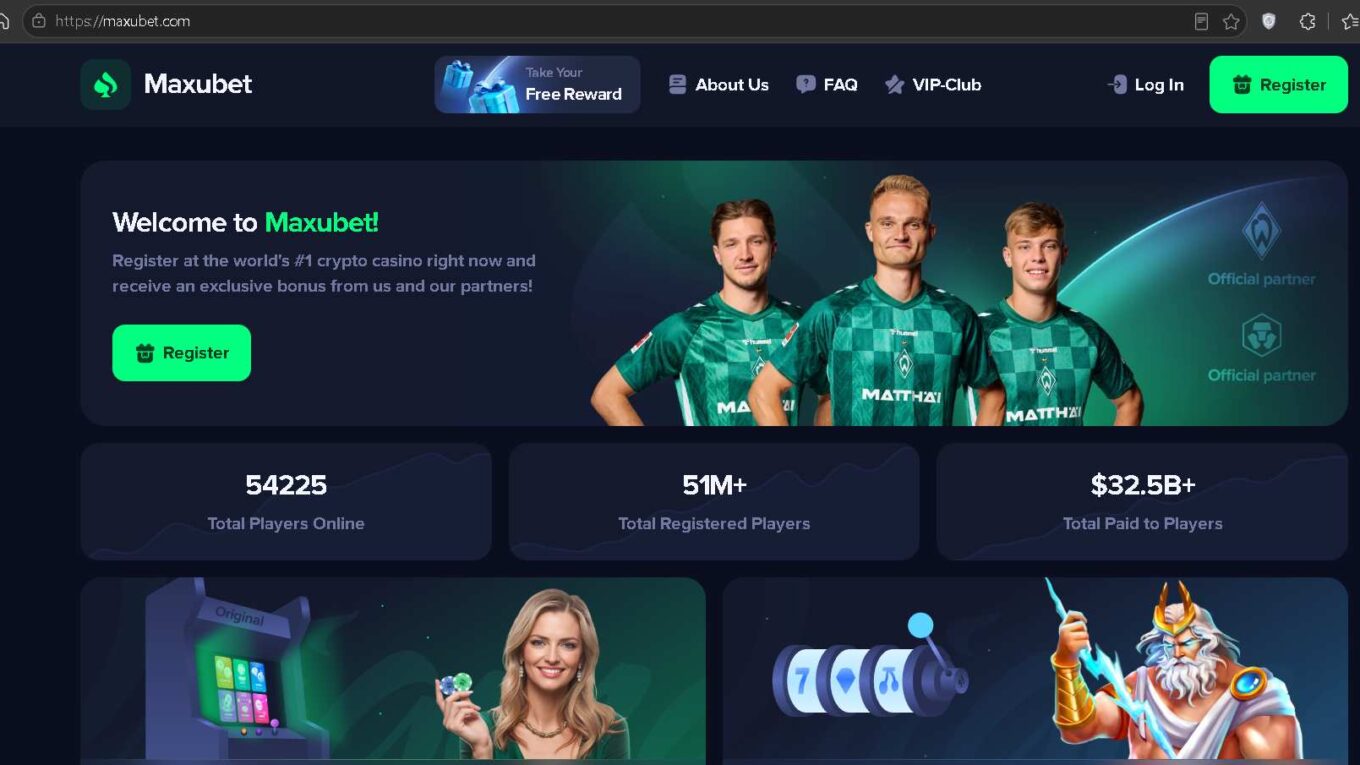
The Payment-Mule Funnel Trap: An Investigative Deep Dive into Maxubet
If you have recently encountered promotions, affiliate referral links, or redirect prompts pointing toward Maxubet, caution is strongly warranted. Operating in the opaque, unregulated corners of the digital gambling space, Maxubet exhibits all the hallmarks of a high-risk portal designed to capture player funds while offloading severe legal and financial risks directly onto users.
Beneath its colorful graphics and promises of effortless entertainment lies a predatory financial setup that every internet user should understand before committing a single cent.
The modern digital economy has made sending and receiving money easier than ever, but it has also allowed underground gambling operations to engineer sophisticated, multi-tiered traps. Rather than operating as transparent, licensed entertainment platforms, portals like this function as aggressive deposit funnels connected to informal money-routing networks.
In this investigative guide, we will break down the mechanics of payment-mule funnel scams, conduct a detailed audit of the platform, analyze the products it sells, and outline the critical risks associated with engaging with this website.
Understanding the Fundamentals of a Payment-Mule Funnel Scam
To evaluate the danger of unregulated betting portals, one must first examine how illicit iGaming platforms handle payment processing when locked out of the legitimate financial banking system.
The Problem of Financial Blacklisting
Regulated online casinos operate under statutory oversight from reputable licensing bodies (such as the UK Gambling Commission or the Malta Gaming Authority). These legitimate platforms partner with tier-1 payment service providers—such as Visa Direct, Mastercard, PayPal, and domestic banking switches—which require strict Know-Your-Customer (KYC) identity compliance, anti-money laundering (AML) controls, and segregated accounts to protect player balances.
Unregulated gambling platforms, by contrast, are legally barred from opening standard corporate merchant accounts. Global card networks, national payment gateways, and regulated commercial banks systematically reject or terminate their payment processing applications.
How the Payment-Mule Pipeline Operates
To circumvent this blockade, offshore syndicates deploy a payment-mule funnel. Instead of routing transactions through an authorized corporate gateway, the platform relies on vast rings of intermediate, third-party personal accounts and shell business handles:
[ User Initiates Deposit ]
            │
            ▼
[ Platform Cashier Interface ] ──── (Generates dynamic personal payment details)
            │
            ▼
[ Stranger's Compromised Bank / UPI / E-Wallet Mule Account ]
            │
            ▼
[ Layered Transfers Across Multiple Mule Rings & Crypto Wallets ]
            │
            ▼
[ Underground Syndicate Treasury ]
When a user deposits money, they are not paying the gaming company; they are sending funds directly to a stranger’s rented or compromised bank account. When a user requests a withdrawal, the incoming funds originate from yet another unrelated third-party account that has already been tainted by illicit transaction flows.
The Real-World Danger: Bank Account Liens and Freezes
Because these mule accounts are continuously used to move illicit gambling revenue, stolen funds, and proceeds of cyber fraud, law enforcement agencies and cyber-crime monitoring cells track them relentlessly.
When a cyber cell freezes an active mule account, its automated investigation scripts place immediate statutory debit liens or total freezes on every single bank account that interacted with it. Everyday players who deposit or receive payouts through these networks suddenly find their primary personal savings, salary accounts, and UPI handles frozen indefinitely, leaving them entangled in complex legal investigations.
📧 Need Legal Assistance?
Contact the author for legal consultations, case evaluations, and professional inquiries.
Dedicated Case Study: Investigating Maxubet
Our technical and operational review examined the behavioral patterns, infrastructure, and user flows behind Maxubet. What emerges is a textbook example of a high-risk, unregulated betting portal engineered around player retention and friction-heavy cashout barriers.
[ Aggressive Social Media & Messaging Ads ]
                     │
                     ▼
             [ Maxubet.com ] ──── (Unregulated Offshore Platform)
                     │
         ┌───────────┴───────────┐
         ▼                       ▼
[ Frictionless Onboarding ]  [ Unaudited Game Catalog ]
 - Instant 1-click registration - Proprietary/cloned slots
 - Zero initial KYC checks      - Rigged house algorithms
         │                       │
         ▼                       ▼
[ P2P Mule Deposit Gate ]   [ Asymmetric Withdrawal Wall ]
 - Direct personal UPI/IMPS   - Endless verification loops
 - Untraceable e-wallets      - Inflated turnover demands
 - Unhosted crypto wallets    - Arbitrary account freezes
How the Website Works
Accessing the platform reveals an interface optimized for rapid, low-friction user acquisition. Visitors can create an account in a matter of seconds, requiring nothing more than a mobile phone number and a password. Unlike compliant financial entities that verify user identities upfront, the onboarding flow is deliberately frictionless to encourage instant financial deposits.
Once inside the member dashboard, users are presented with a cashier interface that constantly rotates payment details. When a player initiates a deposit, the system displays a dynamic UPI address, an unverified local bank account number, or a third-party digital wallet handle. The user is instructed to execute the transfer externally, copy the reference/UTR number, and paste it back into the dashboard for manual balance crediting. This manual confirmation workflow is the definitive operational signature of an informal, peer-to-peer mule network.
The Marketing Claims and Products Being Sold
The portal heavily markets an expansive collection of high-churn, virtual gaming products, framing them as easy, lucrative entertainment:
- Online Slots (Judi Slot / Slot Gacor): The platform places virtual slot games front and center. Promotional materials frequently leverage buzzwords like gacor (promising that specific machines are currently “hot” and mathematically primed for massive payouts). In reality, these games are hosted without independent fairness certifications, meaning payout percentages can be configured to deliver early psychological “wins” before draining balances.
- Live Dealer Casino Streams: Real-time digital casino tables featuring live video feeds of blackjack, roulette, and baccarat. These streams are often aggregated from secondary white-label providers or rebroadcast without direct consumer protection guarantees.
- Digital Lotteries and Number Pools: Fast-paced four-digit (4D) betting systems and micro-lottery pools that simulate official national draws without any statutory licensing or external oversight.
- Sportsbook and Virtual Betting: Odds boards covering major international sporting leagues, esports, and simulated virtual matches, encouraging continuous betting loops with high platform commissions built directly into the spreads.
The Underlying Modus Operandi: The Asymmetric Withdrawal Trap
The financial model of the website relies on a deliberate operational asymmetry: depositing is effortless, but withdrawing is systematically hindered.
- The Onboarding Hook: Small deposits credit quickly, and early gameplay often yields algorithmic wins to build false confidence and encourage larger follow-up deposits.
- The Withdrawal Blockade: When a player attempts to cash out a meaningful balance, the platform erects multiple layers of artificial resistance:
- Inflated Rollover/Turnover Demands: Players are informed that their balance cannot be withdrawn until they wager their deposit and bonus amounts 20x to 50x over, virtually guaranteeing that mathematical house edge wipes out the funds.
- Repetitive KYC Demands: The platform abruptly demands extensive personal documentation, including government identity cards, bank statements, and utility bills, holding the withdrawal permanently “in processing.”
- Advance-Fee Demands: In severe instances common to this scam archetype, users are told they must pay an upfront “handling fee,” “currency conversion charge,” or “tax clearance” before their payout can be approved. Any additional fee paid is simply stolen alongside the original deposit.
Specific Red Flags Uncovered on Maxubet
A systematic evaluation of the portal reveals multiple critical indicators that separate it from legitimate digital platforms:
| Evaluation Criteria | Findings on Maxubet | Standard Legitimate Industry Benchmark | Threat Level |
|---|---|---|---|
| Statutory Licensing | Completely absent; no verifiable domestic license | Clear, clickable license seal (MGA, UKGC, etc.) | Critical Failure |
| RNG Fairness Auditing | No independent testing certificates found | Certified by eCOGRA, iTech Labs, or BMM Testlabs | High Danger |
| Payment Settlement | P2P mule bank accounts and unverified handles | Direct, authorized corporate merchant processing | Severe Hazard |
| Corporate Transparency | Anonymous; hidden behind privacy proxy shields | Publicly registered operating entity and address | High Risk |
| Mobile Distribution | Prompts off-store third-party APK downloads | Verified downloads on Google Play or Apple App Store | Security Threat |
1. Absence of Statutory Gaming Oversight
The platform fails to provide an authentic, clickable regulatory license badge from recognized jurisdictions. Operating without a valid license means the platform has no obligation to maintain segregated player funds, submit its software to independent audits, or submit to external dispute resolution. If your balance disappears, you have no legal ombudsman to approach.
2. Peer-to-Peer Payment Funnel
As detailed in our analysis, the absence of an authorized credit card or direct bank merchant integration is a glaring operational red flag. Forcing users to transfer money directly into personal bank accounts exposes every depositor to direct financial contamination and secondary cyber-cell investigation.
3. Masked WHOIS and Corporate Secrecy
The domain’s administrative records are entirely concealed behind commercial privacy proxy services. There is zero public documentation identifying the directors, the holding company, or the registered physical headquarters. Legitimate gaming platforms are multi-million-dollar corporate entities; an operation whose leadership remains invisible is structurally unaccountable.
4. Side-Loading Unverified Mobile APKs
To bypass mobile browser safeguards and regional telecom filters, sites of this nature routinely urge users to download and install off-store Android Package Kits (APKs). Installing an unvetted APK bypasses operating system security, creating severe vulnerabilities for mobile spyware, intrusive adware, and unauthorized credential tracking.
Final Verdict
Maxubet is an unregulated, high-risk offshore gambling portal operating through a predatory payment-mule funnel.
The site lacks verifiable domestic or international statutory gaming licenses, relies on unaudited software, and processes consumer funds through informal, high-danger peer-to-peer banking networks. Participating on this platform not only puts your deposited capital at extreme risk of arbitrary confiscation through withdrawal roadblocks, but also exposes your personal bank accounts to devastating debit liens and cyber-cell freezes.
Our definitive advice: Avoid registering on this platform, do not download third-party APK files associated with it, and do not execute transfers to any bank accounts or UPI IDs provided by its cashier system.
Frequently Asked Questions (FAQ)
Is Maxubet Legit?
No, Maxubet is not legitimate. The platform functions without verifiable domestic statutory licensing or recognized third-party auditing credentials. It relies on opaque corporate structures and unverified payment channels that fail basic consumer safety standards.
Is Maxubet Scam?
Yes, it exhibits the primary operational characteristics of a predatory gambling and payment-mule funnel scam. Users face asymmetric withdrawal barriers, unaudited mathematical odds, shifting turnover demands, and the severe hazard of having their personal bank accounts flagged by law enforcement for interacting with money-mule accounts.
What is a payment-mule funnel scam in online betting?
A payment-mule funnel scam is a setup where an unauthorized betting site bypasses legitimate merchant processors by routing deposits and cashouts through rings of third-party personal accounts (mules). Users unknowingly send money to, and receive payouts from, accounts linked to financial crimes, exposing their personal banking profiles to cyber-cell freezes.
Can my personal bank account be frozen for using Maxubet?
Yes. Because deposits and withdrawals on unregulated portals often flow through compromised or monitored accounts, law enforcement agencies investigating illegal gambling and money laundering frequently issue debit freezes and cyber liens against all accounts in the transactional chain—including those belonging to everyday players.
What should I do if my withdrawal is stuck on Maxubet?
If your cashout is blocked by repeated demands for identity verification or new rollover requirements, do not deposit any additional capital. Never pay requested “clearance fees,” “taxes,” or “handling charges,” as these are secondary advance-fee extraction tactics. Cease all activity on the site immediately and keep detailed records of your transaction history.
Why do platforms like Maxubet push off-store APK downloads?
Offshore betting platforms encourage users to side-load APK files to bypass official app store security screenings and circumvent regional domain blocking. Installing an unverified APK grants extensive device permissions and introduces severe risks of mobile malware, data leakage, and credential theft.
How can I verify if an online casino platform is legally safe?
A safe, legal platform displays an active, clickable licensing seal from an established regulatory authority, lists its registered corporate entity and headquarters openly, uses verified commercial payment gateways (rather than individual P2P accounts), and features third-party fairness certifications from independent auditing labs like eCOGRA or iTech Labs.
Want to see how fraudulent Web3 and blockchain gaming traps manipulate deposit funnels? Explore our in-depth investigative guide:
Online Crypto Casino Scam: How Blockchain & Web3 Traps Exploit PlayersAbout the Author
Suyesh Gusain is a NISM certified Research Analyst and professional Financial Journalist. With a background in physics and mass communication, he specializes in identifying market anomalies, analyzing technical patterns, and investigating digital fraud. Through Wisdom Ganga, he provides critical research to help retail investors and online shoppers protect their financial footprints from sophisticated automated syndicates.
Every safe click counts. If this post helped, a coffee gesture fuels more scam‑busting investigations.

Help Us Spread Awareness
Please share this article to spread awareness. Follow us on social media for more scam alerts.