The Anatomy of an Online Clothing Trap: Inside Kaioeny and the Modern Bait-and-Switch Machine
If you recently stumbled upon Kaioeny while scrolling social media, you probably noticed the clean aesthetics, premium-looking oversized hoodies, and prices that seem almost too reasonable to pass up. Unfortunately, thousands of online shoppers are running into storefronts like Kaioeny only to discover that they are classic case studies in “Bait-and-Switch” digital merchandising.
When dealing with fast-fashion portals operating under the guise of indie apparel boutiques, low-quality dropshipping is the engine running quietly behind the curtain. Before you submit your credit card information, purchase credit protection insurance, or expect luxury loungewear on your doorstep, it is essential to peel back the layers of this storefront to see what is actually happening behind the interface.
Suspicious Link or Courier SMS?
Verify URLs, APKs, or parcel alerts against our threat database before clicking.
Deconstructing the Illusion: How Low-Quality Dropshipping and “Bait-and-Switch” Really Operate
To protect your wallet, you first have to understand the modern evolution of the classic con. Traditionally, a physical bait-and-switch involved advertising a high-end product at a deep discount, luring the customer into a showroom, claiming the inventory ran out, and steering them toward an overpriced alternative.
Online, the playbook has changed:
- The Bait: The storefront builds a polished digital catalog using curated studio photography, crisp lifestyle imagery, and aspirational copy. They promise luxury-grade weights—such as 450 GSM French terry cotton, tailored fleece cuts, and preshrunk athletic silhouettes.
- The Switch: Instead of receiving the product pictured, the customer is shipped a mass-produced, polyester-heavy substitute from an overseas clearinghouse. The physical garment rarely matches the cut, stitch density, color profile, or textile weight showcased online.
- The Attrition Loop: This is where predatory low-quality dropshipping differs from legitimate e-commerce logistics. Legitimate dropshippers curate, vet, and guarantee their inventory pipelines. Predatory operations cut manufacturing costs to pennies, ship through slow bulk freight, and rely on bureaucratic return barriers to exhaust buyer chargeback attempts.
By the time the shopper realizes the garment is unwearable, the cost and logistical complexity of shipping it back overseas exceeds the item’s value. The merchant keeps the markup, and the buyer is left holding disposable fabric.
Email: ApexLegalSolutionsMumbai@gmail.com
What Kaioeny Claims to Offer vs. The Actual Front-End Mechanics
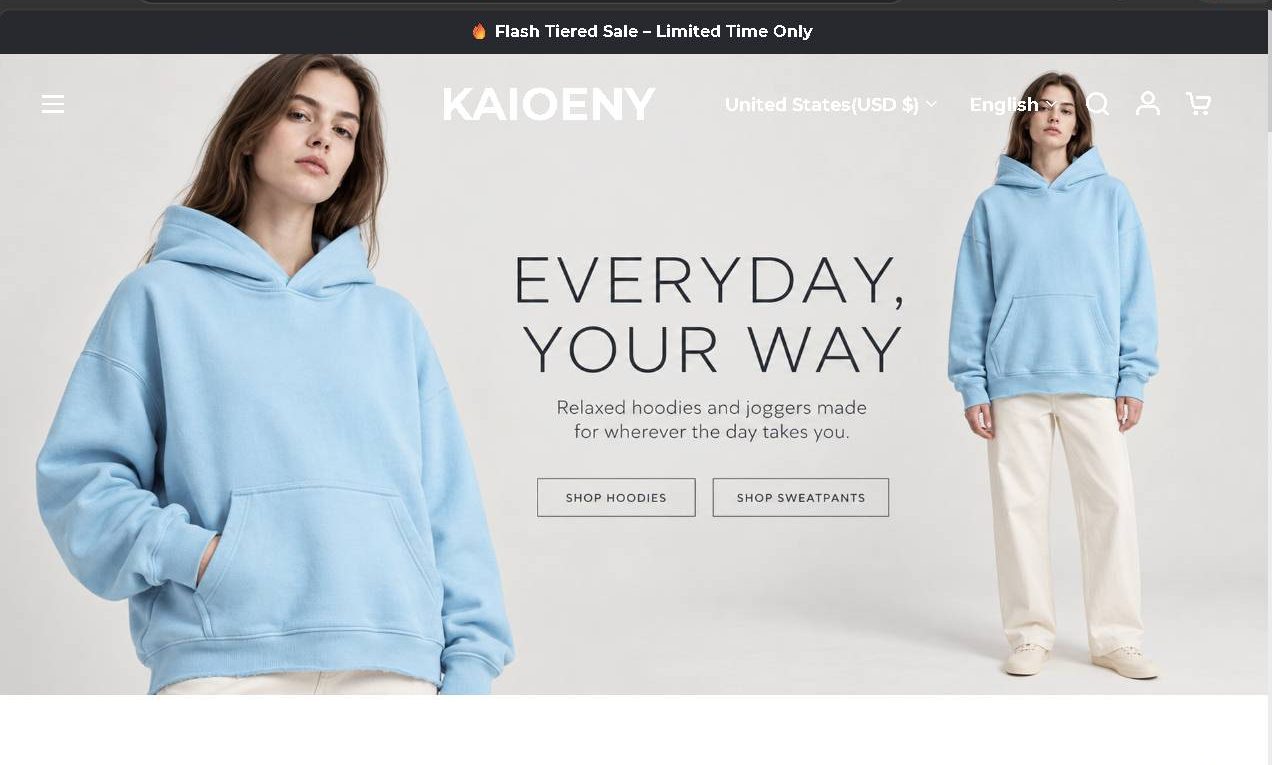
At first glance, Kaioeny positions itself as a modern, minimalist leisurewear brand designed for daily comfort. Its promotional banners spotlight relaxed-fit sweatpants, heavy pullover hoodies, and coordinated streetwear sets under taglines promising effortless urban lifestyle pieces.
The Pitch
The storefront displays an array of lifestyle basics targeted squarely at the North American and European direct-to-consumer market:
- Soft-draped pastel and neutral hoodies
- Tailored jogger pants and sweat sets
- “Everyday, Your Way” branding aimed at casual shoppers seeking elevated athleisure
The Underlying Mechanics
Behind the storefront lies an automated customer acquisition funnel:
- Algorithmic Ad Arbitrage: Traffic is primarily generated through paid video and carousel campaigns across platforms like Meta and TikTok, targeting users interested in minimalist fashion, loungewear, and seasonal discounts.
- Artificial Scarcity Triggers: The homepage runs automated promotional scripts—such as persistent “Flash Tiered Sale – Limited Time Only” banners—designed to force impulse purchases by making discounts appear fleeting.
- Third-Party Payment Funneling: Rather than using verified enterprise checkouts, the transaction routes through third-party payment gateways. This setup creates distance between the actual corporate owners and the financial intermediaries processing your card.
Case Study: Deconstructing Kaioeny’s E-Commerce Blueprint
Examining Kaioeny provides a textbook look at how disposable storefronts mimic high-end fashion outlets.
The Digital Bait-and-Switch Funnel
How disposable storefronts engineer the buyer trap from ad click to delivery
High-Production Ads (Stolen / Stock Visuals)
“Heavyweight Cotton Comfort | 60% Off Flash Sale”
Sourced lifestyle media and polished lookbooks designed to project premium manufacturing standards.
The Conversion Page (Kaioeny Storefront)
- Generic, disposable Shopify or WooCommerce theme setup
- Hardcoded countdown timers and artificial tiered-bundle incentives
- Missing physical company registration or direct operational footprint
Opaque Payment Processing
- Merchant processing accounts routed through overseas intermediary entities
- Checkout environment devoid of verified brand protection or consumer escrows
The Fulfillment Reality
Custom-milled, heavy fleece cotton hoodies and tailored cut
Thin, synthetic polyester substitution sent via bulk overseas depot
Customer Service Friction: Deflection via unmonitored ticket queues, automated chat gates, or requests that the customer pay prohibitive international return shipping fees.
When you examine the catalog items against established wholesale fashion exchanges, the discrepancies surface quickly. The models featured on the site are often drawn from disparate studio sets or lifted from independent boutique lookbooks. There is no cohesive styling, no consistent model lineup, and no social proof tying the specific branded label to independent reviewers.
5 Critical Red Flags Found on Kaioeny
If you are evaluating whether to complete a purchase, consider these five major operational warnings:
1. Fresh Domain Lifecycle with Zero Footprint
Domain records reveal that Kaioeny was registered in August 2026. Legitimate apparel brands spend months or years establishing supply lines, public trademarks, and commercial credit histories. Running global retail sales across multiple currencies within weeks of domain creation is a hallmark of disposable retail networks.
2. Phantom Corporate Ownership
The website provides no verifiable parent corporation, physical headquarters address, or registered tax identifier. Legitimate direct-to-consumer retailers list their operating business name, physical corporate office, and jurisdictional registrations within their Terms of Service and privacy policies.
3. Asymmetric Return Policy Barriers
Like many bait-and-switch storefronts, the fine print is designed to discourage returns. While the marketing suggests a hassle-free satisfaction guarantee, the internal policy often stipulates that return freight must be paid by the consumer to an overseas warehouse address—frequently costing more than the original price of the garment.
Search major independent review platforms like Trustpilot, Sitejabber, or consumer protection forums, and you will find no authentic, long-term feedback. The reviews displayed on the storefront itself are static, self-hosted testimonials that lack independent verification or external order IDs.
5. Automated Pressure Tactics
The checkout system makes extensive use of urgency scripts: pop-ups indicating that multiple anonymous users are viewing the item, fake stock depletion alerts, and ticking discount timers that simply refresh once the countdown reaches zero.
Every safe click counts. If this post helped, a coffee gesture fuels more scam‑busting investigations.

Consumer Protection: What to Do If You Already Placed an Order
If you have already submitted your payment information on Kaioeny, take immediate proactive steps to protect your personal capital:
- Document Every Detail: Take screenshots of the order confirmation page, the product listings showing promised material compositions, and your receipt.
- Monitor Banking Portals: Watch your account ledger for unauthorized secondary micro-transactions. Some dubious merchant processors subscribe cards to unlisted recurring billing programs.
- Contact Your Card Issuer for a Chargeback: If the item arrives and is demonstrably different from the advertised specifications (e.g., 100% polyester instead of the promised heavy cotton fleece), request a dispute under the reason code for “Goods Not as Described” or “Counterfeit Merchandise.”
- Demand Fair Resolution via Written Records: When contacting the site’s support email, maintain a clean paper trail. If they offer a token partial refund (often 10% to 20%) while demanding you pay international return shipping, decline it and forward the communication log directly to your bank’s fraud investigator.
Frequently Asked Questions
1. Is Kaioeny scam or legitimate?
Multiple cybersecurity indicators, newly registered domain data, lack of corporate transparency, and consumer warning scores suggest that Kaioeny is an untrustworthy e-commerce site utilizing deceptive bait-and-switch promotional practices.
2. Is Kaioeny legit for ordering high-end hoodies and sweatpants?
No. The platform does not operate a legitimate private-label apparel manufacturing line. Shoppers risk receiving low-grade synthetic knockoffs that bear little resemblance to the polished studio images displayed on the site.
3. How does the bait-and-switch scam work on apparel websites?
The merchant markets high-quality clothing using premium photos often sourced from legitimate designers. After collecting payment, they fulfill the order with ultra-cheap, mass-produced garments from low-tier overseas distributors, counting on complicated return procedures to prevent chargebacks.
4. Can I get a full refund from low-quality dropshipping sites?
Securing a direct refund from these operators is notoriously difficult. Merchants often offer minor token refunds or require the buyer to cover steep international return shipping. The most reliable path to recovery is filing a formal payment dispute or credit card chargeback through your financial institution.
5. What are the legal risks associated with online shopping fraud?
Consumers who transact on unverified storefronts face unauthorized debit card charges, unencrypted data transmission risks, identity theft through harvested personal contact records, and the loss of standard statutory buyer protection rights.
6. How do I report fraudulent e-commerce websites?
You can file complaints with your regional consumer protection agency, such as the Federal Trade Commission (FTC) in the United States, the European Consumer Centres Network (ECC-Net), or the national cybercrime portal in your local jurisdiction. You can also report the domain to its registrar and hosting provider for fraud investigation.
7. Why do bait-and-switch websites change domain names so frequently?
Once a storefront accumulates enough negative consumer feedback, chargeback flags, and public scam warnings, its payment gateways are frozen by financial merchant processors. The operators abandon the burned domain and immediately launch an identical storefront under a fresh URL.
8. How can I tell if a dropshipping store is safe before ordering?
Check the domain’s registration date using WHOIS lookup tools, verify whether a physical company address and corporate registration number exist, search external review platforms for unvarnished feedback, and ensure the site uses recognizable, dispute-protected checkout channels like PayPal or Apple Pay.
For more shady sites exposed, check our Shopping Scam Directory — your quick guide to staying safe online.
Help Us Spread Awareness
Please share this article to spread awareness. Follow us on social media for more scam alerts.