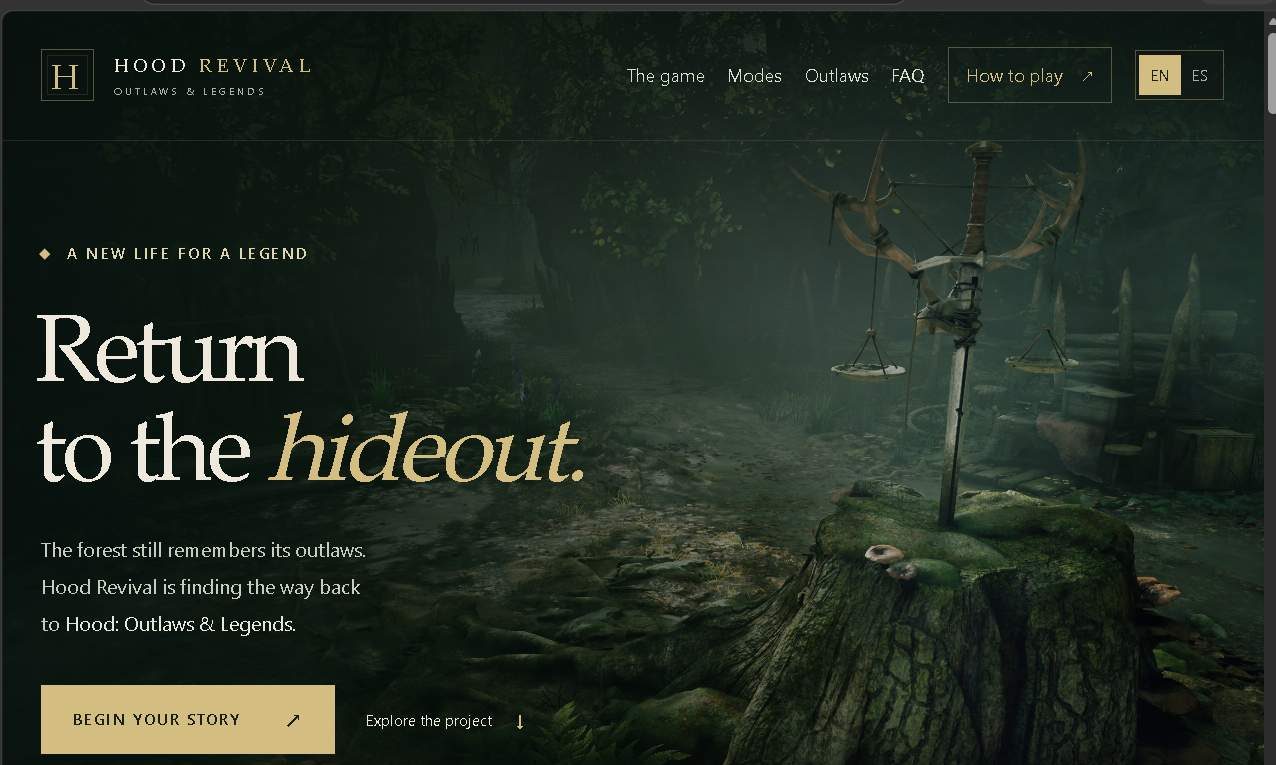
Hood Revival Review: Can Community Servers Actually Save Hood: Outlaws & Legends?
If you ever spent a sweaty evening winching a heavy treasure chest to extraction while an enemy team flanked your perimeter, the sudden sunset of Hood: Outlaws & Legends probably stung. The project over at Hood-revival.com is calling players back to Sherwood Forest with a bold promise: breathing fresh life into a game that official publishers left for dead.
Whenever an abandoned multiplayer title gets picked up by modders, the community gets split right down the middle between raw nostalgia and cyber skepticism. Is Hood Revival a genuine haven for dedicated fans, or is it a security headache waiting to compromise your gaming rig? Let’s break down the state of the project, how these community servers work, and whether it’s safe to jump back in.
What Is the Hood Revival Project?
Hood: Outlaws & Legends—originally developed by Sumo Newcastle and published by Focus Entertainment—delivered a gritty, dark medieval PvPvE heist concept that had serious potential. Teams of four picked iconic folk outlaws (Robin, Marianne, John, and Tooke) to infiltrate heavily fortified keeps, steal keys from the terrifying Sheriff, and extract a massive chest of state gold.
Unfortunately, post-launch balance woes, long queue times, and a brutal content drought caused player numbers to dry up, ultimately leading to the official master servers being permanently unplugged in early 2025. Because the game relied almost entirely on centralized matchmaking servers, shutting down the network rendered legitimate game copies unplayable.
Enter Hood-revival.com. This community-driven hub serves as the ground zero for a reverse-engineered private server initiative. The site features guides, character rosters, mode explanations, and setup instructions aiming to route PC clients away from dead official endpoints and toward fan-hosted matchmaking relays.
Suspicious Link or Courier SMS?
Verify URLs, APKs, or parcel alerts against our threat database before clicking.
How Hood Revival Actually Works
Reviving a live-service Unreal Engine title without official source-code releases is no small task. The architecture behind Hood Revival generally operates across three stages:
  Community Emulation Workflow
  ┌─────────────────────────┐      ┌─────────────────────────┐      ┌─────────────────────────┐
  │ Local Game Files        │ ───► │ Hooked DLLs / Patches   │ ───► │ Private Master Server   │
  │ • Authentic PC client   │      │ • Redirects network API │      │ • Custom matchmaking    │
  │ • Extracted game assets │      │ • Bypasses EOS/backend  │      │ • Community lobby sync  │
  └─────────────────────────┘      └─────────────────────────┘      └─────────────────────────┘
- Client Hooking: Players provide their own legitimate PC installation of Hood: Outlaws & Legends.
- Network Redirection: To stop the game from failing its initial ping to dead publisher servers, custom patch files (often modified
.dllwrappers or launcher hooks) intercept outgoing API requests and point them toward custom server hosts. - Emulated Matchmaking: Dedicated community nodes take over the role of lobby allocation, squad pairing, and basic state synchronization for PvP and PvE sessions.
The Bright Side: Why Fans Care
- Reviving Pure Abandonware: When a game is removed from digital stores and killed server-side, fan-run preservation is literally the only way to experience its unique art direction, combat flow, and map design.
- Passion-Driven, Non-Commercial Effort: Unlike scam storefronts trying to charge your credit card, community revival hubs are typically free passion projects built by fans who simply refuse to let their favorite mechanics vanish.
- The Return of Medieval Heists: For anyone who loved coordinating smoke grenades with Marianne, sniping guards with Robin, or brawling over extraction winches with John, it scratches an itch that no current medieval slasher offers.
The Catch: Real Risks & Red Flags You Must Know
While reviving dead games is awesome, jumping onto third-party private servers comes with practical and technical downsides:
1. Unsigned Binaries and False Positives
To get a dead multiplayer client working, you almost always have to download custom launchers, patchers, or modified runtime libraries. Because independent modders don’t buy expensive enterprise code-signing certificates, Windows Defender and antivirus engines will frequently throw heuristic warnings (Trojan, generic dropper flags). Determining whether an alert is a harmless false positive or an actual malicious payload requires technical diligence.
2. Matchmaking Population Drops
A competitive PvPvE game lives or dies on its active pool. Community revivals for niche titles often suffer from extreme population drought. Unless you organize custom sessions via community Discord channels or play during peak regional evening hours, finding seven other players to fill an 8-man lobby can take patience.
3. Server Latency & Host Desync
Running high-performance game servers costs real money. Fan-hosted nodes often run on unoptimized VPS hardware, leading to hit-registration issues, rubber-banding during high-intensity brawls, and unexpected host disconnects.
4. Account Integrity & Platform Rules
While Sumo and Focus are no longer running the game’s servers, modifying installed files can occasionally interact awkwardly with background anti-cheat modules or system-level security protections if you play other protected multiplayer titles on the same machine.
Safe Gaming Habits: How to Test Community Patches
If you decide to dive into the Hood Revival project to relive your heist glory days, follow these baseline security steps to keep your main PC safe:
- Scan Everything with VirusTotal: Before extracting or running any community zip files, upload the binaries to VirusTotal to analyze detection patterns across dozens of antivirus engines.
- Never Run on a Work/Banking Machine: If you use your PC for sensitive business documents, financial accounting, or daily banking, avoid running unverified third-party executable patches on it.
- Use Sandboxing or Secondary Drives: Run modified community launchers in isolated environments, sandboxed test partitions, or secondary gaming rigs whenever possible.
- Stick to Legitimate Base Copies: Only patch legitimate copies of the game you already own on Steam or Epic Games. Never download repackaged torrent bundles from random file-sharing lockers.
Frequently Asked Questions (FAQs)
1. Is Hood Revival legit?
Yes, Hood Revival is a genuine community-driven preservation effort by fans trying to make Hood: Outlaws & Legends playable again after official servers closed, rather than a commercial scam. However, running unofficial mod files always carries security risks.
2. Can you still play Hood: Outlaws & Legends on consoles?
No. Because console ecosystems (PlayStation, Xbox) require certified server backends and restrict modified client executables, private server revival projects like this are generally restricted strictly to PC players.
3. Why did official servers for Hood: Outlaws & Legends shut down?
The publisher decommissioned the master infrastructure due to declining active player bases, steep ongoing backend server upkeep costs, and the end of post-launch seasonal roadmaps.
4. Will my antivirus flag the Hood Revival patch?
Frequently, yes. Unofficial mods and server-redirect files lack commercial security certificates and inject network hooks, which causes many antivirus suites to trigger generic heuristic or false-positive alerts.
5. Do you need to buy the original game to use Hood Revival?
Generally, yes. Community server emulators require the base game’s original client files, textures, and assets to load matches properly.
6. Is Hood Revival safe to install on my main PC?
It is relatively low risk if verified by reputable community members, but running unsigned third-party .exe files from any personal project is never 100% risk-free. Running it on an isolated gaming PC is always the safest route.
7. How active are matches on Hood Revival?
Match frequency depends heavily on community coordination. Because it is a fan project, you will likely need to join the community Discord to set up custom heist lobbies and schedule matches with other players.
8. What should I do if a community mod crashes on startup?
Ensure your base game version matches the patch build required by the server emulator, verify file integrity in your game launcher, and check that local firewall rules aren’t blocking custom network ports.
Every safe click counts. If this post helped, a coffee gesture fuels more scam‑busting investigations.

For more shady sites exposed, check our Shopping Scam Directory — your quick guide to staying safe online.
Help Us Spread Awareness
Please share this article to spread awareness. Follow us on social media for more scam alerts.