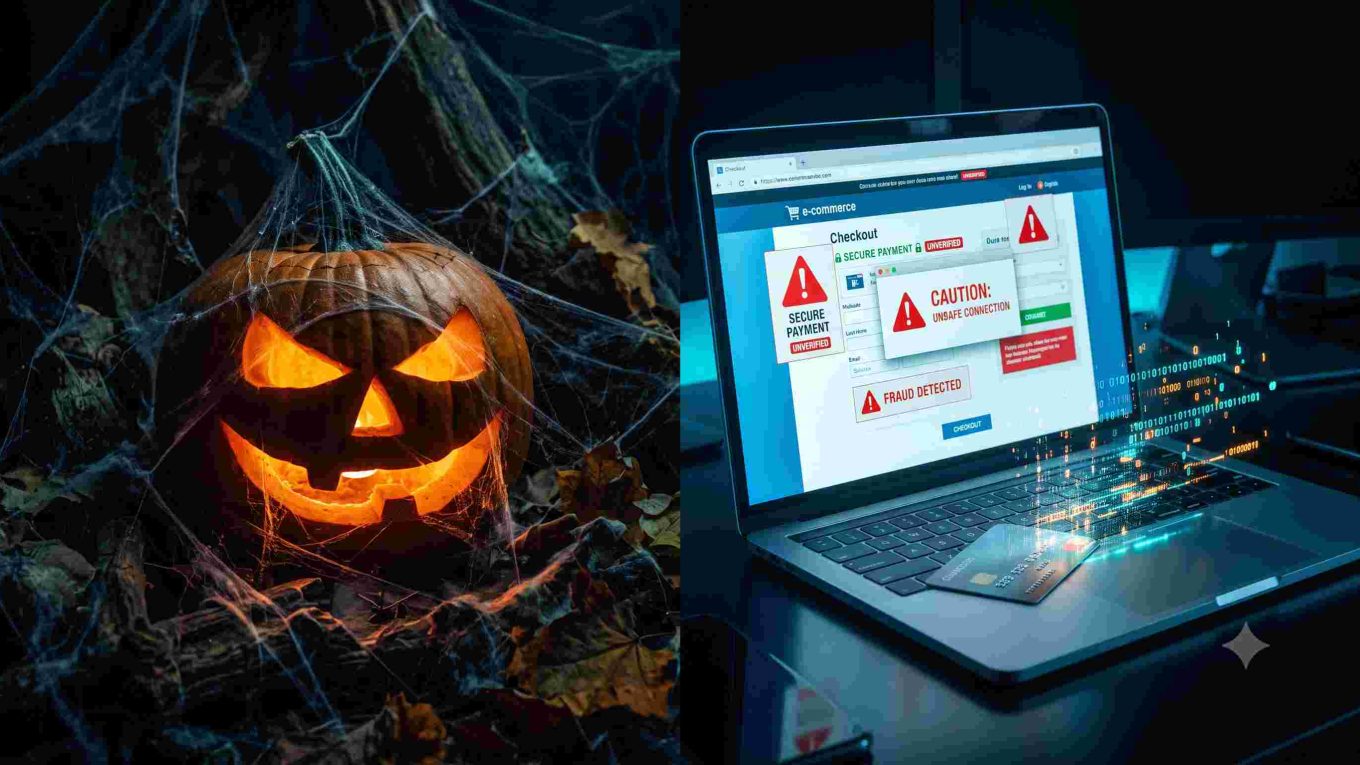
Halloween Scam Alert: The Ultimate Guide to Spotting Fake Stores, Ticket Traps, and Seasonal Phishing Schemes
Every October, as neighborhoods light up with jack-o’-lanterns and consumers rush to finalize costume ideas, cybercrime syndicates and digital grifters roll out their most lucrative operations of the year: the Halloween scam.
Fraudulent actors deliberately weaponize seasonal excitement, time-sensitive retail rushes, and community goodwill to intercept credit card credentials, harvest personal data, and steal hard-earned money from unsuspecting autumn shoppers.
From counterfeit costume storefronts running viral social ads to phantom haunted attraction tickets and sophisticated AI-generated holiday boutiques, seasonal fraud operations have grown remarkably convincing.
Protecting your bank balance and digital footprint requires understanding exactly how these seasonal schemes function, recognizing the underlying forensic red flags, and taking immediate defensive countermeasures before entering payment details.
What Are Halloween Scams?
A Halloween scam is any deceptive scheme that exploits holiday-themed retail, seasonal events, or community traditions to defraud consumers. These operations target several key consumer touchpoints:
- Apparel & Disguises: High-demand Halloween costumes for children, adults, and groups.
- Yard Displays & Props: Oversized inflatables, animatronic props, and atmospheric lighting.
- Experiential Entertainment: Haunted house admission passes, hayrides, zombie walks, and costume balls.
- Community Goodwill: Seasonal charity drives, hospital costume initiatives, and door-to-door trick-or-treat donation appeals.
- Digital Giveaways & Contests: Viral social media sweeps, free candy packages, and holiday gift cards.
Because consumer spending spikes sharply during October, cyber syndicates view Halloween as an annual peak for launching disposable attack infrastructure.
Why the Halloween Season Attracts Cyber Syndicates
Fraud rings exploit predictable human psychology and calendar-driven retail spikes. Several compounding dynamics make October a prime hunting ground:
The Seasonal Scam Accelerator
- Ghost costume websites
- Cheap animatronic drops
- Parents buying for kids
- Goodwill community charity
- Compressed Purchasing Timelines: Unlike year-round retail shopping, Halloween items carry a rigid deadline of October 31st. Consumers feel intense pressure to purchase immediately before sizes or popular styles sell out, bypassing basic security checks.
- Elevated Social Engagement: Costume reveals, decorating challenges, and festive giveaways circulate widely across TikTok, Instagram, and Facebook, providing scammers with organic promotional reach.
- Parental Convenience Bias: Busy parents juggling school events and party preparations often seek fast, all-in-one ordering options, making them vulnerable to deceptive social ads promising bundle markdowns.
- Disposable Technical Infrastructure: Domain registrars offer disposable top-level domains (such as
.shop,.top,.site) for under a dollar. A scam ring can register dozens of domains, run ads for three weeks, collect checkout revenue, and disappear before card processors freeze their merchant accounts.
📧 Need Legal Assistance?
Contact the author for legal consultations, case evaluations, and professional inquiries.
20 Common Halloween Scams Exposed
1. Fake Halloween Costume Store Scams
The most widespread threat during autumn is the phantom costume storefront. Scammers scrape product images from legitimate retail catalogs (such as Spirit Halloween or party specialty brands) and market luxury, licensed, or trending pop-culture outfits at 60% to 80% below retail value.
- The Operation: Victims encounter targeted social ads, land on an unvetted checkout screen, and pay via debit or credit card.
- The Reality: Either no package arrives, or the buyer receives a cheap, unwearable piece of polyester fabric bearing zero resemblance to the studio images.
2. Giant Animatronic and Yard Decoration Scams
High-end lawn decor—such as 12-foot giant skeletons, motorized ghouls, and projected digital lighting—regularly commands retail prices of $300 to $500+. Scammers exploit high demand by setting up clone websites offering these oversized props for an impossible $49.99 to $79.99 with “Free Shipping.” Because shipping an 80-pound animatronic crate costs substantial freight fees alone, buyers either receive an empty tracking number or a cheap 12-inch plastic miniature toy.
3. Fake Halloween Giveaway Scams
Scammers advertise lavish autumn gift baskets, candy hampers, luxury costume bundles, or amusement park passes under the guise of festive community celebrations. To claim the “free” prize, users must complete lengthy questionnaires, submit their email and home address, and pay a nominal $1.95 “shipping fee” with a credit card. The true objective is enrolling the card in recurring unauthorized subscriptions.
“Like, comment, and share to win an ultimate Halloween party kit!” These viral posts are designed to build massive page engagement rapidly (a technique known as “like-farming”). Once the post amasses hundreds of thousands of interactions, the page administrators edit the post to inject malicious phishing links or sell the high-follower account to underground marketers.
5. Fake Party and Ball Ticket Scams
Exclusive Halloween events, masquerade galas, and nightclub costume parties often sell out weeks in advance. Fraudsters create duplicate ticketing portals or post on local event groups claiming they have “spare VIP tickets” due to an emergency. Payments are accepted through peer-to-peer apps (Venmo, Cash App, Zelle), after which the seller blocks the buyer, leaving them with counterfeit or nonexistent digital passes.
6. Haunted House and Ghost Tour Scams
Prominent regional haunted attractions and interactive scream parks frequently suffer brand impersonation. Fraudsters create copycat web addresses that appear identical to the legitimate attraction’s booking engine, offering counterfeit “skip-the-line VIP passes.” When attendees present the barcode at the gate, staff cannot scan the code, forcing victims to pay twice or be turned away.
7. Fraudulent Halloween Charity Appeals
Exploiting community spirit, rogue operators establish fraudulent charitable funds claiming to buy costumes for underprivileged children, fund pediatric hospital celebrations, or support animal rescues. The donation buttons direct funds straight into personal crypto wallets or shell merchant accounts, and none of the proceeds reach the named beneficiaries.
8. Door-to-Door Trick-or-Treat Donation Fraud
In the days leading up to Halloween, scammers canvass residential neighborhoods carrying clipboards or collection buckets. Impersonating local high schools, youth athletics programs, or civic groups, they present fabricated stories to extract cash donations from homeowners on their own doorsteps.
9. Seasonal Phishing Emails and Malicious Discounts
Cybercriminals send massive waves of seasonal spam disguised as official communications from major retailers: “Your Halloween coupon expires in 2 hours” or “Claim your 50% discount voucher.” Clicking the embedded link redirects users to an unauthorized credential-harvesting page engineered to intercept retail passwords, personal addresses, and payment data.
10. Failed Package Delivery SMS (Smishing)
Because household package deliveries surge throughout October, scammers send automated text messages pretending to be USPS, UPS, FedEx, or DHL: “Your Halloween order cannot be delivered due to an incomplete address. Update details here to reschedule.” The link navigates to a deceptive portal requesting a $0.35 address correction fee, which captures full debit card numbers and CVV codes.
11. Malicious QR Code Scams (Quishing)
Modern community advertising relies heavily on QR codes printed on light poles, festival flyers, and local coffee shop bulletin boards. Scammers paste physical stickers containing malicious QR codes directly over legitimate event codes. Scanning them routes the phone’s browser to credential-harvesting landing pages or prompts the background download of suspicious browser profiles.
12. Fake Pumpkin Patch and Fall Festival Scams
Family-oriented autumn experiences like corn mazes, pumpkin patches, and harvest hayrides are frequently targeted. Scammers set up professional-looking event pages advertising weekend festivals on open farmland. Families purchase admission, parking passes, and ride tokens online, only to drive out to an empty, private agricultural field.
13. Theme Park “Fright Fest” Scams
Major theme parks draw enormous crowds for late-night horror nights. Scammers launch unauthorized booking sites advertising “2-for-1 admission” or “All-Access Express Passes.” These platforms run paid search ads above official domain results to intercept holiday travelers looking for theme park discounts.
14. Free Halloween Gift Card Schemes
Pop-ups and unsolicited direct messages frequently proclaim: “You have been selected to receive a $500 Spirit Halloween or Amazon Gift Card!” Claiming the reward requires entering personally identifiable information (PII) and paying an “activation charge.” Legitimate retailers never mandate payment to redeem promotional prizes.
15. Seasonal Horror Actor and Event Job Scams
Attractions, haunted mazes, and costume stores hire thousands of temporary workers every autumn. Scammers exploit job seekers by posting fake openings for costume actors, stagehands, makeup artists, and box office staff. Applicants are asked to wire money for “background checks,” “actor licensing,” or “uniform deposits,” after which the employer disappears.
16. Seasonal Romance and Community Group Traps
Scammers infiltrate neighborhood costume-swapping forums, autumn singles groups, and local community boards. After establishing friendly rapport or romantic interest, the actor invents an urgent financial crisis (such as sudden car repairs preventing them from traveling to a shared Halloween gathering) and requests emergency funds.
17. Themed Cryptocurrency Pump-and-Dump Projects
Capitalizing on internet meme culture, speculative tokens with names inspired by ghouls, pumpkins, or Halloween pop-culture launch on decentralized exchanges. Promoters orchestrate artificial price spikes through coordinated social hype, dump their developer holdings at the peak, and vanish with investor liquidity (a classic “rug pull”).
18. Digital Halloween E-Card Malware
Colleagues and family members frequently exchange digital holiday greetings. Cybercriminals distribute fake animated greeting cards containing malicious macro-enabled documents or compressed zip archives. Opening the file executes infostealers or keyloggers designed to capture saved browser passwords.
19. Fabricated Product Recall and Tainted Candy Panics
Sensationalized notices alleging dangerous costume flammability or contaminated candy brands spread rapidly through private messaging channels and social groups. The posts link to external “safety advisories” that are actually ad-revenue arbitrage farms or malicious exploit kits targeting mobile browser vulnerabilities.
20. AI-Generated Synthetic Boutique Scams
The newest evolution in holiday fraud involves artificial intelligence. Scammers use AI image generators to create lifelike photos of models wearing intricate, non-existent costumes. Large language models (LLMs) generate hundreds of unique product descriptions, while synthetic customer reviews simulate positive social proof. The entire boutique is generated in minutes, giving consumers the false impression of an established brand.
Technical and Behavioral Red Flags to Watch For
Regardless of the specific format, nearly all seasonal fraud operations share these identifiable forensic markers:
| Inspection Area | Authentic Merchant | Halloween Scam Storefront |
| Domain Registration Age | Multi-year tenure; indexed long-term records | Registered mere days or weeks prior (often August–October) |
| Pricing Strategy | Realistic holiday sales (10% to 30% discounts) | Absurd deep markdowns (70% to 90% below MSRP) |
| Contact Transparency | Physical commercial address; verifiable telephone line | Anonymous web forms; generic Gmail or ProtonMail addresses |
| Payment Options | Tokenized credit gateways; Apple Pay; PayPal | Wire transfers; peer-to-peer apps; suspicious direct card forms |
| Catalog Coherence | Specialized holiday or lifestyle collection | Chaotic mix (costumes alongside power tools, car parts, and seeds) |
| Logistics Details | Verifiable domestic tracking numbers (USPS, FedEx, UPS) | Stalled universal trackers (Track718, 17Track, fake logistics hubs) |
Defensive Action Plan: How to Protect Yourself
- Inspect Domain Whois Records: Before entering credit card numbers into an unfamiliar shopfront, run the URL through an ICANN Whois lookup. If the domain was created within the last 60 to 90 days, do not transact.
- Use Virtual or Protected Credit Lines: Never use a debit card for first-time purchases with unvetted merchants. Credit cards provide statutory chargeback rights under federal billing regulations (such as the Fair Credit Billing Act), whereas debit purchases drain checking accounts immediately.
- Cross-Check Oversized Item Dimensions: If an item weighs 50 to 90 pounds (such as a 12-foot yard prop), check the shipping fee. If an unverified site offers “free international airmail” on freight-class goods, the listing is fraudulent.
- Verify Physical Addresses via Mapping: Look up the business address on satellite mapping tools. If the corporate headquarters trace back to a vacant lot, an empty field, or a private rural residence, exit the page immediately.
- Purchase Event Tickets via Official Originating Portals: Avoid secondary tickets posted in social media comment sections. Use primary authorized ticketing agents directly through the event host’s official website.
Recovery Checklist: What to Do If You Were Scammed
If you transacted on a fraudulent seasonal storefront or clicked a suspicious link, follow this response protocol:
- Initiate an Emergency Card Reissue: Contact your bank’s fraud division immediately. Request that the card be permanently canceled and reissued with a new PAN number. Do not rely solely on mobile-app card “locks,” as recurring merchant tokens can bypass software freezes.
- File a Dispute for Non-Delivery / Misrepresentation: If items fail to arrive or arrive as worthless miniature tokens, file a formal chargeback. Use the dispute category Merchandise Not Received or Significantly Not as Described. Provide photographs of packaging and shipping labels showing discrepancies in parcel weight.
- Change Shared Account Passwords: If you registered an account on the fraudulent store using your standard password, update that password immediately across your email, financial institutions, and major retail profiles. Turn on two-factor authentication (2FA) using an authenticator app.
- Report the Infrastructure: Submit the URL to national cybercrime intake portals—including the Federal Trade Commission (
reportfraud.ftc.gov), the FBI’s Internet Crime Complaint Center (ic3.gov), or your local national cybercrime reporting body—to accelerate registrar-level domain suspensions.
Every safe click counts. If this post helped, a coffee gesture fuels more scam‑busting investigations.

Frequently Asked Questions (FAQ)
What are the most common Halloween scams?
The most widespread Halloween scams include fake online costume and prop storefronts, counterfeit haunted attraction tickets, delivery smishing texts, fake social media giveaways, fraudulent charity drives, and AI-generated boutique traps.
No. Authentic viral 12-foot animatronic skeletons weigh 80 to 90 pounds in crate packaging and retail between $300 and $400+. Offering an oversized freight prop for under $100 with free air shipping is an economic impossibility; listings at this price are non-delivery or miniature token scams.
How can I spot a fake Halloween shopping website?
Check the domain’s registration date via Whois tools, review the physical corporate address on satellite maps, search independent review databases for consumer complaints, and look for mismatched branding between the domain address and header logos.
While established brands occasionally run genuine promotional campaigns, many viral contests are designed for “like-farming” or data harvesting. Never provide credit card numbers or pay shipping fees to claim a free promotional giveaway prize.
Can I get a refund if I fell for a Halloween storefront scam?
Direct refunds from scam operators are virtually impossible, as support desks intentionally use automated stall tactics to exhaust dispute windows. Your most reliable path to recovering funds is filing an immediate merchant fraud chargeback directly with your credit card issuer.
Why do fake Halloween stores ship miniature toys instead of the actual order?
Scam operators use the “bait-and-switch token” tactic to generate an authentic postal delivery scan. When you file a dispute for non-delivery, the merchant provides the delivery barcode to your bank to contest the claim, forcing you to prove the package contained an incorrect or counterfeit item.
Do scammers target trick-or-treaters and children during Halloween?
Yes. Scammers use door-to-door fundraising appeals and fake community youth programs to solicit cash donations from parents and neighbors. Additionally, deceptive online toy giveaways frequently harvest contact data from children using internet-connected devices.
What should I do if a Halloween scam site steals my credit card details?
Immediately call your card issuer’s fraud hotline to permanently cancel and reissue the card. Monitor your billing statements for unauthorized micro-charges over the next two billing cycles and report the fraudulent website to law enforcement consumer protection agencies.
Summary
“The scariest thing about Halloween isn’t the ghost at the door. It’s the scam hidden behind an offer that looks too perfect to refuse.”
Maintaining situational awareness, verifying domain lifecycles, and exercising healthy skepticism toward extreme holiday bargains remain your strongest defenses against seasonal retail fraud. Stay informed, shop through verified channels, and keep your personal and financial data protected this autumn.
For more shady sites exposed, check our Shopping Scam Directory — your quick guide to staying safe online.
Help Us Spread Awareness
Please share this article to spread awareness. Follow us on social media for more scam alerts.