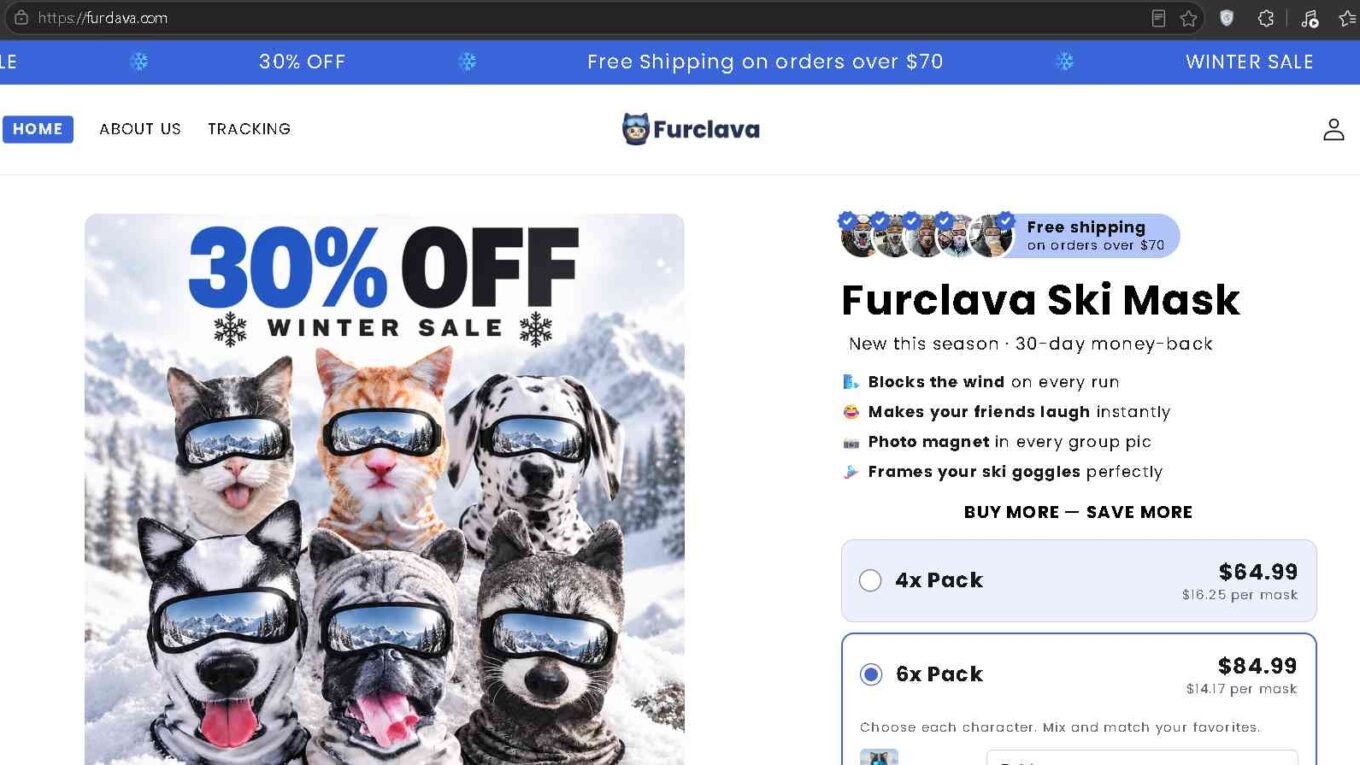
Furclava Review: The Anatomy of a Viral Social Media Drop-Shipping Trap
If you have spent any time scrolling through TikTok, Instagram Reels, or Facebook recently, you have likely encountered flashy videos of hyper-realistic 3D animal-print balaclavas and ski masks designed to turn you into a roaring tiger, a snarling wolf, or a fluffy snow leopard on the slopes.
These viral ad funnels almost always route excited shoppers directly to Furclava, an online storefront promising ultra-plush, head-turning winter headwear complete with steep limited-time discounts and automated discount codes in the comments.
At first glance, it looks like an inventive, fun outdoor lifestyle brand taking ski culture by storm. However, beneath the polished video clips and sleek e-commerce veneer lies a classic blueprint of modern retail deception: the social media pop-up drop-shipping operation. Before entering your payment details, it is essential to understand how these stores operate, what you are actually buying, and whether Furclava is legitimate or just another seasonal cash grab.
Fundamentals of the Social Media Pop-Up Drop-Shipping Scam
To understand what is happening behind the scenes, we first need to dissect the broader mechanics of contemporary social media drop-shipping schemes.
A standard drop-shipping business model is not inherently illegal: a merchant acts as a middleman, forwarding your order to a third-party manufacturer or supplier who packages and ships the product directly to your door. However, over the past few years, unscrupulous marketers have refined this model into an exploitative “pop-up” scheme built entirely around viral algorithms, misleading visual marketing, and minimal consumer recourse.
The formula typically follows three core phases:
- Trend Hijacking & Disposable Infrastructure: Operators identify an impulse-buy product category that photographs well—such as novelty apparel, viral gadgets, or seasonal sports gear. They register a fresh domain, spin up a turnkey Shopify storefront in under two hours, and build targeted landing pages. Because these domains are treated as disposable, the creators have zero long-term commitment to brand reputation.
- Perceptual Bait-and-Switch via High-Engagement Media: Instead of filming the actual bulk inventory, marketers use CGI renders, AI-enhanced images, or re-edited third-party clips that showcase an impossibly luxurious version of the item. By the time prospective buyers hit the website, their expectations are anchored to a premium $40–$60 boutique standard.
- The Buffer Window and Quiet Exit: Delivery times from overseas manufacturing hubs take anywhere from 15 to 45 business days. This delay creates an artificial “honeymoon phase” during which thousands of orders are processed before initial customer complaints begin surfacing online. Once the negative reviews pile up or payment processors initiate holdbacks, the operators abandon the storefront, close the domain, and relaunch the identical product line under a brand-new name.
📧 Need Legal Assistance?
Contact the author for legal consultations, case evaluations, and professional inquiries.
Case Study: Investigating Furclava
Applying this forensic framework directly to Furclava reveals a textbook execution of this pop-up marketing playbook.
How the Website Works
Furclava functions as a stripped-down, single-category e-commerce catalog powered by typical hosted shop software. The interface is engineered for speed and immediate checkout: bold call-to-action buttons, countdown timers, and banners declaring site-wide promotions (frequently “30% OFF Today Only” or “Buy 2, Get 1 Free”).
The user journey is straightforward: click an ad link on social media, land directly on an individual product page, pick an animal style, and proceed straight to the digital cart without ever needing to navigate a corporate homepage or browse an authentic brand catalog.
Marketing Claims vs. Reality: The Animal Balaclava
Furclava markets novelty animal-themed fleece balaclavas and ski hoods. Their marketing copy paints an enticing picture:
- The Claim: Thick, insulating winter gear that keeps skiers and snowboarders warm in freezing conditions while maintaining an incredibly detailed, high-definition 3D animal face complete with realistic faux-fur texture, custom ears, and rugged weather resistance.
- The Reality: The items being sourced are standard, mass-produced polyester tube masks manufactured in bulk overseas. Instead of dense, high-pile plush fleece or breathable performance technical fabric, the actual delivered product is almost universally a paper-thin polyester-spandex blend with flat, 2D heat-sublimation ink prints. Under real winter winds or sub-zero mountain conditions, thin synthetic materials fail to provide genuine thermal insulation, often causing heavy fogging and moisture retention inside goggles.
- The Pricing Gap: While Furclava charges anywhere from $25 to $45 (even after alleged “discounts”), the exact identical prints and cut patterns are sold on open wholesale marketplaces like AliExpress, Temu, and CJ Dropshipping for $2.50 to $5.00 per unit. Shoppers are paying an exponential markup purely for an ad campaign.
Underlying Modus Operandi
Furclava’s traffic acquisition strategy relies heavily on automated social engagement. Short, looping video clips show snowboarders and groups of friends wearing the masks with captions like “Comment MASK to get 30% off!”.
When users comment, automated bots immediately reply with pre-set direct messages and direct links to Furclava. This bot interaction accomplishes two things simultaneously:
- It games the social platform’s algorithm, making the post appear hyper-engaging and sending it viral on user feeds.
- It moves users into an impulse-buying headspace before they have an opportunity to open a search engine and look for third-party consumer feedback or cross-check wholesale listings.
Specific Red Flags Uncovered on the Site
| Red Flag | Observed Evidence | What It Means |
| Domain Longevity | Newly registered domain coinciding directly with the current marketing push. | Established retailers maintain stable histories; disposable domains suggest a temporary funnel designed to disappear. |
| Corporate Transparency | No registered parent company, verifiable physical business address, or executive names. | If your money vanishes or a product never arrives, there is no real-world entity to hold legally accountable. |
| Customer Support Setup | Contact channels restricted to generic web forms or unmonitored Gmail addresses. | A lack of dedicated, phone-based or real-time ticketing support signals an intentional bottleneck to stall refund requests. |
| Stock Scarcity Tricks | Fake countdown timers and dynamic “X people are viewing this” prompts. | Manufactured urgency designed to bypass analytical thinking and trigger immediate card authorization. |
| Asymmetrical Return Policy | Standard boilerplate refund policy with prohibitive overseas return shipping costs. | Even if an unsatisfied buyer is granted an RMA, shipping a $20 mask back to an overseas clearinghouse at personal expense usually costs $30–$50, deterring almost all returns. |
Final Verdict
Verdict: HIGH-RISK POP-UP STOREFRONT / DECEPTIVE DROPSHIPPING SCHEME.
Furclava is not an independent outdoor apparel brand, nor is it an authentic design house pioneering novel winter gear. It operates as a textbook social media drop-shipping middleman that exploits viral engagement loops, inflated retail pricing, and misleading marketing materials to sell inexpensive, bulk-manufactured commodity masks.
While some shoppers may eventually receive a physical parcel after extended transit times, what arrives at your doorstep is fundamentally different in craftsmanship, warmth, and texture from the polished lifestyle media presented in the advertisements. Paying premium boutique prices for thin, mass-market wholesale items while taking on the risks of unvetted customer service makes purchasing from Furclava an unadvisable gamble.
If you truly want an animal balaclava, taking a screenshot of the design and running a reverse image search on wholesale storefronts or major established e-commerce marketplaces will find you the exact same physical product for a fraction of the cost, accompanied by transparent shipping windows and reliable buyer protections.
Frequently Asked Questions (FAQ)
Is Furclava Scam?
Yes, in the sense that it relies on deceptive marketing practices. While it may not always be a classic “phantom site” that takes your money and runs without sending anything, it operates as a deceptive drop-shipping funnel. It markets ultra-cheap, mass-produced polyester face masks with heavily edited visuals, marking up $3 wholesale items to boutique prices while providing virtually nonexistent customer service and misleading product representation.
Is Furclava Legit?
No. Furclava is not a legitimate, established winter sports apparel brand. It lacks corporate registration details, physical headquarters, transparent manufacturing documentation, and verifiable direct phone support. It functions merely as an opportunistic pop-up store built to capitalize on impulse purchases driven by automated social media ad campaigns.
How do I identify a pop up drop shipping scam on social media?
Look for key indicators: an account running high-volume video ads with comments disabled or heavily flooded with bot replies; a domain created only weeks or months prior; lack of a clear “About Us” page detailing the founders or company location; and absence of customer service phone numbers. If a site sells only one or two novelty items backed by countdown clocks and massive discounts, it is almost certainly a pop-up funnel.
What should I do if I already ordered from Furclava?
First, monitor your bank account or credit card statement to ensure you were only charged the agreed-upon amount and were not enrolled in recurring subscription charges. If the delivery window lapses without authentic tracking, or if the product arrives severely misrepresented, contact the seller in writing once to establish a record. If they fail to provide a full refund, immediately initiate a chargeback with your bank or credit card provider under the grounds of “item not received” or “item significantly not as described.”
Where are Furclava products actually made and shipped from?
Despite any vague claims of domestic shipping or fast dispatch, these products are manufactured and fulfilled directly out of third-party wholesale logistics warehouses located overseas (primarily East Asia). This is why tracking updates often remain static for weeks before packages suddenly enter your domestic postal system.
How does the bait and switch work on viral winter mask websites?
The bait consists of realistic 3D renderings, computer-generated mockups, or curated videos of plush, faux-fur hoods with lifelike animal characteristics. The switch occurs when the buyer receives a flat, low-grade tubular polyester neck gaiter featuring basic 2D printed ink that looks pixelated, dull, and entirely devoid of the plush physical features implied in promotional clips.
How can I find the real source of a viral product before buying?
Before purchasing any trending product from a sponsored social media ad, save the product photo to your device. Upload the image to Google Lens or run a reverse visual search on Amazon or AliExpress. In the vast majority of cases, you will find identical listings from dozens of suppliers, revealing the actual wholesale price and customer reviews from people who received the real physical item.
For more shady sites exposed, check our Shopping Scam Directory — your quick guide to staying safe online.
Every safe click counts. If this post helped, a coffee gesture fuels more scam‑busting investigations.

Call to Action
Please share this article to spread awareness. Follow us on Facebook, Twitter, and Instagram for more scam alerts. If you doubt the legitimacy of any website or investment plan, DM us on social media — we’ll help you verify.