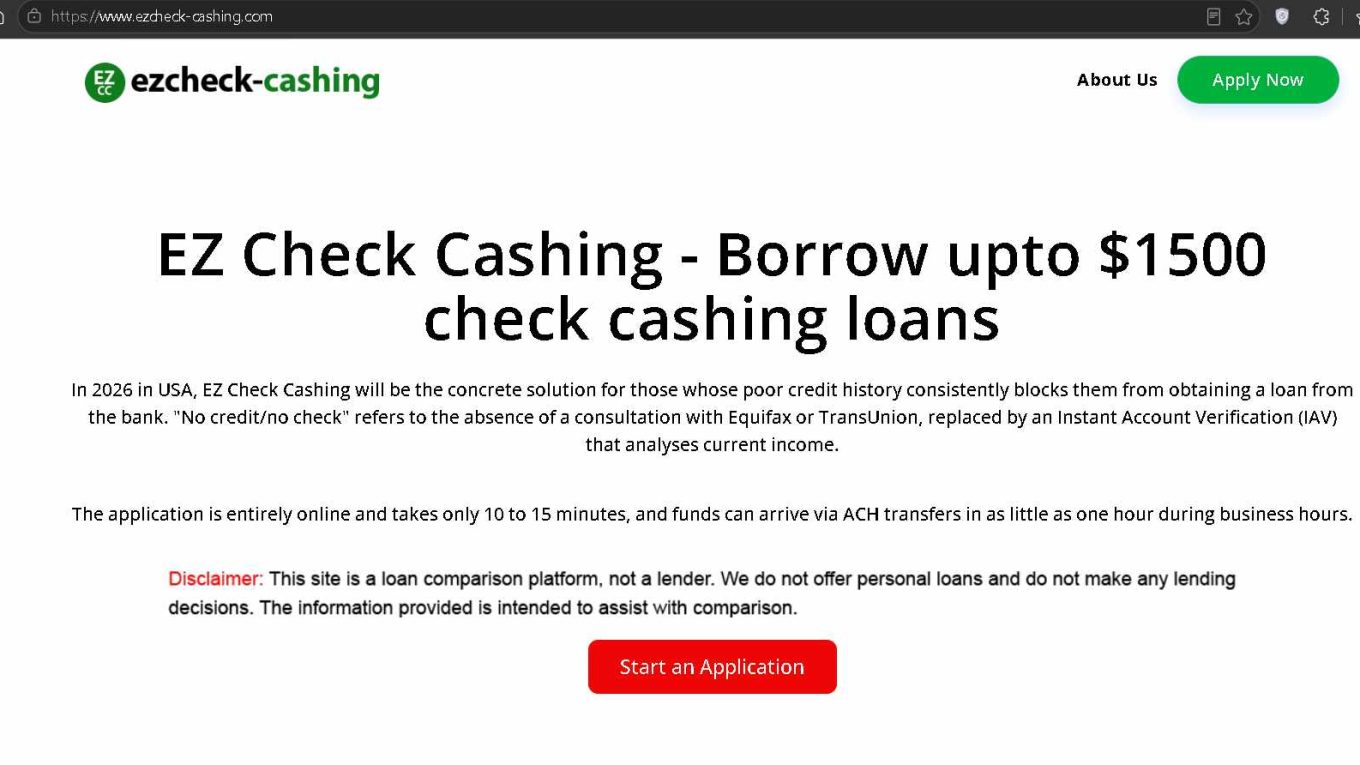
The Truth About Ezcheck-cashing: How Payday Lead Aggregators Monetize Your Sensitive Data
Navigating the online lending space requires caution, especially when platforms like Ezcheck-cashing emerge in search results promising instant emergency cash advances. Before entering sensitive personal details into these portals, it is vital to examine whether the service is genuinely helping consumers or acting as a high-risk payday loan matching and sensitive data-harvesting lead generator.
When emergency financial shortfalls strike, borrowers often turn to short-term installment loans, bad credit personal loans, and check-cashing portals. Unfortunately, ambiguous web brokers exploit this financial vulnerability by packaging lead distribution funnels as direct lending solutions, creating significant risks for consumer data privacy and bank account security.
Anatomy of High-Risk Payday Loan Matching & Sensitive Data Harvesting
In digital lending, operations typically fall into two categories: direct lenders and lead aggregators. A direct lender underwrites loans, sets specific Annual Percentage Rates (APR), evaluates credit risk, disburses principal, and handles repayments directly under state-regulated licensing.
A high-risk lead matching portal, by contrast, operates entirely as an intermediary. Instead of holding lending capital, the platform is designed to capture high-intent financial leads. Through extensive online forms, these sites collect comprehensive profiles, including:
- Full legal names, dates of birth, and Social Security numbers (SSN)
- Residential addresses and verified phone numbers
- Employer names, pay stubs, income frequencies, and work contact lines
- Checking account routing numbers, account numbers, and online banking details
Once collected, this data is routed into real-time bidding exchanges or sold down an affiliate broker chain. The consumer’s information is packaged as a “lead sheet” and auctioned off to third-party subprime lenders, debt relief agencies, offshore loan brokers, or telemarketing call centers. This structure exposes consumers to aggressive marketing blitzes, predatory interest charges, and unauthorized account debits without any guarantee of a funded loan.
Suspicious Link or Courier SMS?
Verify URLs, APKs, or parcel alerts against our threat database before clicking.
Case Study: Deconstructing Ezcheck-cashing
Portals operating under banners like Ezcheck-cashing position themselves as fast, frictionless hubs where consumers can convert checks or receive instant payday loans without traditional credit checks. A forensic look at their front-facing interface and backend behavior reveals how these platforms mirror classic aggregator playbooks.
Promotional Claims vs. Service Reality
On the surface, Ezcheck-cashing markets immediate liquidity. Promotional copy typically emphasizes:
- Same-day deposits or cash advances regardless of credit tier (targeting FICO scores below 580)
- “No hard credit inquiries,” assuring applicants that their credit scores will remain untouched
- Transparent rates with instant approvals for payroll checks, cash advances, and short-term debt consolidation
Behind the promotional claims sits a different operational mechanism:
- No Direct Capital Outlay: The platform does not fund checks or service loans. The “Apply Now” button triggers an ingestion script rather than a banking underwriting review.
- Broad Distribution Clauses: The fine print and terms of service frequently specify that submitting an application authorizes the site to share data across an unspecified network of “marketing partners,” “financial affiliates,” and “lending networks.”
- Blind Redirection: Once the form is submitted, applicants are rarely presented with a firm loan offer from Ezcheck-cashing. Instead, users are automatically redirected to third-party domains, each imposing separate terms, fees, and disclosure agreements.
Email: ApexLegalSolutionsMumbai@gmail.com
Technical Workflow: How the Lead-Generation Engine Works
- Traffic Acquisition: The site captures traffic from search engines, paid ads, or email campaigns targeting keywords like instant cash advance, no-credit-check payday loans, and emergency bad credit loans.
- Step-by-Step Data Capture: The interface employs a multi-step form. Low-friction fields (name, desired loan amount) appear first, gradually drawing applicants into entering higher-stakes data (driver’s license, employer details, SSN, and banking credentials).
- Automated Ping-Tree Routing: The applicant’s profile is sent to an automated “ping tree” API. Algorithms test the data against buyer criteria, pricing the lead based on monthly income and banking history.
- Data Dispersal: If a buyer bids on the lead, the applicant’s browser redirects to that lender’s checkout page. If rejected, the lead flows to lower-tier buyers, including debt settlement firms, subprime auto dealers, and credit monitoring services.
- Secondary Monetization: Rejected or accepted, the core data often remains stored on intermediary servers, entering long-tail SMS, robocall, and email marketing databases.
5 Red Flags Associated with Ezcheck-cashing
When evaluating whether to trust Ezcheck-cashing or similar cash-advance matching sites, keep these warning signs in mind:
1. Vague Regulatory Disclosures and Missing State Licensing
Legitimate financial service providers, payday lenders, and money services businesses (MSBs) clearly publish their state-issued licenses, physical headquarters addresses, and National Multistate Licensing System (NMLS) IDs in their site footer. Aggregator portals often list either no physical address, a generic corporate registration, or a virtual mailbox without verifying state-by-state compliance.
2. Disclaimers Renouncing Direct Lending Status
Tucked deep within the Terms of Use, these platforms explicitly state: “This site is not a lender, does not make credit decisions, and does not broker loans.” This disclaimer directly contradicts the home-page branding, shifting all legal liability away from the site operator.
3. Immediate Influx of Spam and Telemarketing
Within hours of submitting an application, users frequently report an onslaught of unsolicited calls, spam SMS messages, and phishing emails. This influx occurs because the applicant’s contact information was instantly dispersed to multiple third-party marketing networks.
4. Zero Upfront Transparency Regarding APR and Repayment Terms
Under the Truth in Lending Act (TILA), authentic lenders must disclose the APR, repayment schedules, finance fees, and late penalties before collecting complete personal information. Intermediaries cannot supply these figures because they have no control over the final interest rate, which often ranges from 399% to 780% APR once transferred to subprime lenders.
5. Demands for Unrestricted Banking Access
Sites that harvest sensitive data often request online banking login credentials or complete ACH direct debit authorizations during the preliminary matching process. Entering account numbers into an unvetted platform significantly increases the risk of unauthorized electronic fund transfers, hidden membership charges, or phantom debt recovery scams.
Safe Financial Alternatives for Emergency Cash
Consumers facing unexpected bills should consider these alternatives before submitting identifying details to unvetted lead-generation funnels:
| Alternative | Typical APR / Cost | Primary Benefit | Approval Speed |
|---|---|---|---|
Federal Credit Union PALs Payday Alternative Loans | Capped at 28% APR | Regulated rates & credit-building potential | 1–3 Business Days |
Earned Wage Access Apps EarnIn, Brigit, etc. | $0–$4 voluntary tips / fees | Advances your own earned income without interest | Instant to 24h |
Local Community Action Agencies Government & Non-Profit Grants | Non-repayable grants / Subsidies | Direct utility & emergency rent relief | Varies by agency |
Peer-to-Peer Personal Loans Bad Credit Direct Networks | 12% – 36% APR | Fixed monthly terms with transparent disclosures | 24–48 Hours |
Every safe click counts. If this post helped, a coffee gesture fuels more scam‑busting investigations.

Frequently Asked Questions
Is Ezcheck-cashing scam or safe?
Ezcheck-cashing operates primarily in a legal gray area common to lead generation networks rather than functioning as an outright fraudulent entity, but it cannot be classified as a safe direct lender. The platform exists to aggregate and monetize consumer financial data. While it may occasionally connect an applicant with an actual lender, users face severe privacy risks, unwanted marketing contacts, and potential exposure to predatory, triple-digit APR terms.
Is Ezcheck-cashing legit?
Ezcheck-cashing is not a legitimate direct bank, licensed credit union, or certified check-cashing bureau. It serves strictly as an unregulated marketing intermediary. Consumers seeking fully licensed borrowing options should look for providers registered with state banking divisions and verified through the NMLS database.
What happens to personal data submitted to Ezcheck-cashing?
When an application is completed, data including full names, addresses, Social Security numbers, employment histories, and bank details is stored and routed across third-party affiliate systems. Even if a loan is never approved, this sensitive data can be retained and used for future marketing or sold to secondary lead brokers.
Does applying on Ezcheck-cashing hurt my credit score?
The initial submission on a lead aggregator generally involves only a soft pull, which does not directly hurt credit scores. However, once the lead is transferred to outside subprime lenders, those third-party providers may execute a hard inquiry when formalizing an installment or payday agreement, which will reflect on consumer credit files.
Why do platforms like Ezcheck-cashing ask for bank account routing and account numbers upfront?
Lead generation sites request banking details upfront to verify that an applicant possesses an active checking account with regular direct deposits. Active banking profiles fetch higher prices on lead exchanges because lenders require an active account to process automated ACH withdrawals for loan payments and fees.
What are the main risks of using an unverified payday loan matching service?
The primary risks include identity theft, automated overdraft and nonsufficient funds (NSF) bank fees from repeated trial debits, persistent phone and email harassment from debt buyers, and high-interest repayment cycles that can trap borrowers in revolving debt.
Can I withdraw my consent or have my data deleted after submitting a form?
Removing your data can be challenging. Because lead aggregators distribute consumer profiles across dozens of external affiliate databases almost instantly, sending a data deletion request to the primary site does not automatically delete that information from every partner who purchased the lead.
How can I spot the difference between a direct lender and a lead generator?
A direct lender will clearly present a physical headquarters, explicit state licensing information, clear APR disclosure ranges (e.g., 5.99% to 35.99%), and a dedicated customer service phone line. Lead generators typically rely on generic website designs, hide behind broad “not a lender” disclaimers, omit license numbers, and redirect users to third-party domains upon submission.
For more shady sites exposed, check our Shopping Scam Directory — your quick guide to staying safe online.
Help Us Spread Awareness
Please share this article to spread awareness. Follow us on social media for more scam alerts.