Corelledish Review: Stolen Plates, Bogus Rates, and the Kitchenware Impersonation Trap
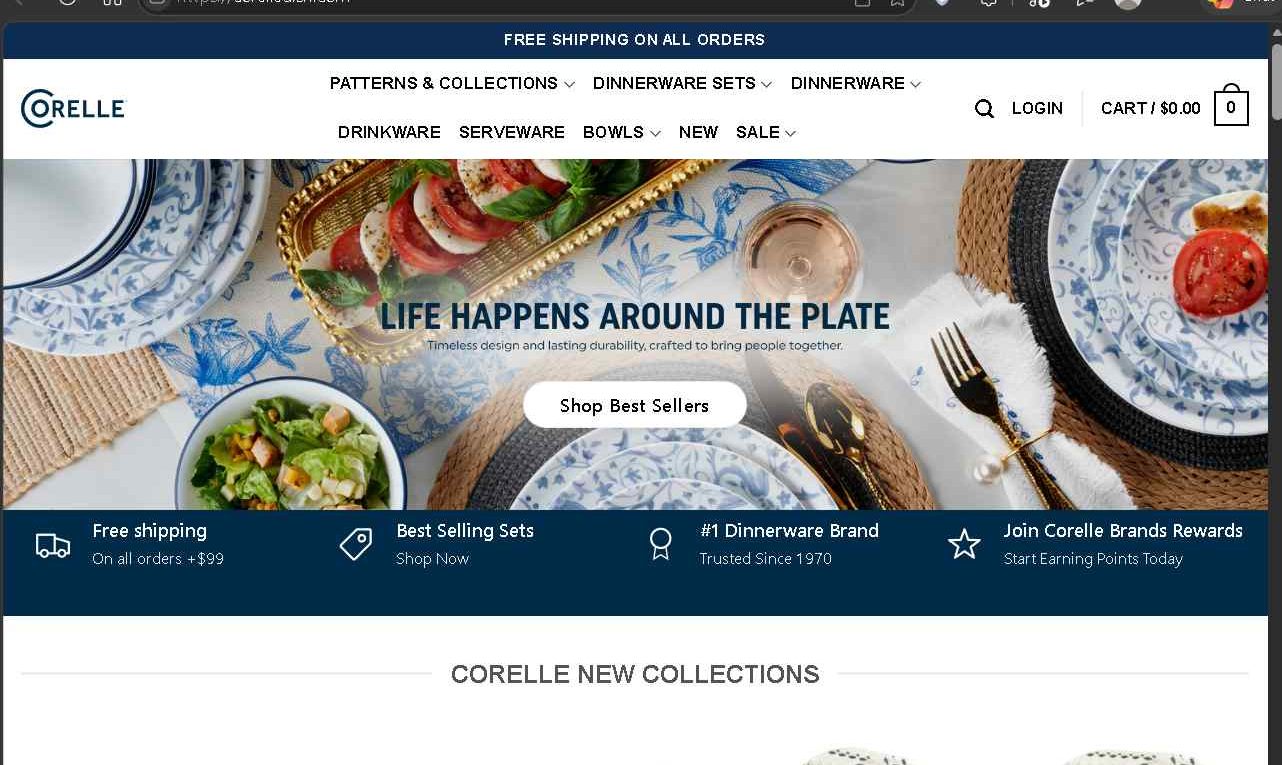
Kitchenware shoppers browsing search engines for dinnerware bargains frequently cross paths with Corelledish, an illicit web portal running a calculated brand impersonation scam. The storefront duplicates the visual aesthetics, product lines, and design branding of Corelle—the iconic American glassware and dishware company—to trick consumers into paying for phantom orders while harvesting sensitive financial credentials.
Finding genuine kitchen goods online requires understanding how scam operators copy heritage brands to construct convincing, low-cost counterfeit traps. This investigative review breaks down how Corelledish operates, evaluates the anatomy of brand impersonation fraud, highlights critical warning signs, and details clear steps to safeguard your banking details and recover lost payments.
What Is a Brand Impersonation Scam?
A brand impersonation scam is a predatory cybercrime model where malicious operators create an unauthorized duplicate of a well-established manufacturer’s website. They hijack trade names, official trademarks, lifestyle images, and catalog layouts to trick shoppers into believing they are buying directly from an official factory outlet, authorized liquidator, or regional distributor.
Unlike legitimate clearance outlets that buy surplus inventory, an impersonation storefront has zero physical stock. The primary goal is capturing immediate consumer payments and sensitive credit card information.
Operators rely on lookalike domains, paid digital shopping ads, and promotional social links to attract consumers searching for household discounts. Because shoppers already recognize and trust the heritage brand, their natural skepticism drops, making them far more likely to enter payment information on an untrusted website.
Suspicious Link or Courier SMS?
Verify URLs, APKs, or parcel alerts against our threat database before clicking.
Case Study: Deconstructing the Corelledish Operation
Analyzing Corelledish demonstrates how modern brand cloning funnels exploit household names to run retail scams.
           [ Legitimate Manufacturer: Corelle.com ]
                          │
             (Official Logos, Catalogs & Copy Scraped)
                          ▼
   ┌────────────────────────────────────────────────────────┐
   │             Scam Portal: corelledish.com               │
   │  ┌─────────────────────────┐  ┌─────────────────────┐  │
   │  │ Cloned Homepage Design  │  │ Absurdly Low Prices │  │
   │  │ • Stolen Corelle logo   │  │ • 18-pc sets for $19│  │
   │  │ • "Life Happens" banner │  │ • Bowls for $2 - $5 │  │
   │  │ • Contradictory shipping│  │ • 70%–80% Markdowns │  │
   │  └─────────────────────────┘  └─────────────────────┘  │
   └────────────────────────────────────────────────────────┘
                          │
            (Shopping Ads & Search Queries)
                          │
                          ▼
              [ Shopper Enters Checkout ]
                          │
       ┌──────────────────┴──────────────────┐
       ▼                                     ▼
 [ Payment Card Compromised ]      [ Ghost Order / Knockoff ]
 • CVV, Card details stolen        • Total non-delivery
 • Risk of unauthorized charges    • Cheap junk sent to delay disputes
Digital Infrastructure and Cloning Mechanics
The platform duplicates Corelle’s official website architecture. It displays Corelle’s registered logo, official brand slogan (“Life Happens Around the Plate”), and standard navigation menus, including Patterns & Collections, Dinnerware Sets, Dinnerware, Drinkware, Serveware, Bowls, New, and Sale.
Instead of operating an authorized inventory management system, the developers ran scraping scripts across the real manufacturer’s site to mirror product photos, pattern descriptions, and dimensions. Consumers landing directly on category pages via search results can easily mistake the portal for a legitimate direct-to-consumer store.
What Corelledish Claims and Offers
- Unrealistic Price Reductions: Complete 18-piece dinnerware sets that retail for $65 to $75 are listed for $19.50. High-demand Vitrelle glass sets and serving bowls are advertised for as little as $2.50 to $5.00, representing unfeasible markdowns of 70% to 80%.
- Conflicting Freight Promises: The top sitewide announcement bar claims “FREE SHIPPING ON ALL ORDERS”, while icon banners right beneath it contradict the offer by stating “Free shipping on all orders +$99”—an error stemming from poorly configured site scrapers.
- Loyalty Perks: Displays promotional links prompting users to “Join Corelle Brands Rewards” and “Start Earning Points Today,” mimicking authentic customer loyalty programs.
- Broad Availability: Shows full stock across retired patterns, seasonal lines, and popular Corelle collections without stock limits.
E-Commerce Protection Checklist
-
1
Break the In-App Browser Funnel
Never check out inside Instagram or TikTok web-views. Copy the link and open a standalone browser to remove referral tracking tokens and inspect the real root domain.
-
2
Run a 60-Second Background Check
Look up the domain age via WHOIS (avoid sites under 6 months old) and reverse-search product imagery on Google Lens to verify whether cheap wholesale duplicates exist.
-
3
Verify Corporate Entity Details
Check the website footer for a registered legal company name, verifiable physical address on Google Maps, and dedicated phone support—not just an anonymous web form.
-
4
Demand Insulated Payment Options
Refuse direct bank deposits, UPI QR codes, crypto, or debit transfers. Use zero-liability credit cards or protected checkout channels like PayPal Goods & Services.
-
1
Stop Waiting for Merchant Email Replies
Do not waste dispute windows negotiating with automated helpdesks or generic tracking updates. Deceptive pop-up storefronts stall purposely to exhaust chargeback timelines.
-
2
Initiate a Bank Chargeback Within 24-48 Hours
Call the phone number printed on the back of your card. Request an immediate dispute categorized under Merchant Fraud, Goods Not Delivered, or Misrepresentation.
-
3
Freeze Billing and Replace Card Credentials
Instruct your bank’s fraud desk to block future merchant authorizations under that descriptor and re-issue a fresh card number to prevent hidden recurring subscription debits.
-
4
Preserve Order & Ad Evidence
Save full-page screenshots of the product page, transaction debit receipts, and tracking communications to upload directly into your card issuer’s dispute portal.
5 Critical Red Flags on Corelledish
1. Lookalike Domain Name
Authentic manufacturers consolidate their retail presence on concise, authoritative domains. The official website for Corelle dinnerware is corelle.com. Unofficial operators register lookalike domains adding keywords like “dish,” “outlet,” “store,” or “clearance” (corelledish.com) to siphon traffic from people looking for deals.
2. Deep Discounts Below Production Cost
Manufacturing specialized three-layer laminated Vitrelle glass requires proprietary industrial facilities. Genuine Corelle dinnerware maintains steady wholesale value due to manufacturing costs and freight weight. Selling full boxed sets for under $20 with free delivery across the country is economically unviable. Excessive discounts across entire store catalogs remain the most consistent indicator of a payment harvesting scam.
3. Sloppy and Contradictory Website Copy
Because scam sites are built rapidly using automated scrapers, their site templates frequently contain errors. On Corelledish, one section promises free shipping on all orders, while another requires a $99 purchase threshold. Furthermore, the footer lists vague text like "© 2026 Corelle Dish - Ca" instead of verifiable parent company details, corporate registrations, or physical headquarters addresses.
4. High Risk of Payment Harvesting
Rather than utilizing verified merchant checkouts backed by multi-factor authentication or established digital wallets (such as PayPal, Apple Pay, or Google Pay), brand impersonation sites often steer shoppers into unvetted card entry forms. These capture your credit card number, CVV, expiration date, and billing details directly into the scammer’s database, leaving your accounts vulnerable to unauthorized transactions.
5. Anonymous Operators and Unmonitored Support
Genuine home goods retailers provide transparent company details, including corporate registration records, active customer support telephone numbers, and dedicated corporate email channels. Clone sites conceal ownership behind domain privacy proxies, offer no functional phone support, and route inquiries through disposable web forms or generic webmail addresses.
Action Plan: Steps for Smarter Shopping & Consumer Recovery
If you visited Corelledish or submitted payment information on the site, take these immediate steps to secure your finances:
- Request an Immediate Credit Card Chargeback: Contact your card issuer’s fraud division right away. Explain that you made a purchase on an unauthorized counterfeit impersonation website and request a formal chargeback for merchant fraud and non-delivery.
- Cancel and Replace the Compromised Card: Because the checkout form collected your credit card number, CVV code, and expiration date, consider the card compromised. Have your bank cancel it and issue a replacement with a new card number to block future unauthorized charges.
- Collect and Archive Transaction Records: Keep copies of your order confirmation emails, bank statements showing the payment, screenshots of the product listings, and the site URL. These records serve as evidence if your payment provider reviews the dispute.
- Watch for Follow-Up Phishing Scams: Fraud rings frequently trade stolen customer lists. Be alert for suspicious SMS messages or emails claiming your package is stuck at a logistics facility or held for unpaid customs fees.
- Report the Scam Domain: Submit the URL to consumer protection agencies like the Federal Trade Commission (ReportFraud.ftc.gov) or econsumer.gov, and flag the site on Google Safe Browsing to help take the link down.
Frequently Asked Questions
Is Corelledish scam?
Yes, Corelledish is an unauthorized scam website. It uses stolen logos, photos, and branding from the legitimate Corelle brand to collect payments and compromise credit card details without sending authentic goods.
Is Corelledish legit?
No, Corelledish is not a legit online store. The official, authentic web store for genuine Corelle dinnerware is hosted exclusively at corelle.com.
What is the authentic website to buy Corelle dinnerware online?
The legitimate brand storefront is corelle.com. Authentic Corelle products can also be purchased through certified department stores, authorized kitchenware retailers, and major retail marketplaces like Target, Walmart, and Amazon.
Can I get my money back after buying from Corelledish?
Yes, if you paid using a credit card, you can dispute the charge with your financial institution by requesting a fraud-related chargeback. Debit card payments and wire transfers offer fewer protections, so calling your bank immediately is critical.
Why are the dinnerware sets on Corelledish priced so cheap?
The prices are artificially reduced to lure shoppers into making quick impulse purchases. Because the site operators have no actual inventory to manufacture or ship, they can display impossibly low prices to maximize stolen payments.
Why does the site display a secure HTTPS padlock icon?
The padlock symbol only confirms that the connection between your browser and the website’s host server is encrypted via SSL. It does not verify the business’s identity, legality, or whether the merchant will actually ship your order.
What should I do if a clone shop sends a cheap trinket instead of my order?
Photograph the package, postal shipping label, and received item right away. Provide these images directly to your card issuer as concrete proof of counterfeit bait-and-switch fraud to support your chargeback claim.
How can I spot fake dinnerware websites online?
Watch for lookalike web domains with extra words like “dish” or “outlet,” prices discounted by more than 60% across the board, conflicting shipping statements, missing corporate office addresses, and absent telephone customer support lines.
Every safe click counts. If this post helped, a coffee gesture fuels more scam‑busting investigations.

For more shady sites exposed, check our Shopping Scam Directory — your quick guide to staying safe online.
Help Us Spread Awareness
Please share this article to spread awareness. Follow us on social media for more scam alerts.