Buyspookything Review: Is That Viral Halloween Prop Deal a Wicked Trap?
Every autumn, front yards transform into miniature horror movie sets complete with fog machines, tombstone props, and towering animatronics. But before you rush to deck out your lawn from Buyspookything, take a moment to look past the flashy banner ads and spooky visuals. Online shoppers hunting for early bargains on viral holiday decor are finding themselves steered toward this storefront, leaving many to wonder whether it is an incredible seasonal steal or a cleverly crafted illusion designed to vanish with their cash.
The rise of seasonal e-commerce has made autumn a prime target for opportunistic digital storefronts that appear overnight, churn through social media ad budgets, and disappear just as quickly. Buyspookything bears the classic hallmarks of this exact cycle. In this investigative teardown, we will pull back the digital cobwebs to look at how fraudulent popup shops operate, break down the specific red flags found on this site, and explore what actually happens when you hit that enticing “checkout” button.
Anatomy of the “Fraudulent Popup Shop” Scam
To understand what makes sites like this tick, we have to look behind the curtain of modern holiday marketing. The fraudulent popup shop—often referred to by cybersecurity investigators as an “ephemeral store”—is not an accidental bad business. It is an intentional, highly calculated operation designed to exploit temporary consumer urgency.
1. The Seasonal Blitz Strategy
These storefronts operate around specific consumer calendar spikes: Halloween animatronics in September and October, viral Christmas trees in November and December, and novelty laser engravers or outdoor pools in the spring. Operators know that during these windows, buyers are emotionally driven, looking for novelty gifts, and searching for steep discounts on expensive home goods.
2. High-Tech Ads, Low-Rent Infrastructure
Running an operation like this used to require technical web development expertise. Today, rogue operators use ready-made e-commerce templates on platforms like Shopify, WooCommerce, or custom cloned scripts. Setting up a storefront takes less than thirty minutes. They attach a generic domain, import a bulk catalog file, paste a couple of stolen video clips, and connect a merchant processor.
From there, the real investment goes into targeted social media ads on platforms like Facebook, Instagram, TikTok, and Pinterest. The ad creatives are not produced by the store; they are downloaded straight from legitimate creator channels, viral TikTok videos, or official trade demonstrations from companies like Lowe’s, Home Depot, Spirit Halloween, or specialized prop designers.
3. The Tracking Number Shell Game
When an online shopper buys an item from a legitimate merchant, tracking details reflect actual parcel transit. Fraudulent popup operations, however, frequently employ a “tracking number shell game.”
- Ghost Shipments: Some operators purchase bogus tracking numbers from illicit logistics brokers. These numbers show a parcel moving across international hubs and eventually registering as “Delivered” to a zip code near you, even though nothing was ever mailed.
- The Dollar-Store Substitution (Bait-and-Switch): Other setups ship a tiny, negligible item—such as an envelope containing a single foam sticker, a plastic ring, or a flat nylon sheet—via standard economy post. The goal here is simple: generate a valid postal scan. When the buyer opens a dispute with PayPal or their credit card company claiming non-delivery, the seller presents the carrier tracking confirmation showing delivery to the user’s postal code, buying the rogue merchant extra weeks before chargebacks catch up with them.
📧 Need Legal Assistance?
Contact the author for legal consultations, case evaluations, and professional inquiries.
Case Study: Deconstructing Buyspookything
When you pull up Buyspookything, you aren’t looking at an established seasonal novelty brand with years of curated customer reviews. You are looking at a textbook example of a modern, fast-turnaround drop-store. Let’s analyze how this specific site presents itself to unsuspecting decorators.
The Marketing Pitch & The Featured Product
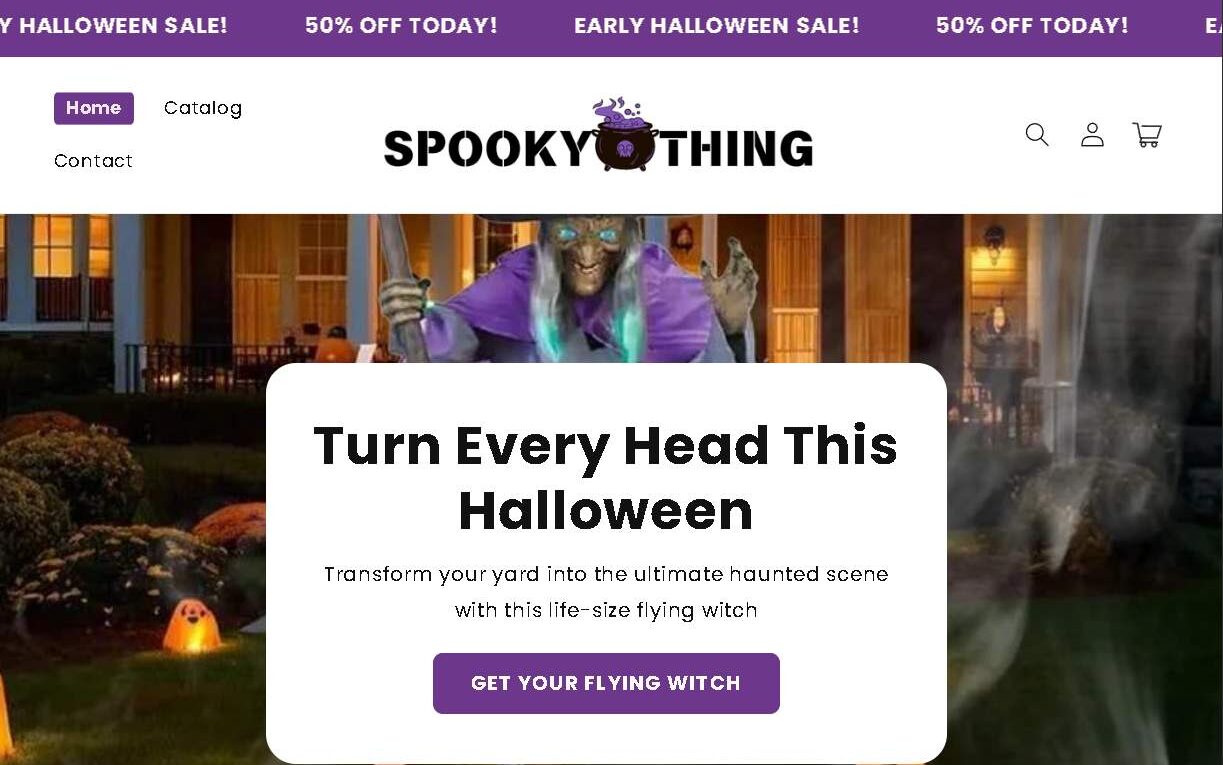
Front and center on the storefront sits an eye-catching hero banner with a headline screaming: “Turn Every Head This Halloween.” Beneath the bold text, the subheadline promises to help you “Transform your yard into the ultimate haunted scene with this life-size flying witch.”
The prominent call-to-action button invites visitors to “GET YOUR FLYING WITCH.” The background of this banner showcases a massive, highly detailed, animated flying witch prop floating menacingly over an immaculate suburban lawn, complete with lit cauldrons, realistic facial sculpts, glowing eyes, and synchronized movement.
To sweeten the deal, the top navigation ticker runs a looping banner: “EARLY HALLOWEEN SALE! — 50% OFF TODAY!”
The Underlying Modus Operandi
Here is where reality and digital illusions clash:
- The Cost Disconnect: Anyone who collects or builds Halloween yard displays knows that a genuine, heavy-duty, motor-driven animatronic with sound chips, internal metal framing, and dynamic motion sensors retails anywhere between $180 and $350+. Manufacturing, packaging, and shipping a 20-to-30-pound oversized parcel overseas costs more than the entire price these popups typically charge. When a site offers a “life-size flying witch” at a fraction of that cost with free or nominal shipping, the math fundamentally fails to hold up.
- Stolen Creative Assets: The video clips and photos of the life-size flying witch featured on the site are ripped directly from genuine prop designers, commercial holiday retailers, or viral decorator videos on YouTube and TikTok. The store operators did not build this prop, nor do they stock it in a domestic warehouse.
- The Checkout Rush: The site pairs deep discounts with artificial countdown timers and constant “limited stock” alerts. This layout is engineered to hijack your rational decision-making, encouraging an impulsive checkout before you take two minutes to run a search for external reviews.
Detailed Red Flags Uncovered on the Storefront
If you look closely at the structure and functionality of the website, multiple warning bells ring in unison:
1. Minimalist “Template-Only” Navigation
Legitimate retailers provide extensive navigation menus: detailed department categories, brand information, customer support hubs, order status portals, and clear shipping matrices. Buyspookything features a stripped-down header with bare minimum navigation: just Home, Catalog, and Contact. This minimal setup is standard for pop-and-drop e-commerce templates assembled in minutes.
2. Anonymous Contact Information
When you dig into the contact pathways of stores like this, you will rarely find:
- A verifiable physical headquarters address.
- A registered corporate entity name that can be matched to state or national business filings.
- A monitored direct customer service phone number.
Instead, shoppers are met with an anonymous web contact form or a generic email address. If an order goes wrong or fails to arrive, getting a human response is virtually impossible once your payment has processed.
3. Missing Real-World Footprint & Social Proof
Established seasonal businesses take pride in customer community interactions, showcasing real buyer photos, tagged Instagram posts, and third-party ratings. This site has no authentic community footprint. Any reviews visible directly on the product landing pages are statically coded widgets—meaning the site owner wrote or imported them directly rather than collecting them via verified third-party review platforms like Trustpilot or Google Customer Reviews.
4. Blanket “50% Off” Urgency Traps
Persistent banners reading “EARLY HALLOWEEN SALE! 50% OFF TODAY!” create a false sense of fleeting opportunity. If you return to the site tomorrow, next week, or next month, you will notice the exact same “today only” urgency banner running uninterrupted. Real retailers balance seasonal sales with standard pricing; fly-by-night operations stay permanently “on sale” to maximize panic conversions.
What Happens If You Place an Order?
If you already entered your card details into the checkout form, here is what typically unfolds across the next two to six weeks:
- The Silence Period: You receive an automated confirmation email with an arbitrary order number. For several days or weeks, no dispatch update arrives.
- The Bogus or Slow-Boat Tracking Notice: Eventually, you might receive a shipping notification linking to an obscure third-party carrier tracking aggregator. The parcel will appear to move slowly through international sorting hubs.
- The Delivery Letdown:
- In scenario A, the tracking updates to “Delivered,” but your porch remains empty.
- In scenario B, you open your mailbox to find a cheap padded mailer containing a flimsy, palm-sized cloth silhouette or cheap plastic witch mask—nowhere near the towering, motorized animatronic promised on the site.
- The Customer Service Runaround: When you write to customer service demanding a refund, you will either be completely ignored or receive a form email offering a 10% to 20% partial refund while asking you to pay $50+ to ship the plastic trinket back to an overseas address at your own expense.
Action Plan: What to Do If You Already Paid
If you made a transaction on the site, don’t panic. Take these proactive steps immediately to safeguard your funds and accounts:
- Contact Your Bank or Card Issuer: Do not wait for the return window to close. Call the number on the back of your credit or debit card, explain that you made a purchase on a deceptive storefront advertising stolen product imagery, and request a chargeback under merchant fraud or goods not as described.
- Monitor Card Activity: Watch your statements closely for unauthorized micro-charges or secondary subscriptions that occasionally accompany low-tier checkout forms. If necessary, request a replacement card.
- Preserve Documentation: Take full-page screenshots of the product description page, the order receipt, and any email correspondence. These serve as evidence for your bank’s dispute department.
- Report the Source Ad: If you arrived at the store via an Instagram, Facebook, or TikTok sponsored post, find the ad history in your feed settings and flag it for deceptive/misleading commercial practices.
Final Verdict
Verdict: AVOID.
Buyspookything bears all the definitive characteristics of an ephemeral, deceptive seasonal popup shop. From its unrealistic discount claims on complex animatronics to its generic infrastructure and copied media assets, the site is designed to capture quick impulse dollars during the holiday rush without providing the high-value items shown in its marketing.
If you are looking for outdoor Halloween decorations that will truly delight your neighborhood, stick to authorized dealers, vetted specialty prop shops, or reputable brick-and-mortar retailers where you can inspect build quality and verify customer warranties.
Frequently Asked Questions (FAQ)
Is Buyspookything Scam?
Yes. Buyspookything exhibits classic hallmarks of an online retail scam, including dramatic underpricing of viral yard animatronics, stolen promotional media, anonymous contact details, and high-pressure discount tickers intended to trick impulse shoppers.
Is Buyspookything Legit?
No, Buyspookything is not considered a legitimate or verified retail business. It lacks transparent corporate ownership, verifiable business registration, authentic third-party consumer feedback, and an established supply chain to deliver the expensive animatronics shown on its pages.
How do seasonal Halloween decor scams work?
Seasonal decor scams work by publishing slick, temporary websites that advertise viral holiday products (like giant yard animatronics or complex light displays) at extreme discounts. Operators run heavy social media ad campaigns using stolen video footage. Once orders are gathered, they either send nothing or deliver cheap, palm-sized trinkets before closing down the website when dispute rates escalate.
Why are viral flying witch animatronics so cheap on social media ads?
Viral flying witch props appear cheap on social media ads because scam storefronts use footage of expensive, commercially produced props (which normally cost hundreds of dollars) while listing them for under $50. The low price is deliberate bait—the seller does not possess the inventory and cannot deliver the actual motorized item at that price point.
What should I do if a fake online store won’t refund my money?
If an unresponsive or deceptive online store refuses to refund your money, bypass the seller entirely and file an immediate transaction dispute (chargeback) with your credit card issuer or payment provider (such as PayPal). Provide copies of your order confirmation, screenshots of the original advertised product, and details of any non-delivery or bait-and-switch substitutions.
How can you tell if an online Halloween prop store is fake?
You can identify a fake online prop store by checking several key elements: look up the domain registration date on WHOIS to see if it was created recently; check for a verifiable physical address and corporate phone number; reverse-search product imagery to see if it was stolen from major brands; and be wary of stores offering 50% to 80% markdowns across their entire catalog.
Can you get your money back from a bait-and-switch retail scam?
Yes, you can typically recover your funds through your financial institution. When a merchant ships a cheap trinket (like a pair of cheap socks, a piece of foam, or an envelope) instead of the large item you ordered, it qualifies as “goods significantly not as described.” Present the tracking weight disparity and photos of the received parcel to your bank to support your claim.
For more shady sites exposed, check our Shopping Scam Directory — your quick guide to staying safe online.
Every safe click counts. If this post helped, a coffee gesture fuels more scam‑busting investigations.

Call to Action
Please share this article to spread awareness. Follow us on Facebook, Twitter, and Instagram for more scam alerts. If you doubt the legitimacy of any website or investment plan, DM us on social media — we’ll help you verify.