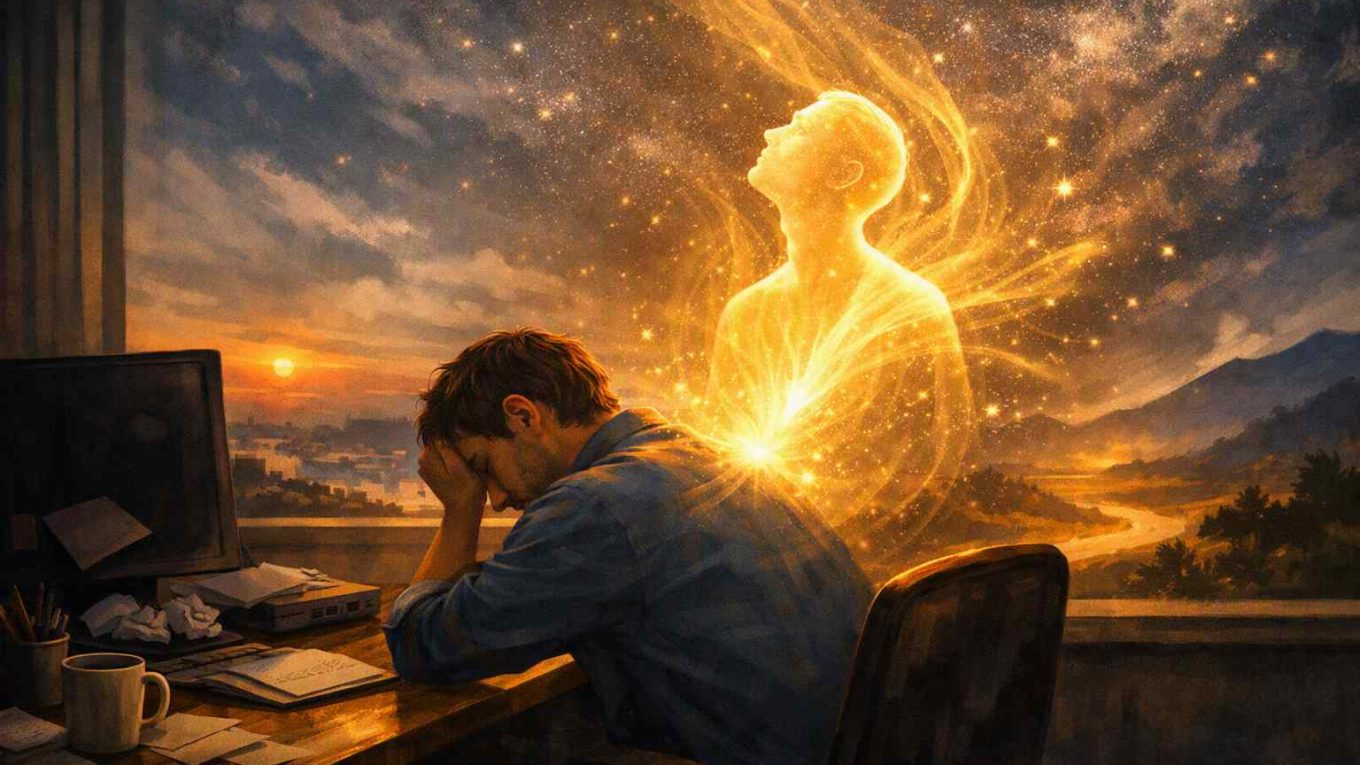
Chapter1: Boredom: The Signal of the Soul
Boredom Beyond Work and Study
While working, I felt boredom creeping into my mind. It wasn’t the first time, and I’m sure it happens to all of us. What surprised me was that earlier I used to feel bored while studying, but now it appeared during work. Soon I realized boredom is not tied only to study or work — it emerges whenever the mind needs refreshment from monotonous activities.
When we begin a new project, our energies are high, and we pour ourselves into the initial stages. But as things become trickier and harder, boredom often sets in, and we abandon the work midway. Yet I noticed something: when I write articles with genuine enthusiasm, when the subject comes from within, it never feels like work. The effort feels weightless, almost like zero. That taught me that boredom is often a signal that we are doing mechanical work, not meaningful work.
Mechanical Work vs. Artistic Work
We are human beings, not machines built to repeat tasks endlessly. If someone can do repetitive work happily, it is because they truly enjoy it. Otherwise, work must evolve from mechanical repetition into something artistic.
Boredom arises when the mind is tired, but it also appears when the mind is fresh yet the thoughts are stale. Much of the world’s work today is copy‑and‑paste, rudimentary tasks that machines will eventually replace. But those who understand their craft deeply, who approach it with enthusiasm and focus, transform their work into art.
Even simple lines on paper can become visuals in the mind of such a person. Their work carries flow, symmetry, and life — something that feels crafted by an artist rather than performed by a machine.
I’ve always disliked competition. Perhaps because society conditions us to race ahead of others instead of learning our craft with joy. I remember playing badminton with friends for hours, never feeling tired. The matches stretched into the night, and though our bodies were exhausted, our minds went home fresh.
But when I joined an academy to learn badminton professionally, the competitive environment drained the fun. Winning became the motive, and happiness slipped away. Ironically, before learning techniques formally, I used to win games effortlessly, guided by natural instinct. The academy made me technically sound but stripped away the joy.
The Signal of Boredom
This is the societal condition many of us face — chasing competition, certificates, and profiles instead of true learning.
Only a few people know what they truly want to do, and those few often become masters of their craft. They turn their work into art, and success follows naturally. As Ahmed Fraz beautifully said:
vo log bahut ḳhush‑qismat the, jo ishq ko kaam samajhte the, yā kaam se āshiqī karte the
Boredom, then, is not just a nuisance. It is a signal. It tells us either that we are tired and need a pause, or that the work we are doing is not aligned with our deeper self.
For students and freshers, boredom can be a guide to explore new directions. For those already in jobs, it doesn’t mean abandoning everything overnight. It means building a buffer, preparing carefully, and then making space for something more meaningful.
Closing Reflection
If boredom visits you, treat it with empathy. It is not your enemy but your companion, whispering that your mind needs rest or that your soul seeks purpose. Listen to it. Sometimes it asks for a break, sometimes for a change, and sometimes for courage to reshape your path. Whatever the case, boredom is a reminder that you are human — meant not just to work, but to create, to feel, and to live with joy.
Boredom may feel heavy, but it is also a messenger. It tells us when our work has lost meaning or when our mind needs renewal. Yet hidden inside boredom is a surprising gift — the spark of creativity.
Read Next: Chapter 2 — The Hidden Gifts of Boredom We’ll explore how moments of stillness and monotony can unlock imagination, inspire breakthroughs, and even change the way we see our work.\
Chapter 3: The Escape from Boredom
Chapter 4: Bill Gates and Think Week
Chapter 5: Steve Jobs and the Power of Pauses
Chapter 6: Simon Sinek and the Boredom Walks