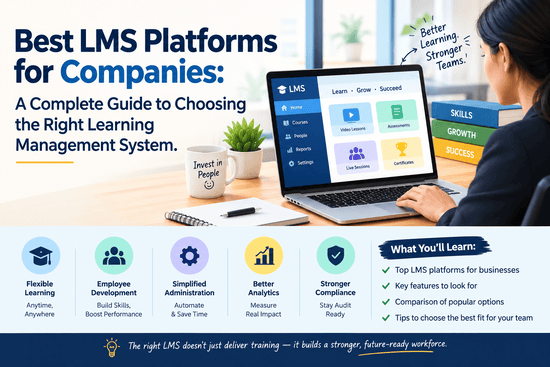
Best LMS Platforms for Companies: A Complete Guide to Choosing the Right Learning Management System
In today’s fast-changing business environment, employee learning is no longer optional. Organizations that invest in continuous training and development often see better employee engagement, improved productivity, and stronger retention rates. Whether you are onboarding new hires, upskilling existing teams, ensuring compliance training, or building leadership pipelines, a Learning Management System (LMS) can become the backbone of your corporate learning strategy.
Having worked closely with HR, talent acquisition, and employee development processes, I have seen how challenging it can be to manage training manually. Tracking attendance on spreadsheets, sharing learning materials over emails, and monitoring certification completion can quickly become overwhelming as teams grow. This is where the right LMS platform makes a significant difference.
In this article, we’ll explore the best LMS platforms for companies, their key features, benefits, and how to choose the right solution for your organization.
What Is an LMS?
A Learning Management System (LMS) is a software platform that helps organizations create, deliver, manage, and track employee training programs from a centralized location.
Modern LMS platforms allow companies to:
- Onboard new employees
- Assign compliance training
- Deliver online courses
- Track learning progress
- Generate training reports
- Issue certifications
- Support remote learning
- Develop employee skills
An LMS eliminates administrative bottlenecks and creates a structured learning ecosystem that supports both employees and business goals.
Why Companies Need an LMS in 2026
The workplace has changed dramatically over the past few years. Remote work, hybrid teams, and rapid technological advancements have made continuous learning essential.
Here are some key reasons companies invest in LMS platforms:
- Faster Employee Onboarding: New hires can access structured onboarding materials immediately, reducing the time it takes to become productive.
- Consistent Training Delivery: Every employee receives the same training experience regardless of location or department.
- Compliance Management: Industries such as healthcare, manufacturing, finance, and IT require regular compliance training. LMS platforms automate reminders and certificate management.
- Skill Development: Organizations can build learning paths that help employees acquire new skills and grow their careers.
- Better Employee Engagement: Employees appreciate opportunities for professional development, leading to higher motivation and retention.
- Data-Driven Learning: Managers gain insight into course completion rates, learner performance, and training effectiveness.
Key Features to Look for in an LMS
Before selecting an LMS, consider the following essential features:
- User-Friendly Interface: Employees should be able to navigate the platform without extensive training.
- Mobile Accessibility: Learners increasingly access courses through smartphones and tablets.
- Reporting and Analytics: Detailed dashboards help administrators measure learning outcomes.
- Content Management: The LMS should support videos, documents, SCORM packages, webinars, quizzes, and interactive content.
- Learning Paths: Structured training journeys improve employee development.
- Gamification: Features such as badges, points, and leaderboards increase engagement.
- Integrations: The LMS should integrate smoothly with HRMS, CRM, payroll, collaboration, and communication tools.
- Certification Management: Useful for compliance-heavy organizations that require frequent renewals.
Best LMS Platforms for Companie
1. TalentLMS
Best For
Small and medium-sized businesses
TalentLMS is known for its simplicity, affordability, and ease of implementation. Companies can launch training programs quickly without requiring extensive technical expertise.
Key Features
- Course authoring tools
- Certification management
- Gamification
- Learning paths
- Custom branding
- Mobile learning support
- Detailed reporting
Pros
- Easy setup
- User-friendly dashboard
- Affordable pricing
- Strong customer support
Cons
- Limited advanced customization
- Reporting may be basic for large enterprises
Personal Experience Perspective
Many HR professionals appreciate TalentLMS because it doesn’t require a lengthy implementation cycle. If your organization wants to start employee training immediately, this platform is often a practical choice.
2. Docebo
Best For
Mid-sized and enterprise organizations
Docebo is an AI-powered LMS designed for organizations that want a sophisticated learning ecosystem.
Key Features
- AI-driven content recommendations
- Social learning
- Learning automation
- Extended enterprise training
- Advanced analytics
- Mobile-friendly interface
Pros
- Scalable platform
- Excellent learner experience
- Strong automation capabilities
- Comprehensive integration options
Cons
- Higher pricing
- May be overwhelming for smaller companies
Why Companies Choose It
Organizations undergoing rapid growth often need an LMS that scales seamlessly. Docebo offers enterprise-level functionality without compromising user experience.
3. Cornerstone Learning
Best For
Large enterprises
Cornerstone Learning has become a leading solution for corporate learning and talent development.
Key Features
- Skills management
- Workforce development
- AI-powered learning recommendations
- Compliance tracking
- Performance management integration
- Succession planning support
Pros
- Comprehensive talent development ecosystem
- Strong analytics capabilities
- Enterprise-grade security
Cons
- Complex setup
- Premium pricing
Ideal Use Case
Large multinational organizations seeking an integrated platform for learning, performance, and talent management often prefer Cornerstone.
4. Moodle Workplace
Best For
Organizations seeking flexibility
Moodle Workplace is the corporate version of the widely used Moodle platform.
Key Features
- Open-source foundation
- Organizational learning structures
- Dynamic rules automation
- Multi-tenant management
- Competency tracking
- Extensive customization
Pros
- Highly customizable
- Cost-effective
- Strong community support
Cons
- Requires technical expertise
- Setup complexity can be high
HR Perspective
For companies with dedicated IT resources, Moodle Workplace provides exceptional flexibility to align the LMS with unique business processes.
5. Absorb LMS
Best For
Growing businesses and enterprises.
Absorb LMS is recognized for its modern interface and powerful administrative tools.
Key Features
- Intelligent automation
- E-commerce support
- Learner engagement tools
- Reporting dashboards
- Compliance tracking
- Content libraries
Pros
- Clean user experience
- Strong automation
- Excellent reporting
Cons
- Higher investment compared to some competitors
Why It Stands Out
Absorb balances powerful administrative functionality with an intuitive learner experience, making it attractive to fast-growing organizations.
6. SAP SuccessFactors Learning
Best For
Organizations already using SAP solutions.
SAP SuccessFactors Learning combines learning management with broader HR and talent management capabilities.
Key Features
- Compliance management
- Employee development plans
- Certification tracking
- Workforce analytics
- Integration with SAP ecosystem
Pros
- Strong enterprise capabilities
- Deep HR integration
- Global scalability
Cons
- Complex implementation
- Can require significant resources
Recommended For
Large organizations looking to consolidate HR and learning processes under a single ecosystem.
7. LearnUpon
Best For
Corporate training and customer education.
LearnUpon offers a streamlined learning experience for employees, partners, and customers.
Key Features
- Multiple training portals
- Reporting and dashboards
- Assessments
- Certification management
- Webinar integrations
Pros
- Easy administration
- Excellent customer service
- Strong scalability
Cons
- Limited customization compared to open-source options
Practical Advantage
Companies managing training for employees, channel partners, and customers appreciate LearnUpon’s multi-portal capabilities.
8. Litmos
Best For
Compliance and corporate training.
Litmos is widely recognized for its extensive content library and rapid deployment capabilities.
Key Features
- Compliance training tools
- Learning content marketplace
- Mobile accessibility
- Reporting dashboards
- Automation capabilities
Pros
- Fast implementation
- Strong compliance features
- Extensive course catalog
Cons
- User interface may feel dated to some learners
Best Use Case
Organizations requiring mandatory compliance and regulatory training often benefit from Litmos.
How to Choose the Right LMS for Your Company
With so many options available, selecting the right LMS can feel overwhelming. Here’s the approach I typically recommend to HR and business leaders:
Step 1: Define Your Goals
Ask:
- Are you focused on onboarding?
- Compliance training?
- Leadership development?
- Technical skill enhancement?
- Customer education?
Your objectives should drive platform selection.
Step 2: Understand Your Learners
Consider:
- Employee demographics
- Technical proficiency
- Mobile learning needs
- Language requirements
The learner experience should remain central to your decision.
Step 3: Evaluate Scalability
Choose a platform that can support future growth without requiring major changes.
Step 4: Check Integration Capabilities
A good LMS should connect with:
- HRMS platforms
- Payroll systems
- CRM tools
- Collaboration software
- Communication platforms
Step 5: Review Analytics
The ability to measure learner engagement and training effectiveness is critical.
Step 6: Consider Budget
Look beyond licensing costs and evaluate:
- Implementation fees
- Customization expenses
- Support costs
- Internal resource requirements
Common Mistakes Companies Make When Selecting an LMS
Many organizations focus solely on features and overlook practical considerations.
Avoid these mistakes:
Choosing Based on Price Alone
The cheapest LMS may not support long-term growth.
Ignoring User Experience
Complicated interfaces reduce adoption rates.
Lack of Stakeholder Involvement
HR, IT, managers, and employees should all contribute to the decision-making process.
Skipping Pilot Testing
Always test the platform with a sample group before full implementation.
Neglecting Mobile Learning
Employees increasingly prefer learning on-demand from multiple devices.
The Future of Corporate LMS Platforms
Learning technology continues to evolve rapidly. Several trends are shaping the future of LMS platforms:
- Artificial intelligence-powered learning recommendations
- Personalized learning journeys
- Skills-based talent development
- Microlearning modules
- Virtual reality training
- Social and collaborative learning
- Learning experience platforms (LXPs)
- Advanced workforce analytics
Organizations that embrace these innovations will be better positioned to develop agile and future-ready workforces.
Final Thoughts
Choosing the best LMS platform for your company is not about selecting the solution with the longest feature list. It is about finding a platform that aligns with your business objectives, employee needs, and long-term learning strategy.
From my experience working in HR and talent management environments, the most successful learning initiatives are not necessarily powered by the most expensive software. Rather, they succeed because the platform is easy to use, relevant to employees, and integrated into the organization’s culture of continuous learning.
For small and medium-sized businesses, TalentLMS and LearnUpon offer strong value and simplicity. For growing enterprises, Docebo and Absorb LMS deliver scalability and advanced functionality. Large organizations may benefit from comprehensive solutions such as Cornerstone Learning or SAP SuccessFactors Learning.
Ultimately, the right LMS should make learning accessible, engaging, measurable, and aligned with organizational goals. When chosen thoughtfully, an LMS becomes more than just a training platform. It becomes a strategic tool that drives employee growth, business performance, and long-term success.
Sweta Rawat is an HR professional with over 2.5 years of experience and an MBA in Human Resources. She writes on modern HR practices, employee engagement, and workplace culture, blending professional expertise with creative insight.