Eiuswonr Review: How to Spot a Fraudulent Clone Website Scam in Fast Fashion
If you come across an attractive apparel advertisement leading to Eiuswonr, you may wonder if this fraudulent clone website scam is worth trusting or if it is an online shopping trap designed to take your money. Finding affordable wardrobe staples online is popular worldwide, but buying clothes from unverified storefronts frequently leads to unauthorized credit card charges, fake parcel tracking, and financial identity theft.
Online clothes shopping should make you feel confident, not leave you worrying about your bank balance. In this guide, we break down how disposable fashion storefronts operate, use Eiuswonr as a direct case study, walk through the key red flags to look out for, and share practical steps to protect your personal funds and data.
What Is a Fraudulent Clone Website Scam in Online Retail?
A fraudulent clone website scam in online retail is a deception where operators build short-lived storefronts that mimic modern boutique clothing brands. Instead of manufacturing apparel or building authentic supply chains, these operations scrape photography, product names, and styling lookbooks from legitimate independent designers and popular social media channels.
These websites are engineered to take advantage of impulse buyers. By presenting high-resolution catalog photos and low prices, they encourage shoppers to place quick orders before verifying who actually runs the site.
Suspicious Link or Courier SMS?
Verify URLs, APKs, or parcel alerts against our threat database before clicking.
Unlike authentic fashion brands that invest in long-term customer relationships, verified warehouse hubs, and clear return policies, these pop-up shops have a disposable life cycle. They run paid advertising campaigns on social media feeds, harvest customer transactions, and disappear or swap to a new web address once negative reviews and bank chargeback requests begin to mount.
Case Study: Investigating Eiuswonr
Looking at Eiuswonr provides a clear real-world look at how disposable fashion setups attempt to win visitor trust.
  Disposable Apparel Storefront Funnel
  ┌─────────────────────────┐      ┌─────────────────────────┐      ┌─────────────────────────┐
  │ Scraped Boutique Photos │ ───► │ Low-Priced Impulse Trap │ ───► │ Payment Harvesting      │
  │ • Stolen studio sets    │      │ • Trendy "Everyday Edit"│      │ • Card data captured    │
  │ • Gibberish brand name  │      │ • Artificial discounts  │      │ • Bait-and-switch / none│
  └─────────────────────────┘      └─────────────────────────┘      └─────────────────────────┘
What Is the Site Claiming and Offering?
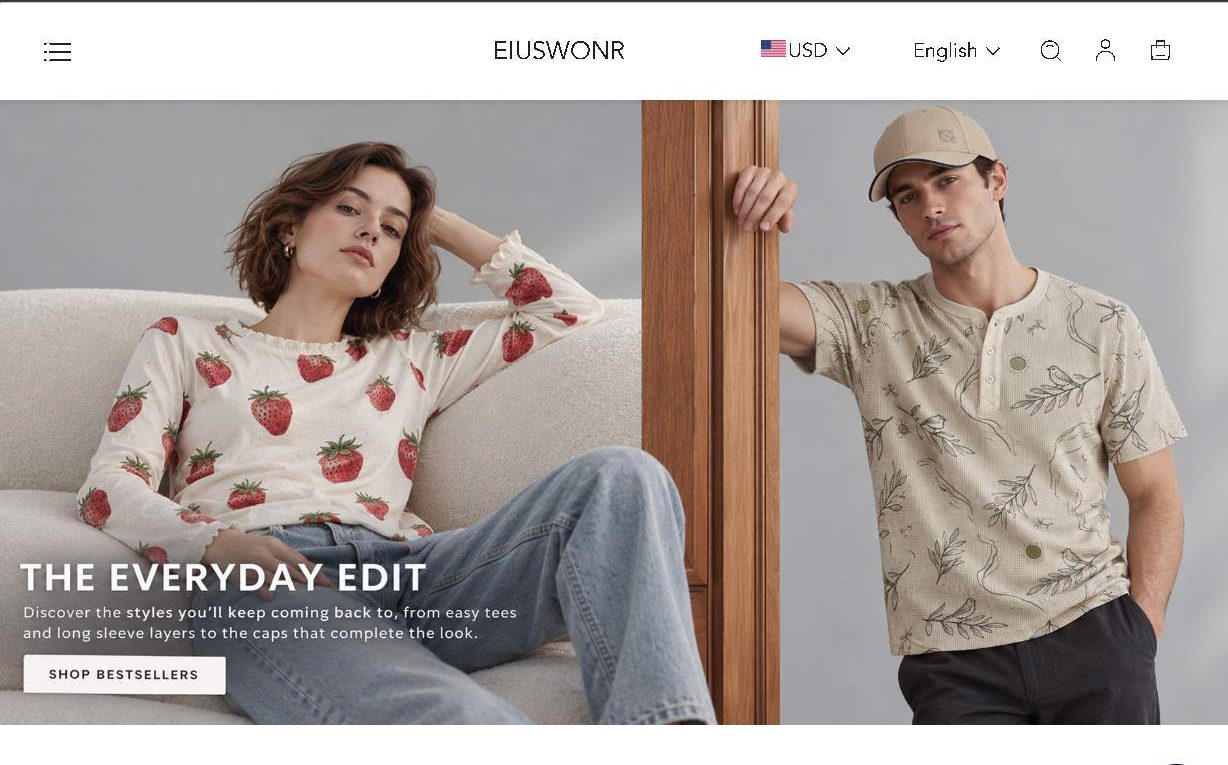
When opening Eiuswonr, visitors see a clean, modern lifestyle aesthetic labeled “THE EVERYDAY EDIT: Discover the styles you’ll keep coming back to, from easy tees and long sleeve layers to the caps that complete the look”.
The store displays an array of trendy casual wear:
- Printed long-sleeve tops and graphic tees (such as strawberry-patterned shirts)
- Earth-toned casual henleys and cotton-blend pullovers
- Everyday baseball caps and seasonal accessories
- Curated lists of popular bestselling apparel
To look like an established worldwide boutique, the header includes a global currency converter set to USD, simple language selectors, and standard search and cart features.
How Does the Site Actually Work?
Behind its polished appearance, the site follows a standard pop-up dropshipping and harvesting sequence:
- Scraped Imagery: High-quality studio photos and model shoots are lifted from genuine fashion brands, independent boutiques, or wholesale portals without permission.
- Impulse Price Points: The items are priced attractively to make buyers feel they are getting boutique-quality garments at bargain-basement rates.
- Checkout Data Capture: During checkout, the buyer provides their complete name, shipping address, contact phone number, and payment card details.
- The Fulfillment Reality: Once an order is placed, customers usually face one of two common outcomes:
- The Bait-and-Switch: Instead of the high-quality cotton or knitwear shown in the pictures, an ultra-cheap, ill-fitting synthetic polyester garment arrives weeks later from an overseas clearinghouse.
- Complete Non-Delivery: The package never arrives, and the seller issues a fake tracking code on an unverified logistics site to delay disputes until bank claim deadlines pass.
5 Warning Signs on Eiuswonr
Before entering payment information on any unfamiliar clothing shop, check for these five critical warning signs:
- 1. Nonsensical, Auto-Generated Brand Name: Legitimate fashion houses choose deliberate, recognizable brand names. The name “EIUSWONR” is an unpronounceable string of letters typical of mass-generated storefront templates that can be discarded without losing brand equity.
- 2. Extremely Fresh Domain Age: Domain registration records show that
Eiuswonrwas registered recently in late August 2026. A brand-new domain claiming to have global “bestseller” collections lacks the operational history to back up its claims. - 3. Missing Corporate Verification: Trustworthy fashion retailers clearly state their physical corporate headquarters, tax registration numbers, and phone customer service. Disposable sites hide behind domain privacy tools and provide only generic email web forms.
- 4. Stolen Model and Product Photos: Running a quick reverse-image search on the site’s hero photos reveals that the models and clothing designs were originally created by independent boutique creators or commercial catalogs elsewhere.
- 5. Restrictive and Unrealistic Return Terms: Cloned clothing websites often structure their return policies to discourage refunds. They commonly demand that customers pay high international postage fees back to foreign warehouses to return an inexpensive top, making chargebacks through your bank the only practical solution.
What to Do If You Already Placed an Order on Eiuswonr
If you have already submitted your payment card information on Eiuswonr, taking action quickly will protect your money:
- Call Your Bank or Card Issuer Right Away: Dial the customer assistance number on the back of your card. Report that you made a purchase on an unverified, deceptive storefront, request an immediate card cancellation, and initiate a chargeback dispute.
- Update Any Shared Passwords: If you registered an account on the store using a password that you use for your email, shopping, or personal banking, change those passwords immediately. Make sure multi-factor authentication (2FA) is turned on.
- Monitor Your Statements Closely: Check your bank and card statements over the next few months for unexpected micro-charges or unauthorized subscription sign-ups.
- Report the Storefront: File an online report with official cyber fraud and consumer agencies, such as the Federal Trade Commission (FTC) in the United States, Action Fraud in the United Kingdom, or the National Cyber Crime Reporting Portal in India, to help authorities flag the domain.
Safe Ways to Shop for Apparel Online
To enjoy online fashion shopping without getting caught by deceptive portals, keep these straightforward habits in mind:
- Use Reverse-Image Searches: If you see a cute design on an unfamiliar site, use Google Lens to find the original designer or boutique that created the photo.
- Check the Domain Age: Use free WHOIS lookup directories to verify when the website was created. Be cautious with fashion sites that are only a few weeks or months old.
- Stick to Protected Payment Channels: Use credit cards with zero-liability fraud protections or reputable services like PayPal Goods and Services rather than direct debit cards or wire transfers.
Frequently Asked Questions (FAQs)
1. Is Eiuswonr scam or legit?
Eiuswonr shows the typical characteristics of an unverified pop-up storefront rather than an established, reliable fashion brand. It uses an auto-generated brand name, stolen product images, and a brand-new domain to collect orders without verified fulfillment.
2. Is Eiuswonr legit for buying everyday clothing and tops?
No, Eiuswonr is not considered a verified or trustworthy source for apparel. Shoppers face significant risks of receiving low-grade polyester knockoffs or nothing at all.
3. How does a fraudulent clone website scam take money from shoppers?
These counterfeit storefronts attract shoppers with deep discounts on popular fashion styles. When you check out, they charge your payment card, fail to deliver the advertised quality, and may compromise your payment details for further unauthorized transactions.
4. Why does Eiuswonr use a random letter name?
Deceptive storefront syndicates generate names randomly using computer scripts so they can launch dozens of disposable shopping sites quickly without spending time building genuine brands.
5. What should I do if my credit card was charged by Eiuswonr?
Contact your card issuer’s fraud assistance line right away. Tell them you were misled by a deceptive merchant, request a chargeback, and ask for a replacement card with a new number.
6. Can I safely track an order placed on Eiuswonr?
Tracking information provided by disposable storefronts often points to rogue third-party tracking portals designed to show false delivery progress and delay chargebacks.
7. Why is returning clothing to sites like Eiuswonr so difficult?
These storefronts frequently require customers to pay costly international postage back to overseas addresses to process a return, making the return process more expensive than the garment itself.
8. How can I verify an online clothing store before placing an order?
Check how old the domain is using a public WHOIS lookup tool, search for authentic customer reviews on independent consumer platforms, and verify whether the business lists a genuine physical address and phone number.
Every safe click counts. If this post helped, a coffee gesture fuels more scam‑busting investigations.

For more shady sites exposed, check our Shopping Scam Directory — your quick guide to staying safe online.
Help Us Spread Awareness
Please share this article to spread awareness. Follow us on social media for more scam alerts.