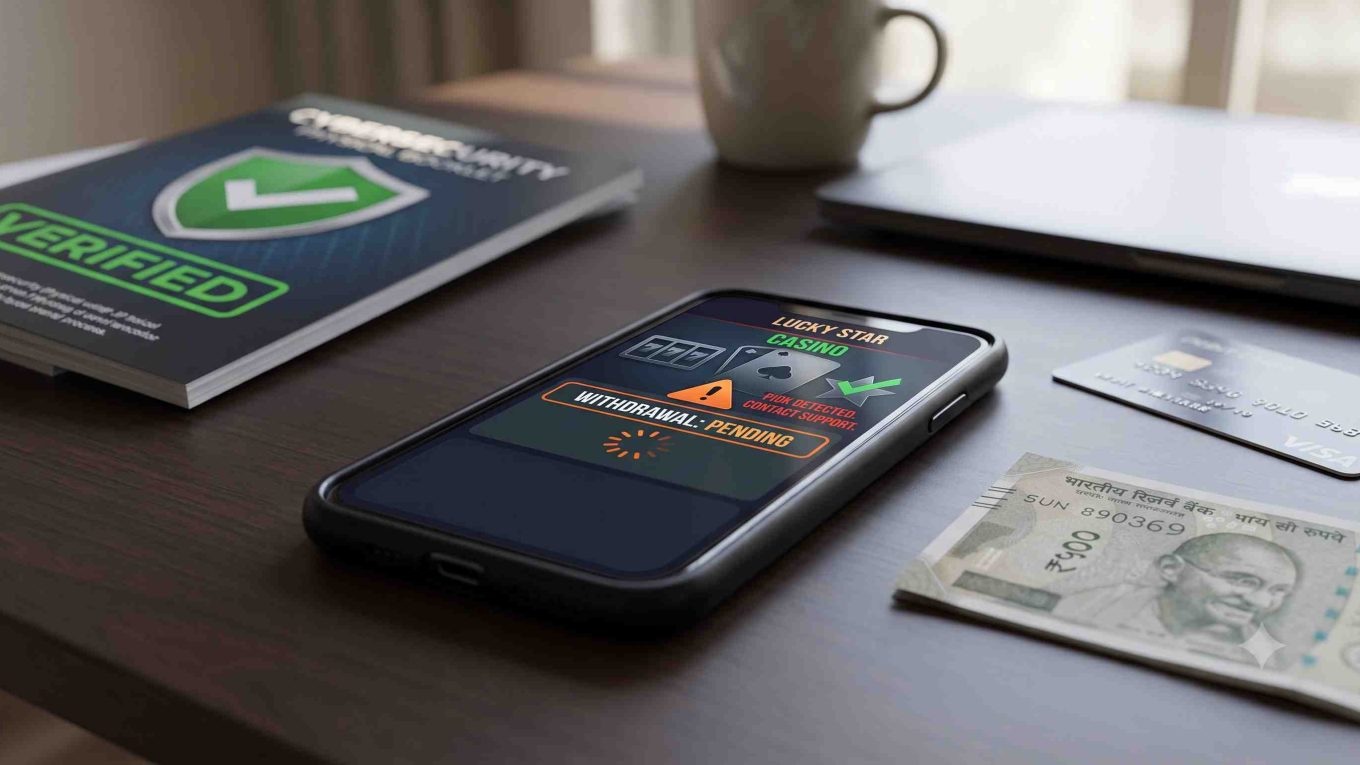
Lucky Star Casino Review: Legitimacy Check, Withdrawal Risks, and APK Safety Analysis
Online searches for Lucky Star Casino have surged across search engines, social channels, and messaging apps. However, user intent is split between two completely different entities: a legitimate, land-based tribal gaming enterprise in the United States, and an aggressively marketed offshore online betting portal distributed via third-party Android Application Packages (APKs).
This investigative consumer guide provides an objective breakdown of how these offshore platforms operate, the cybersecurity hazards of sideloading gambling APKs, common payout mechanics documented in user complaints, and critical steps to protect your personal data and bank accounts.
Disambiguation: Physical Tribal Venue vs. Offshore Online Portal
Before assessing safety reports, it is essential to distinguish which entity you are researching.
+------------------------------------+---------------------------------------+
| Oklahoma Tribal Venues (Legitimate) | Offshore Online / APK Portal (High Risk)|
+------------------------------------+---------------------------------------+
| • Owned by Cheyenne & Arapaho      | • Operates via mirror web domains     |
|   Tribes of Oklahoma               | • Distributed via unofficial APK files|
| • Regulated by NIGC & state compact| • Claims shell/offshore registrations |
| • Brick-and-mortar hospitality     | • Relies on P2P & unregulated rails   |
+------------------------------------+---------------------------------------+
The Physical Venue (Oklahoma, USA)
The original, brick-and-mortar Lucky Star Casino properties are owned and operated by the Cheyenne and Arapaho Tribes in Oklahoma (with locations in Concho, Clinton, Watonga, Canton, and Hammon). These venues operate under strict legal compacts with the State of Oklahoma and oversight from the National Indian Gaming Commission (NIGC). They feature regulated gaming machines, live table games, hotels, and event centers.
The Offshore Online Platform & APK
The entity driving global search spikes—particularly across South Asia, Southeast Asia, and parts of Europe—is an unvetted offshore website and mobile application. It promotes online casino games, crash multipliers (such as Aviator), slots, and virtual table games. This offshore online platform is completely unaffiliated with the federally recognized tribal enterprise in Oklahoma.
Is Lucky Star Casino Online Real or Fake? The Licensing Reality
When evaluating any online wagering portal, the single most critical factor is regulatory oversight. Without a recognized, enforceable domestic license, a platform operates outside legal consumer protection frameworks.
The Offshore Shell Registration
Most offshore iterations of Lucky Star operate under loose jurisdictions such as Curaçao or Anjouan, or operate with no verifiable registration at all.
- No Player Protection: Unlike stringent regulators (such as the UK Gambling Commission or the Malta Gaming Authority), offshore sub-license holders rarely investigate consumer grievances, disputed transactions, or withheld player balances.
- Jurisdictional Impunity: If an offshore portal shuts down, alters its terms of service retroactively, or voids an account balance, players have virtually zero legal recourse through local courts or national consumer protection forums.
- Mirror Domain Churn: Unregulated portals regularly rotate through temporary URLs (e.g.,
luckystar-login-app.com,luckystar888.net) to evade internet service provider (ISP) blocks and regulatory bans, making accountability nearly impossible.
The APK Sideloading Trap: Cybersecurity & Device Risks
Because major app marketplaces like the Google Play Store and Apple App Store enforce strict compliance rules that bar unvetted, real-money betting software, operators rely on sideloading—prompting users to download .apk files directly from web browsers, Telegram channels, or social media links.
The Dangers of Bypassing App Stores
- Intrusive Device Permissions:Standard mobile applications only request access to features necessary for their core function. Illicit gambling APKs frequently demand permissions to read SMS messages, view call logs, access storage files, and track device locations. Access to SMS messages is especially dangerous because rogue applications can silently intercept one-time passwords (OTPs) generated by two-factor authentication (2FA) and banking apps.
- Trojanized Clones & Spyware:Because there is no centralized distribution, cybercriminal syndicates regularly create modified versions of trending betting apps. Users who believe they are installing a casino interface often end up installing credential stealers, keyloggers, or adware that runs persistently in the background.
- Disabled OS Defenses:Installing an APK requires users to toggle on “Install Unknown Apps” in Android system settings. Once this barrier is lowered, the operating system’s built-in sandbox protections are compromised, leaving the device vulnerable to silent secondary payload installations.
Withdrawal Mechanics: The “Bait-and-Freeze” Pattern
Independent consumer dispute forums, review boards, and cybersecurity complaints reflect consistent operational patterns among unregulated offshore betting platforms.
[Small Initial Deposit] ──> [Minor Win & Fast Cashout] ──> (Builds Trust)
                                                                 │
[Substantial Deposit]   ──> [Large Win / Cashout Request]        │
                                    │                           ▼
                            [Account Frozen] <─── [Infinite KYC Stalls / Delays]
The Initial Trust Phase
When a user registers and wagers small amounts, early micro-withdrawals ($5 to $20) are often processed smoothly. This automated tactic is designed to lower the user’s skepticism, create a false sense of reliability, and encourage substantially larger deposits.
Infinite Verification Stalls
When a player attempts to withdraw a significant balance, platforms frequently trigger indefinite delays:
- Repetitive KYC Demands: The user is asked to provide sensitive government identification (national identity cards, passports, utility bills, notarized bank statements). Even after submission, support teams claim documents are “unclear” or “pending review by the security department.”
- Vague Terms Violations: Accounts are often flagged for alleged “irregular betting patterns,” “bonus abuse,” or “multiple account creation,” providing the operator with an arbitrary excuse to void earnings.
- Ghosting & Blocked Access: In severe cases, live chat sessions disconnect, customer support tickets remain unanswered, or the user’s login credentials are simply disabled.
Unsure About Another Suspicious Site or Offer?
Don’t risk your card details or personal info. Paste any domain into our free engine to check its safety rating, domain age, and fraud signals instantly.
Financial Hazards: P2P Deposits and Mule Bank Accounts
A major risk associated with unvetted gambling portals is not just losing deposited funds, but having your personal bank account compromised or frozen by law enforcement agencies.
How Informal Payment Channels Work
Because mainstream payment processors and card networks (Visa, Mastercard) decline transactions linked to unlicensed offshore betting entities, operators resort to informal Peer-to-Peer (P2P) transfers, third-party UPI IDs, and private crypto wallets.
- Mule Account Networks: When you deposit money via UPI or local bank transfer on these platforms, you are generally sending money to a personal account operated by a “money mule”—an account managed by intermediary syndicates to launder digital funds.
- The Contagion Effect on Bank Accounts: When national cybercrime units or financial intelligence divisions investigate these mule accounts, they track every inbound and outbound transaction. Anyone who has transacted with that account—even for a routine deposit or minor withdrawal—can find their primary personal bank account frozen or flagged as part of an active cyber fraud probe.
📧 Need Legal Assistance?
Contact the author for legal consultations, case evaluations, and professional inquiries.
Regulatory Comparison: Safe Standards vs. Offshore Portals
To evaluate whether a platform operates ethically, compare its operating standards against standard financial benchmarks:
| Feature / Standard | Legally Regulated Financial & Gaming Operators | Offshore “Lucky Star” Portals & APKs |
|---|---|---|
| Licensing | Domestic governmental or state authority | Unverified offshore sub-license or none |
| Software Integrity | RNG audited by eCOGRA, iTech Labs, or GLI | Unverified algorithms, no public audit logs |
| Distribution | Official app stores (Google Play, iOS App Store) | Direct APK downloads, Telegram channels |
| Dispute Resolution | Formal arbitration, ombudsman oversight | Solely internal customer service, no appeal |
| Payment Rails | Direct merchant accounts, verified gateways | P2P accounts, mule networks, obscure crypto |
| Data Privacy | Strict compliance with data protection laws | Unregulated storage of sensitive KYC records |
Protective Measures: What to Do If You Interacted with an APK
If you have already downloaded an unverified Lucky Star APK or shared sensitive information on a mirror portal, take immediate action to secure your digital and financial identity:
- Purge the Application Immediately:Uninstall the APK from your mobile device. Run a full device scan using a reputable mobile anti-malware security tool to check for remaining background scripts or unauthorized profiles.
- Revoke System Permissions:Go to your device’s Settings > Security > Install Unknown Apps and ensure all browser and messaging apps are set to “Not Allowed.”
- Reset Critical Credentials:Change the passwords for your email accounts, primary online banking portals, and mobile wallets. Enable two-factor authentication (2FA) using an authenticator app rather than SMS-based verification whenever possible.
- Notify Your Bank:If you performed direct P2P bank transfers or shared debit card numbers, contact your financial institution. Request a block on suspicious outbound transactions and consider issuing a fresh card to prevent unauthorized recurring charges.
- Report Cyber Incidents:If funds were fraudulently siphoned or your account was targeted, document transaction IDs, URLs, and communication transcripts, and submit a formal complaint with your local cybercrime reporting portal or national consumer affairs desk.
Every safe click counts. If this post helped, a coffee gesture fuels more scam‑busting investigations.

Frequently Asked Questions (FAQ)
Is Lucky Star Casino real or fake?
The legitimacy of “Lucky Star Casino” depends on which entity is being referenced. The physical Lucky Star Casino locations in Oklahoma are legitimate tribal gaming and hospitality properties regulated by the National Indian Gaming Commission. Conversely, the online Lucky Star Casino websites and downloadable APKs circulating across South Asia and international markets are unvetted offshore platforms that lack domestic regulatory approval, making them high-risk operations with documented withdrawal and security concerns.
How to fix a Lucky Star Casino withdrawal problem?
If your withdrawal request is stuck in “pending” status or repeatedly rejected, review whether the platform is requesting additional KYC documents or claiming a violation of wagering requirements. Keep clear, timestamped records of your deposits, account balance, and live chat exchanges. However, because offshore operators operate outside domestic financial laws, there is no government ombudsman or independent authority to force a payout. Never send additional money to “unlock” or “verify” an existing withdrawal request, as this is a common secondary fee trap.
Is the Lucky Star Casino APK download safe for Android?
No, downloading and installing a Lucky Star APK from third-party websites or messaging apps poses significant cybersecurity hazards. These files bypass the automated security scans enforced by the Google Play Store. Sideloaded APKs can request invasive permissions—such as reading incoming text messages, accessing personal storage, or tracking device identifiers—which compromises two-factor authentication codes and banking data.
What is the official Lucky Star Casino customer care number?
The physical tribal casino resorts in Oklahoma maintain official landline numbers for reservations and guest services across their Concho, Clinton, and Watonga properties. However, offshore online and APK platforms do not provide legitimate direct telephone customer support. Any phone numbers or “helpline” accounts found on social platforms, Telegram, or unofficial forums are typically run by unauthorized third parties or affiliate agents and should not be trusted with account passwords or payment details.
What are the legal risks of playing Lucky Star Casino online?
Accessing offshore real-money betting websites carries legal and financial hazards depending on your jurisdiction. In many countries, participating in unlicensed online gambling violates regional gaming acts. Furthermore, because offshore sites frequently process payments through informal P2P mule networks, user bank accounts are routinely flagged, investigated, or frozen by cyber police units tracking broader money-laundering operations.
Related Forensic Teardown
How Domain Churn Scams Keep Illegal Betting Rings Alive →Help Us Spread Awareness
Please share this article to spread awareness. Follow us on social media for more scam alerts.