Orthwithu Review: Inside the Holiday Shopping Scam and Fake Storefront Network
Executive Summary: Orthwithu (
orthwithu.com) is a fraudulent, high-risk storefront tied to disposable phantom retail store churn networks. Registered in August 2026, it lures shoppers with fake discounts, unverified trust seals, and false domestic shipping claims. It poses severe risks of non-delivery and credit card theft. Avoid entirely; affected buyers should immediately cancel cards and request chargebacks.
Finding a great deal online can feel exciting, but landing on Orthwithu (orthwithu.com) should immediately raise caution flags. Operating under the guise of an all-inclusive seasonal gift boutique, this platform relies on the classic mechanics of phantom retail store churn to attract buyers and collect payment information before disappearing.
Shoppers across North America, Europe, the UK, Australia, and Asia are frequently drawn to the site by social media ads and sponsored deals. Before you enter your credit card details or bank credentials, read this complete breakdown to understand how this platform operates, the red flags it displays, and how to recover your funds if you already made a purchase.
5 Critical Red Flags Found on the Website
1. Fictitious Trust Badges and Unverified Certifications
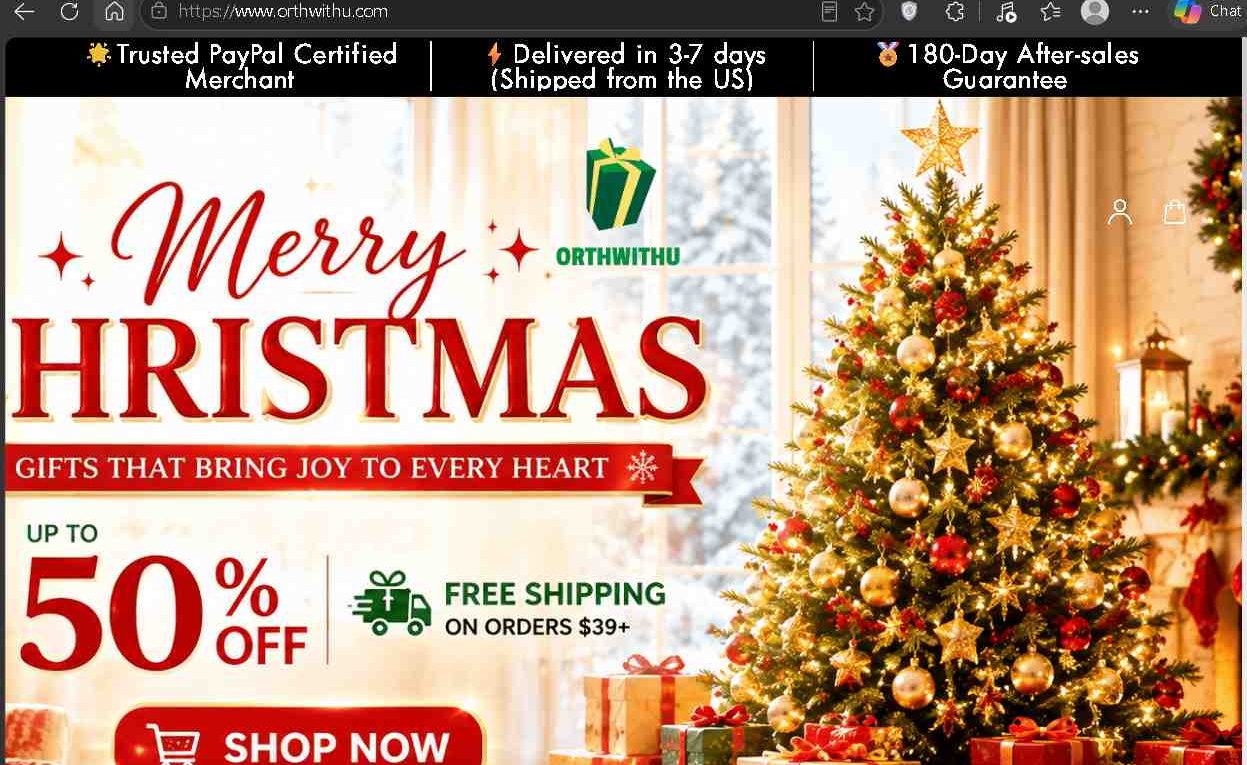
Right across the top banner, the website displays badges claiming to be a “Trusted PayPal Certified Merchant,” offering “180-Day After-sales Guarantee,” and promising items “Shipped from the US in 3–7 days”. These are simple image overlays hardcoded onto the website template rather than clickable, authenticated third-party trust seals. Legitimate certifications link directly to a third-party security verification page, which this website fails to provide.
2. A Brand-New, Anonymous Domain Registration
Domain WHOIS records reveal that the web address was registered on August 20, 2026 through GoDaddy. The registrant’s identity is masked behind privacy proxies. Trust score scanners like Gridinsoft give the store an abysmal 1/100 trust rating, pointing directly to high-risk fake shop signatures and zero established business reputation.
3. Disposable Domain Churn Profile
The platform name itself—an arbitrary string of letters (“Orthwithu”)—matches the exact naming pattern used by syndicates that generate hundreds of throwaway online shops. When chargeback disputes mount and merchant payment processors freeze their accounts, the fraudsters simply shut down the URL and spin up another domain using the exact same code base.
4. Premature and Overhyped Holiday Promotions
Launching aggressive Christmas and holiday sales months ahead of time with blanket “Up to 50% Off” discounts and low free-shipping thresholds ($39+) is a classic consumer trap. These offers create artificial urgency, coaxing buyers into making fast impulse purchases on seasonal merchandise without checking the seller’s legitimacy.
5. Absence of a Verifiable Corporate Entity
A legitimate global business displays an official corporate entity name, registered office address, tax registration number, and clear contact numbers. The website provides no verifiable company background or clear corporate footprints. When customers attempt to contact support regarding late orders, messages either go unanswered or receive canned, automated holding replies.
Suspicious Link or Courier SMS?
Verify URLs, APKs, or parcel alerts against our threat database before clicking.
Immediate Action Plan: How to Protect Your Money
If you have already placed an order on the site, taking fast action can make the difference between recovering your money and losing it permanently:
- File an Immediate Credit Card Chargeback: Contact the fraud or customer dispute department of your credit card company or bank. State that you purchased from a fraudulent merchant that failed to deliver products or provided false seller information. Request a transaction dispute under merchant fraud / goods not received.
- Freeze and Reissue Your Card: If you entered your raw 16-digit card number, CVV, and expiration date on the checkout page, consider that card compromised. Request a new card number to block future unauthorized micro-transactions or recurring subscription fees.
- Dispute via PayPal Resolution Center: If you completed the purchase using PayPal, open an inquiry immediately in the PayPal Resolution Center. Escalate it to a formal claim for non-receipt or item not as described before the seller can provide fake tracking numbers to stall the dispute window.
- Document Every Interaction: Save screenshots of the product page, order confirmation email, transaction receipt, and any tracking numbers provided. This evidence strengthens your bank chargeback case.
E-Commerce Protection Checklist
-
1
Break the In-App Browser Funnel
Never check out inside Instagram or TikTok web-views. Copy the link and open a standalone browser to remove referral tracking tokens and inspect the real root domain.
-
2
Run a 60-Second Background Check
Look up the domain age via WHOIS (avoid sites under 6 months old) and reverse-search product imagery on Google Lens to verify whether cheap wholesale duplicates exist.
-
3
Verify Corporate Entity Details
Check the website footer for a registered legal company name, verifiable physical address on Google Maps, and dedicated phone support—not just an anonymous web form.
-
4
Demand Insulated Payment Options
Refuse direct bank deposits, UPI QR codes, crypto, or debit transfers. Use zero-liability credit cards or protected checkout channels like PayPal Goods & Services.
-
1
Stop Waiting for Merchant Email Replies
Do not waste dispute windows negotiating with automated helpdesks or generic tracking updates. Deceptive pop-up storefronts stall purposely to exhaust chargeback timelines.
-
2
Initiate a Bank Chargeback Within 24-48 Hours
Call the phone number printed on the back of your card. Request an immediate dispute categorized under Merchant Fraud, Goods Not Delivered, or Misrepresentation.
-
3
Freeze Billing and Replace Card Credentials
Instruct your bank’s fraud desk to block future merchant authorizations under that descriptor and re-issue a fresh card number to prevent hidden recurring subscription debits.
-
4
Preserve Order & Ad Evidence
Save full-page screenshots of the product page, transaction debit receipts, and tracking communications to upload directly into your card issuer’s dispute portal.
What the Orthwithu Claims vs. What It Sells
The storefront advertises a cozy, festive marketplace centered around holiday items, gift packages, home decorations, and seasonal accessories.
- Promised Offers: “Gifts That Bring Joy to Every Heart,” flat 50% off storewide discounts, complimentary delivery on orders over $39, and an unrealistic 180-day return policy.
- Delivery Claims: Express delivery within 3 to 7 business days originating from domestic United States warehouses.
- Product Catalog: A wide variety of holiday merchandise, tree decor, LED displays, and seasonal trinkets.
In practice, the storefront does not maintain independent regional warehouses or genuine commercial distribution agreements. The catalog is built using scraped images and stolen product copy taken directly from genuine online brands, Amazon storefronts, and manufacturer catalogs.
How Orthwithu Storefront Operates Behind the Scenes
The platform functions as a front to capture payments rather than a standard retail business:
- Traffic Acquisition: The site attracts visitors through targeted social media campaigns, automated video ads, or sponsored listings showcasing attractive seasonal goods.
- Checkout Data Capture: Customers enter their billing information, phone numbers, and payment credentials.
- Fulfillment Obstacles:
- Ghost Deliveries: The customer receives a false tracking number that remains stuck in transit indefinitely.
- The Bait-and-Switch: Instead of the high-value decorative setup or gift ordered, the buyer receives a cheap substitute—like a small plastic ornament or paper ribbon—shipped via slow international postal services.
- Exhausting Dispute Deadlines: By the time the buyer realizes the item is missing or fake, weeks have passed, making it harder to complete standard return windows.
Safe Online Shopping Checklist
Keep these guidelines in mind whenever you shop on an unfamiliar website:
- Verify Domain Age: Use free WHOIS lookup tools to inspect domain registration dates. Avoid making expensive purchases on e-commerce sites less than 6 months old.
- Check for Clickable Trust Badges: Genuine Norton, McAfee, or PayPal merchant verification badges link to live security certificates on the provider’s domain. Static image badges are meaningless.
- Search for Independent Reviews: Look up the exact domain name on independent platforms like Trustpilot, Sitejabber, or Reddit. The absence of any reviews is just as alarming as negative feedback.
- Use Virtual Cards or Buyer-Protected Methods: When ordering from new stores, opt for disposable virtual card numbers with preset spending limits, or use payment processors that offer proven buyer protection programs.
Frequently Asked Questions
Is Orthwithu scam?
Yes, orthwithu.com shows strong indicators of being an online retail scam, including a freshly registered domain, fake trust badges, extreme unverified discounts, and an exceptionally low third-party security rating.
Is Orthwithu legit?
No, it is not a legitimate or verified retail brand. The platform lacks verifiable corporate ownership, authentic domestic warehouse fulfillment, and responsive customer support channels.
How does the phantom retail store churn model work?
Organized networks rapidly deploy hundreds of automated, disposable e-commerce sites to capture payments and personal credentials. Once buyer complaints and dispute flags accumulate, the operators close the website and launch new ones under different names to continue the cycle.
Can I get a refund if I placed an order on the site?
Securing a direct refund from the website’s support team is unlikely. Your most effective path to a refund is opening an official payment dispute or chargeback with your bank, credit card issuer, or payment processor.
Why does the store advertise US domestic shipping if it lacks warehouses?
Scam retail stores frequently post “Shipped from the US” banners to ease customer doubts regarding long delivery times and make their offers appear local and reliable.
What should I do if I received a cheap substitute item instead of my order?
Take photos of the parcel, the postal label showing the tracking number, and the incorrect item. Submit these images to your bank or payment gateway as proof of fraudulent merchant bait-and-switch to support your chargeback claim.
Are my credit card details safe after purchasing on this platform?
If you entered your full card details directly on the site, treat them as compromised. Contact your issuing bank to cancel the card and request a replacement to prevent unauthorized transactions.
How can I spot newly created shopping scams during the holiday season?
Watch out for arbitrary domain names, excessive site-wide discounts (50% to 80% off), missing physical business addresses, non-clickable trust logos, and domains registered only weeks before major holiday sales events.
Every safe click counts. If this post helped, a coffee gesture fuels more scam‑busting investigations.

For more shady sites exposed, check our Shopping Scam Directory — your quick guide to staying safe online.
Help Us Spread Awareness
Please share this article to spread awareness. Follow us on social media for more scam alerts.