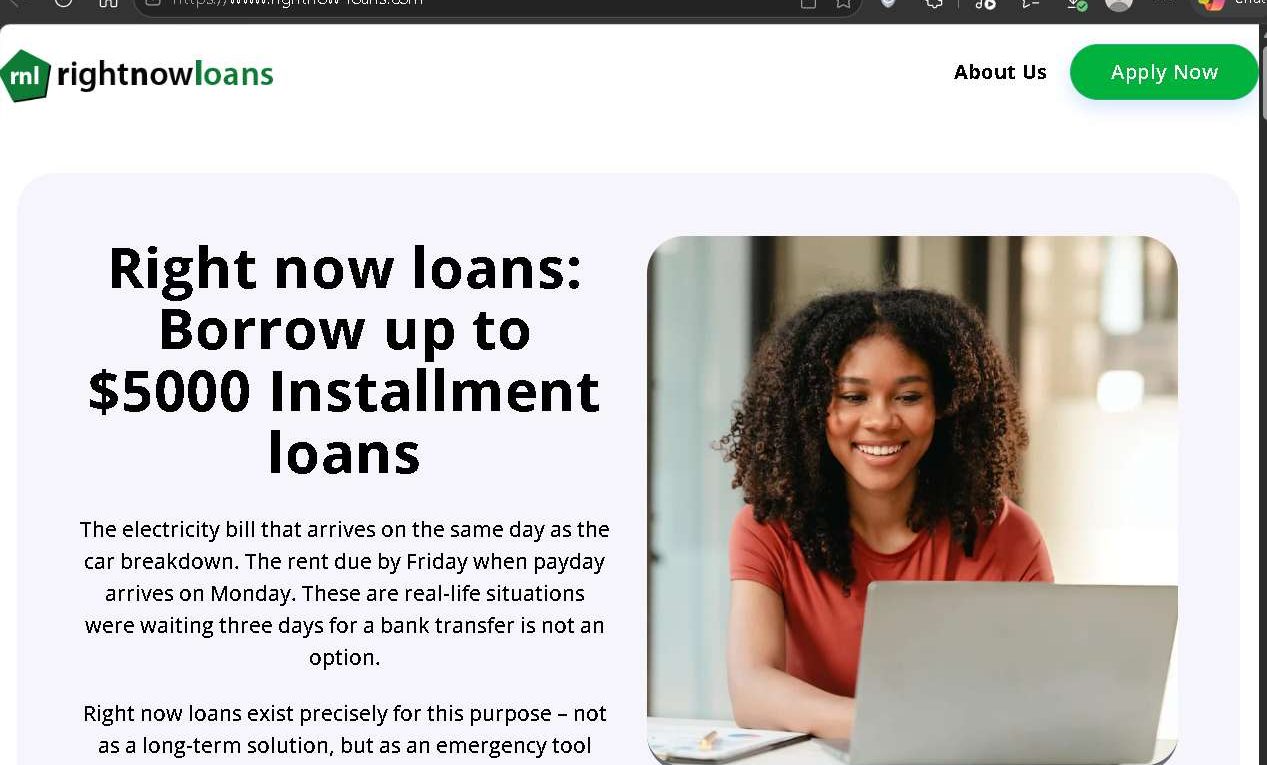
Rightnow-loans Review: Key Red Flags and Consumer Considerations Before Applying
Facing sudden financial friction—such as an urgent medical bill, unplanned vehicle repairs, or a temporary gap before payday—frequently drives individuals to search online for rapid credit solutions. One platform actively appearing in search queries for quick personal financing is Rightnow-loans, promoting installment loans of up to $5,000 with simple online intake forms.
While getting immediate access to funds can seem reassuring during an emergency, online lending environments require careful scrutiny. Submitting detailed personal identification, employment records, and bank credentials to third-party portals carries long-term privacy and financial implications.
Below is an objective review of Rightnow-loans, explaining how the platform functions, its critical red flags, structural loan differences, and practical steps to maintain caution before applying.
Technical & Credibility Scorecard
| Assessment Dimension | Finding on Rightnow-loans | Consumer Risk Assessment |
| Operational Model | Loan broker / third-party matching service | Moderate to High (Data distributed to multiple networks) |
| Advertised Financing | Short-term installment loans up to $5,000 | High (Subprime terms often carry steep APRs) |
| Transport Encryption | Standard HTTPS / SSL certified | Baseline (Encrypts data in transit only) |
| Credit Inquiries | Soft intake; hard pulls by matching lenders | Moderate (Potential impact on credit score upon formal offer) |
| Corporate Transparency | Web intake with general email contact | High (Limited direct telephone support before intake) |
| Brand Disambiguation | Often confused with tribal lenders (rightnowloan.com) | High (Sovereign tribal interest rate caps may not apply) |
Suspicious Link or Courier SMS?
Verify URLs, APKs, or parcel alerts against our threat database before clicking.
How Rightnow-loans Operates
Understanding the mechanics of modern digital lending helps set realistic expectations regarding where your personal data goes.
Rightnow-loans is generally not a direct financial institution, chartered bank, or credit underwriter; it functions primarily as a lead generation and loan-matching gateway:
 [Applicant Submits Form] ──► Personal info, income, SSN, bank details entered
             │
             ▼
 [Lead-Routing Network]  ──► Data filtered across third-party subprime lenders
             │
             ▼
  ┌──────────────────────────────────────────────┐
  │         Potential Lender Outcomes            │
  │ • State-licensed non-bank short-term lenders │
  │ • Sovereign tribal installment lenders       │
  │ • Automated email/SMS marketing funnels      │
  └──────────────────────────────────────────────┘
             │
             ▼
 [Final Loan Terms Set]  ──► Lender presents Truth in Lending (TILA) disclosures
- The Lead Brokering Funnel: Rather than funding loans directly from its own capital, the site uses an intake form to capture applicant credentials.
- Network Distribution: The submitted information is fed through automated partner APIs to find an affiliated subprime lender, peer-to-peer network, or alternative finance provider willing to accept the borrower’s risk profile.
- The Final Agreement: If a match is found, the user is redirected to that third-party creditor’s standalone portal to review specific interest rates, fees, and repayment terms.
E-Commerce Protection Checklist
-
1
Break the In-App Browser Funnel
Never check out inside Instagram or TikTok web-views. Copy the link and open a standalone browser to remove referral tracking tokens and inspect the real root domain.
-
2
Run a 60-Second Background Check
Look up the domain age via WHOIS (avoid sites under 6 months old) and reverse-search product imagery on Google Lens to verify whether cheap wholesale duplicates exist.
-
3
Verify Corporate Entity Details
Check the website footer for a registered legal company name, verifiable physical address on Google Maps, and dedicated phone support—not just an anonymous web form.
-
4
Demand Insulated Payment Options
Refuse direct bank deposits, UPI QR codes, crypto, or debit transfers. Use zero-liability credit cards or protected checkout channels like PayPal Goods & Services.
-
1
Stop Waiting for Merchant Email Replies
Do not waste dispute windows negotiating with automated helpdesks or generic tracking updates. Deceptive pop-up storefronts stall purposely to exhaust chargeback timelines.
-
2
Initiate a Bank Chargeback Within 24-48 Hours
Call the phone number printed on the back of your card. Request an immediate dispute categorized under Merchant Fraud, Goods Not Delivered, or Misrepresentation.
-
3
Freeze Billing and Replace Card Credentials
Instruct your bank’s fraud desk to block future merchant authorizations under that descriptor and re-issue a fresh card number to prevent hidden recurring subscription debits.
-
4
Preserve Order & Ad Evidence
Save full-page screenshots of the product page, transaction debit receipts, and tracking communications to upload directly into your card issuer’s dispute portal.
5 Major Red Flags and Operational Hazards
Before providing sensitive personal or banking details, prospective borrowers should consider several structural risks:
1. Extensive Data Sharing and Spam Influx
When applying through a loan broker network, the platform’s terms of service and privacy policy typically authorize sharing applicant contact details across dozens of third-party marketing partners.
- Once your phone number and email address enter these affiliate clearinghouses, expect a sudden volume of automated promotional phone calls, SMS loan offers, and marketing emails.
- Even if an application is declined or abandoned, your contact details remain stored across distributed partner lists unless formally opted out.
2. High-APR Subprime Financing Realities
Emergency installment loans marketed to individuals with lower credit scores often carry substantial borrowing costs.
- While conventional personal bank loans cap Annual Percentage Rates (APRs) between 8% and 36%, subprime short-term installment products connected through lead aggregators frequently carry APRs ranging from 150% to over 600%.
- Over a multi-month installment schedule, interest accumulation can dwarf the original principal. For example, borrowing $1,500 on an extended high-APR term can require total repayments exceeding $3,500 to $4,500.
3. Confusion with Sovereign Tribal Lenders
Consumers frequently confuse rightnow-loans.com with rightnowloan.com (singular).
- The latter operates as an entity associated with sovereign Native American tribal governance (such as the Elem Indian Colony of Pomo Indians).
- Under federal Indian law, tribal lenders often claim sovereign immunity from state-level usury laws, meaning state-mandated interest rate caps (such as 36% APR limits enforced in several US jurisdictions) may not apply.
- Consumers who confuse the two entities risk entering agreements without realizing which regulatory body governs their dispute rights.
4. Instant Account Verification (IAV) and Automated Debit Risks
During the loan matching and finalization process, subprime lenders routinely require borrowers to link their checking accounts via Instant Account Verification (IAV) or execute automated ACH debit authorizations.
- Granting automatic withdrawal rights allows lenders to debit scheduled payments directly from the borrower’s primary bank account on paydays.
- If account balances are insufficient when the debit hits, borrowers can face simultaneous non-sufficient fund (NSF) charges from their bank alongside missed-payment penalties from the lender, deepening financial distress.
5. Absence of Direct Creditor Recourse
Because a matching service does not underwrite the debt, service the account, or establish the lending criteria, its customer support desk cannot resolve billing discrepancies, adjust payment schedules, or modify loan contracts. If issues arise with excessive interest or account debits, you must deal directly with the third-party lender, who may operate under different regional or sovereign dispute procedures.
Consumer Caution Checklist: How to Protect Your Finances
If you are evaluating short-term installment financing options, practice these disciplined consumer safeguards:
- Review the Truth in Lending Act (TILA) Disclosures: By law, any formal loan agreement must present a standardized TILA box before signing. Never accept an offer without checking three specific figures: the exact APR, the Finance Charge (total dollar cost of borrowing), and the Total of Payments (overall sum you must pay back).
- Explore Non-Profit and Credit Union Alternatives First: Before committing to high-cost emergency loans, consider alternative options:
- Inquire about Payday Alternative Loans (PALs) offered by federal credit unions, which cap interest rates at 28%.
- Check employer-sponsored early wage access programs.
- Research local non-profit community assistance organizations that offer 0% emergency grants for rent or utility obligations.
- Beware of Upfront Payment Requests: Legitimate online lenders and matching brokers never demand advance fees, insurance deposits, or payments via gift cards/prepaid debit cards before releasing loan proceeds. Any platform demanding money upfront to “guarantee” loan approval is an illegal advance-fee scheme.
- Isolate Your Application Contact Details: If using an online financial aggregator, consider using a secondary email address and reviewing privacy permissions to limit exposure to aggressive telemarketing follow-ups.
- Check the Exact Domain in the Address Bar: Always verify whether you are dealing with a licensed state lender, a lead generation website, or a sovereign tribal organization by reading the regulatory licensing disclosures located in the website’s footer.
Frequently Asked Questions (FAQs)
Is Rightnow-loans a direct lender or a broker?
Rightnow-loans operates primarily as an online loan matching service rather than a direct bank or credit union. It collects applicant information and connects borrowers with third-party installment and short-term credit networks.
Does applying on Rightnow-loans impact my credit score?
Initial data submission on a loan matching site typically involves a soft credit assessment, which does not harm your credit score. However, once matched with a specific third-party lender who conducts a formal credit underwriting review, that lender may perform a hard credit inquiry that can temporarily affect your credit rating.
What interest rates (APR) should I expect from matched lenders?
Interest rates vary widely depending on the lender, your state of residence, and your credit profile. For bad-credit or emergency installment options, APRs often range from high double digits up to 400% or higher. Always inspect the TILA disclosure box on the final loan offer to confirm your exact rate.
Is Rightnow-loans associated with tribal lending entities?
While the domain name is very similar to sovereign tribal operations like rightnowloan.com, they may represent distinct portals. It is vital to read the licensing disclosure on any loan agreement you receive to determine whether the lender operates under state banking charters or sovereign tribal laws.
What should I do if I am receiving unwanted calls after applying?
Loan matching aggregators share data with wide marketing networks. To limit unwanted solicitations, request removal from the primary caller’s list, register your number on national Do-Not-Call registries, and submit opt-out requests through the platform’s posted privacy policy contact channels.
Rightnow-loans serves as a standard online intake funnel for short-term liquidity, but applicants must proceed with careful diligence[cite: 6]. By checking the full loan contract, verifying the identity of the actual underlying creditor, and comparing costs against traditional community credit alternatives, consumers can avoid unexpected fee obligations and maintain control over their financial health.
Every safe click counts. If this post helped, a coffee gesture fuels more scam‑busting investigations.

For more shady sites exposed, check our Shopping Scam Directory — your quick guide to staying safe online.
Help Us Spread Awareness
Please share this article to spread awareness. Follow us on social media for more scam alerts.