Ponchoclub Review: How to Spot a Fraudulent Clone Website Scam in Outdoor Apparel
Seeing a targeted ad offering massive discounts on rugged western shirts and outdoor performance wear might lead you straight to Ponchoclub, but you should stop and verify whether this fraudulent clone website scam is real or a direct trap for your money.
Performance fishing shirts, quick-dry flannels, and stretch denim are essentials for outdoor enthusiasts, but purchasing from unverified copycat websites routinely leads to unauthorized credit card charges, phantom shipments, and compromised personal data.
Upgrading your outdoor wardrobe should prepare you for your next adventure, not leave you dealing with bank disputes. In this guide, we break down how outdoor brand-jacking schemes operate, use Ponchoclub as a direct case study, detail the primary red flags to keep in mind, and share practical steps to protect your finances.
What Is a Fraudulent Clone Website Scam in Outdoor Apparel?
A fraudulent clone website scam in outdoor apparel happens when scammers copy the visual brand identity of established outdoor lifestyle companies. Instead of sourcing durable UPF-rated fabrics, reinforced pearl snaps, or breathable technical weaves, these groups lift professional lifestyle photos, marketing copy, and brand names to build a convincing copycat storefront.
These operations rely heavily on clearance-driven urgency. By posting ads across social media feeds featuring headlines like “Warehouse Liquidation” or “70% Off Everything,” they tempt impulse shoppers into checking out before confirming who actually runs the site.
  Brand-Jacking Clearance Funnel
  ┌─────────────────────────┐      ┌─────────────────────────┐      ┌─────────────────────────┐
  │ Stolen Brand Assets     │ ───► │ 70% Clearance Trap      │ ───► │ The Consumer Result     │
  │ • Copied Poncho visuals │      │ • Too-good-to-be-true   │      │ • Card data stolen      │
  │ • Typosquatted domain   │      │ • Impulse cart-building │      │ • Fake tracking/silence │
  └─────────────────────────┘      └─────────────────────────┘      └─────────────────────────┘
Unlike authentic outdoor outfitters that provide verified customer support, transparent corporate addresses, and straightforward returns, these clone sites operate on a disposable cycle. They collect card payments, ignore customer messages, and vanish or swap domain names once chargebacks and online scam reports begin to surface.
Suspicious Link or Courier SMS?
Verify URLs, APKs, or parcel alerts against our threat database before clicking.
Case Study: Investigating Ponchoclub
A close look at Ponchoclub shows how these brand-jacking clearance portals present themselves to prospective buyers.
What Is the Site Claiming and Offering?
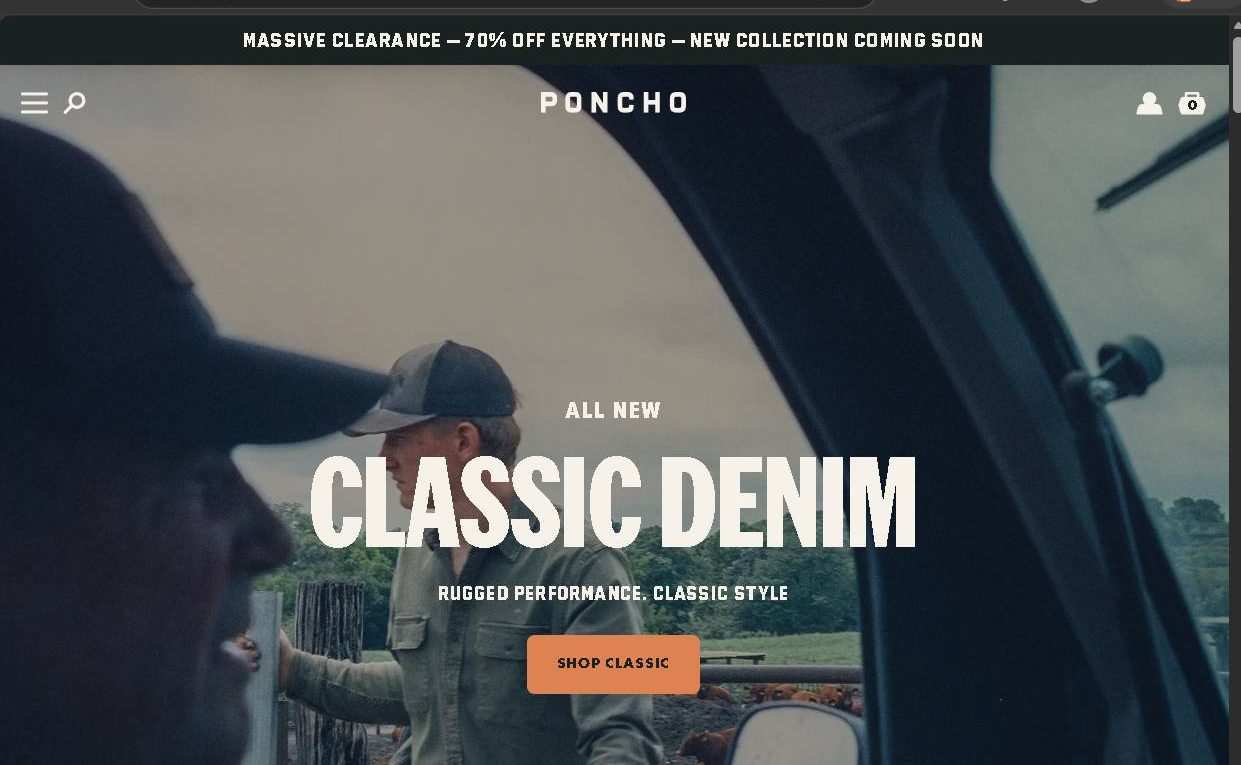
The homepage of Ponchoclub copies the look, styling, and product range of Poncho Outdoors (ponchooutdoors.com), a Texas-based outdoor apparel brand known for performance fishing shirts and rugged flannels. The storefront displays Poncho’s familiar branding alongside imagery titled “ALL NEW CLASSIC DENIM: Rugged Performance. Classic Style”.
The store advertises a familiar catalog of outdoor work and field wear:
- Quick-dry performance pearl-snap fishing shirts
- Thermal-regulating outdoor flannels
- Rugged stretch denim work pants and outdoor trousers
- Embroidered trucker caps and seasonal field gear
To push shoppers toward an immediate checkout, the store displays an announcement bar across the top stating: “MASSIVE CLEARANCE — 70% OFF EVERYTHING — NEW COLLECTION COMING SOON”. This slashes premium $85–$95 technical shirts down to around $25, encouraging shoppers to load multiple items into their carts.
How Does the Site Actually Work?
Behind its polished presentation, the website follows an unauthorized retail and harvesting blueprint:
- Scraped Brand Photography: The operators copy lookbooks, high-resolution lifestyle images, and technical product descriptions directly from the authentic brand portal at
ponchooutdoors.com. - Margin-Defying Markdowns: Real technical fabrics, anti-microbial treatments, and specialized venting carry significant manufacturing costs. Slashing 70% off an entire catalog creates an artificial sense of urgency designed to drive fast buying decisions.
- Data Harvesting at Checkout: Shoppers enter full names, billing and shipping addresses, phone numbers, and complete payment card details.
- The Fulfillment Reality: Once the card is charged, buyers typically face one of two common outcomes:
- The Low-Quality Bait-and-Switch: Instead of high-end stretch denim or breathable performance fabric, the buyer receives a cheap, thin polyester shirt sent from an overseas clearinghouse weeks later.
- Complete Non-Delivery: The package never arrives, and the seller provides a bogus tracking number linked to a dummy logistics portal to stall until bank chargeback deadlines pass.
5 Red Flags Found on Ponchoclub
Before entering payment information on any unfamiliar outdoor apparel shop, keep these five red flags in mind:
- 1. Domain Name Typosquatting: The genuine, official home of Poncho Outdoors is
ponchooutdoors.com. The addressponchoclub.comdrops “outdoors,” adds “club,” and uses the official brand’s typography without authorization to mislead searchers and ad traffic. - 2. Unrealistic “70% Off Everything” Discounts: High-end performance outdoor wear operates on structured margins. An online storefront offering blanket 70% discounts across brand-new flagship lines is advertising phantom stock.
- 3. Absence of Verifiable Corporate Details: Legitimate clothing brands clearly display their physical headquarters, registered business entity details, and working customer service phone lines. Disposable copycat sites rely on anonymous contact web forms or unmonitored free webmail inboxes.
- 4. Template and Policy Contradictions: Scam storefronts often reuse generic website templates. It is common to find return policies that mention unrelated items (such as electronics or footwear), contain grammar mistakes, or demand that buyers return items to overseas warehouses at their own expense.
- 5. Social Media Ad Dependency: Instead of having organic search presence, these domains rely on short-lived ad campaigns on platforms like Facebook and Instagram to drive immediate traffic before the domain gets blacklisted.
What to Do If You Already Placed an Order on Ponchoclub
If you have already entered your payment card information or placed an order on Ponchoclub, take these steps right away to protect your accounts:
- Contact Your Bank or Card Issuer Immediately: Call the customer support number on the back of your debit or credit card. Let your bank know you made a purchase on an unverified, deceptive storefront, request a replacement card, and file a formal chargeback dispute.
- Change Any Reused Passwords: If you registered an account on the site using an email and password you also use for your personal inbox, online shopping, or banking, change those passwords right away. Enable two-factor authentication (2FA) wherever available.
- Monitor Your Statements Closely: Check your bank records over the next few months for unexpected micro-charges or unauthorized subscription fees.
- Report the Storefront: File an online fraud report with official consumer protection agencies, such as the Federal Trade Commission (FTC) in the United States, Action Fraud in the United Kingdom, or the National Cyber Crime Reporting Portal in India, to help authorities flag the domain.
Safe Sourcing: Where to Buy Authentic Poncho Apparel
To ensure you receive genuine performance gear backed by real customer service, stick to verified retail channels:
- Official Brand Website: Order directly from the official portal at
ponchooutdoors.com. - Authorized Specialty Outfitters: Purchase through established fly-fishing shops, outdoor lifestyle outfitters, and recognized regional dealers that carry direct brand inventory.
- Trusted Multi-Brand Retailers: When shopping on larger retail platforms, make sure the item is listed as “Sold and Shipped by” the official brand or an authorized outdoor dealer rather than an unverified third-party account.
Frequently Asked Questions (FAQs)
1. Is Ponchoclub scam or legit?
Ponchoclub displays all the typical features of an unauthorized brand-jacking clone storefront rather than a verified retailer. It uses stolen brand photography, brand-name manipulation, and unrealistic liquidation markdowns to collect payments without reliable fulfillment.
2. Is Ponchoclub legit for ordering Poncho Outdoors shirts and denim?
No, Ponchoclub is not an authorized or legitimate source for authentic Poncho Outdoors products. Authentic gear is sold directly through ponchooutdoors.com and its authorized retail partners.
3. How does a fraudulent clone website scam steal money from shoppers?
These counterfeit sites attract shoppers by marketing popular brand names at steep clearance discounts. When you check out, they charge your payment card, fail to deliver the authentic goods, and may compromise your card details for unauthorized transactions.
4. What is a niche outdoor apparel brand-jacking scam?
It is a deceptive tactic where scammers copy a recognizable outdoor or workwear brand to exploit consumer trust. They target outdoor enthusiasts with fake clearance promotions to take payments and collect personal data.
5. Why are shirts and jeans priced so cheaply on Ponchoclub?
Deep discounts are used as bait. Because genuine technical fabric shirts are expensive to make, scammers advertise fake 70% markdowns to rush shoppers into making impulsive multi-item purchases.
6. What should I do if my credit card was charged by Ponchoclub?
Contact your card issuer’s fraud team right away. Let them know you were misled by a deceptive merchant, open a chargeback dispute, and ask for a replacement card with a new number.
7. Can I safely track an order placed on Ponchoclub?
Tracking links sent by clone sites often point to unverified third-party tracking portals that display synthetic updates designed to delay bank dispute filings.
8. How can I verify that an outdoor clothing website is authentic?
Check the exact spelling of the domain against official brand social media accounts, look up the domain’s registration date using a free WHOIS lookup tool, and confirm that the store lists a verifiable physical company address and phone number before buying.
Every safe click counts. If this post helped, a coffee gesture fuels more scam‑busting investigations.

For more shady sites exposed, check our Shopping Scam Directory — your quick guide to staying safe online.
Help Us Spread Awareness
Please share this article to spread awareness. Follow us on social media for more scam alerts.