Yarlio Review: How to Spot a Fraudulent Clone Website Scam in Handcrafted Home Decor
If you have seen social media ads showcasing charming garden ornaments and ended up on Yarlio, you might be wondering whether this fraudulent clone website scam is genuine or a clever scheme to take your money. Handcrafted metal garden art, stained-glass suncatchers, and novelty planters are popular decorative items, but ordering them from unverified websites often leads to unauthorized credit card charges, non-delivery of packages, and personal identity theft.
Sprucing up your patio or living space should bring warmth to your home, not unexpected disputes with your bank. In this guide, we break down how decorative clone storefronts operate, use Yarlio as a direct case study, walk through the critical red flags to keep in mind, and outline practical steps to safeguard your money and personal data.
What Is a Fraudulent Clone Website Scam in Home and Garden Decor?
A fraudulent clone website scam in the home and garden decor niche is an operation where bad actors build temporary digital storefronts that mimic independent craft studios. Instead of hand-welding steel or hand-cutting colored glass, these websites scrape photos and video clips directly from independent artisan portfolios, Etsy creators, and Pinterest design boards.
These websites are engineered to capture quick impulse buys. By pairing stolen craft photography with appealing promotions like “Buy 2, Get 1 FREE,” they encourage casual browsers to complete checkout before checking who actually runs the site.
  Artisan Clone Storefront Blueprint
  ┌──────────────────────────┐      ┌──────────────────────────┐      ┌──────────────────────────┐
  │ Stolen Artisan Photos    │ ───► │ Artificial Volume Deal   │ ───► │ The Delivery Outcome     │
  │ • Etsy metal silhouettes │      │ • "Buy 2 Get 1 Free"     │      │ • Cheap printed plastic  │
  │ • Stained-glass panels   │      │ • "Crafted to Last" slogan│     │ • Ghost tracking/silence │
  └──────────────────────────┘      └──────────────────────────┘      └──────────────────────────┘
Unlike genuine artisan workshops that invest in durable raw materials and transparent customer support, these clone portals follow a disposable pattern. They generate orders through paid feed promotions, collect customer card payments, and disappear or rebrand under a fresh domain once negative reviews and credit card chargeback disputes start to accumulate.
Suspicious Link or Courier SMS?
Verify URLs, APKs, or parcel alerts against our threat database before clicking.
Case Study: Investigating Yarlio
Looking closely at Yarlio provides a clear view of how modern decorative dropship portals build their online appearance.
What Is the Site Claiming and Offering?
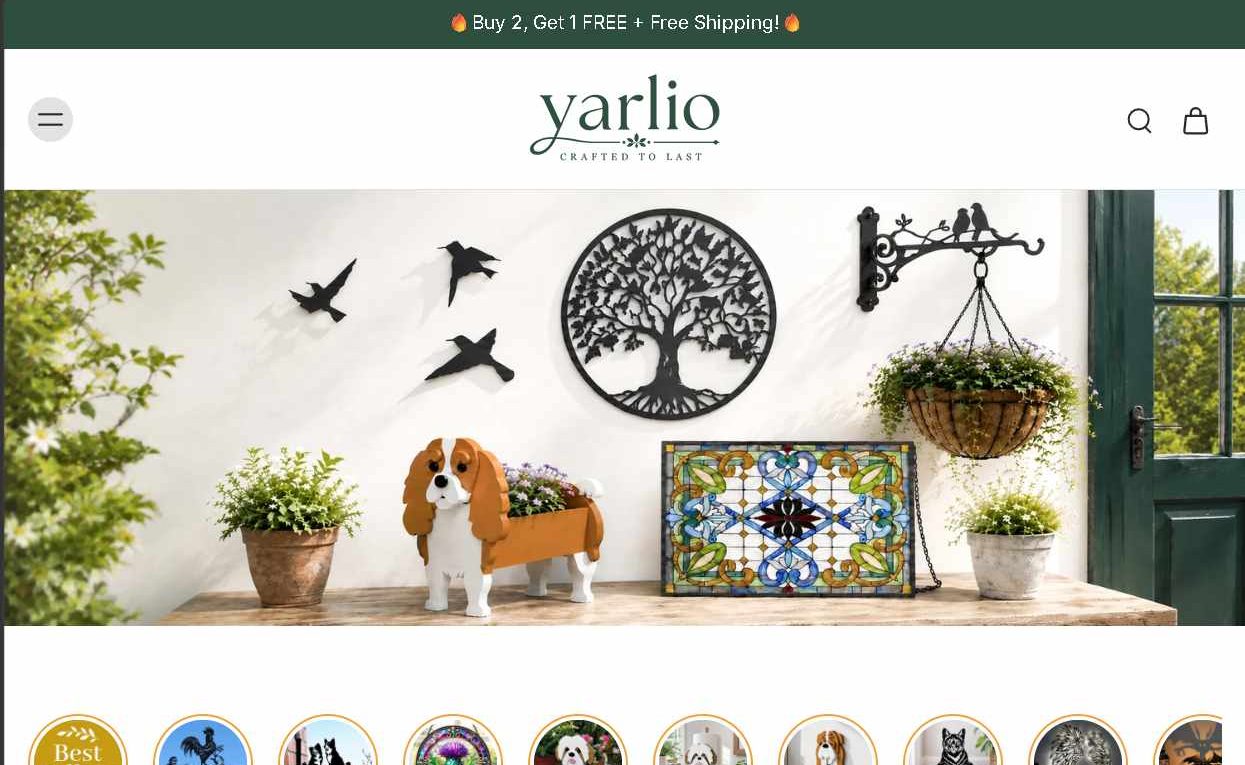
When opening Yarlio, visitors are greeted by a rustic lifestyle aesthetic featuring the motto “Crafted to Last”. The storefront displays a collection of whimsical outdoor and indoor decorative pieces:
- Intricate metal tree-of-life wall plaques and hummingbird silhouettes
- Handcrafted-style stained glass suncatcher panels and window hangings
- Cast-iron style decorative hanging basket brackets with bird motifs
- Wooden dog-shaped garden planters and pet-themed home novelties
To encourage immediate multi-item purchases, the site displays a prominent top bar announcing “Buy 2, Get 1 FREE + Free Shipping!” alongside automatic currency adjustments and claims of an easy 30-day refund policy.
How Does the Site Actually Work?
Behind its warm, artisan-style branding, the platform operates on an unauthorized retail and fulfillment blueprint:
- Scraped Artisan Catalogs: High-resolution product images, workshop photos, and detailed lifestyle scenes are copied directly from independent metalworkers, woodworkers, and stained-glass artists on Etsy without licensing or permission.
- Aggressive Bundle Anchoring: Authentic handcrafted stained glass and welded metalwork require hours of skilled labor, making true retail prices fairly high. Offering volume deals like “Buy 2 Get 1 Free” makes expensive artisanal items appear unusually cheap, prompting buyers to add several items to their carts.
- Data & Payment Capture: Shoppers enter their full shipping address, contact phone number, and credit or debit card details during checkout.
- The Fulfillment Reality: Customers ordering from clone shops usually experience one of two frustrating results:
- The Low-Grade Bait-and-Switch: Instead of a heavy, textured metal silhouette or authentic leaded stained glass, the customer receives a flimsy piece of printed flat acrylic or stamped sheet metal worth pennies.
- Ghost Logistics / Non-Delivery: The order is never sent, and the customer is given a dummy tracking link that shows endless transit updates to run out bank dispute deadlines.
5 Red Flags Found on Yarlio
Before you enter your payment details on an unfamiliar decor site, keep these five major red flags in mind:
- 1. Stolen Independent Artisan Photography: Running a quick reverse-image search on the tree-of-life silhouettes, dog planters, and stained-glass panels reveals they were originally designed and photographed by individual craft sellers on Etsy and design forums.
- 2. Unrealistic “Buy 2 Get 1 Free” Pricing on Handcrafted Goods: Genuine stained glass and welded steel involve substantial material costs and manual labor. Offering blanket volume giveaways and free worldwide shipping on complex artisan goods is an immediate sign of mass-produced knockoffs or non-delivery.
- 3. Absence of Verifiable Corporate Details: Trustworthy home decor businesses clearly display a physical showroom address, official corporate registration, and a direct telephone support line. The site operates with zero physical address transparency, providing only a generic support email inbox.
- 4. Self-Hosted, Unverified 5-Star Reviews: The portal displays internal review widgets showing hundreds of perfect five-star ratings, yet lacks an authentic footprint on verified, independent consumer review platforms like Trustpilot or the Better Business Bureau.
- 5. Restrictive and Costly Return Terms: While the storefront advertises a “30-Day Money-Back Guarantee,” the fine print often requires customers to cover expensive international shipping back to foreign clearinghouses for items they dislike, making returns far more costly than the product itself.
Practical Steps If You Already Placed an Order on Yarlio
If you have already entered your payment information or completed an order on Yarlio, taking action promptly will protect your funds:
- Contact Your Bank or Card Issuer Immediately: Call the customer service number on the back of your credit or debit card. Tell your bank that you made a purchase on an unauthorized, deceptive storefront, request an immediate card cancellation, and open a formal chargeback dispute.
- Update Reused Account Passwords: If you created an account on the store using a password that you use for your email, online shopping, or banking profiles, change those passwords immediately. Turn on two-factor authentication (2FA) wherever possible.
- Keep an Eye on Account Activity: Regularly review your bank statements over the coming months for unexpected recurring subscription charges or micro-transactions.
- Report the Storefront: File an online complaint with consumer protection agencies, such as the Federal Trade Commission (FTC) in the United States, Action Fraud in the United Kingdom, or the National Cyber Crime Reporting Portal in India, to help authorities flag the domain.
Safe Sourcing: Where to Buy Genuine Handcrafted Decor
To support genuine creators and ensure you receive quality items, stick to verified purchasing channels:
- Direct Artisan Marketplaces: Purchase through platforms like Etsy, but check that the seller has an established multi-year track record, authentic workshop progress photos, and genuine customer feedback.
- Local Craft Fairs and Studios: Buy directly from regional metalworkers, wood crafters, and glass artists at local markets where you can inspect build quality firsthand.
- Established Home & Garden Retailers: Major home improvement stores and verified garden centers provide safety-tested, weather-resistant outdoor decor backed by simple local return policies.
Frequently Asked Questions (FAQs)
1. Is Yarlio scam or legit?
Yarlio displays all the typical features of an unverified pop-up decor storefront rather than an authentic craft business. It uses stolen artisan imagery and volume discounts to collect payments without delivering authentic handmade goods.
2. Is Yarlio legit for ordering metal garden art and stained glass?
No, Yarlio is not considered a reliable source for authentic handcrafted metalwork or stained-glass decor. Shoppers risk receiving cheap printed plastic knockoffs or nothing at all.
3. How does a fraudulent clone website scam take money from shoppers?
These counterfeit storefronts attract shoppers with deep discounts and bundle deals on trendy products. Once you check out, they charge your payment card, fail to deliver the advertised craftsmanship, and may expose your payment details to unauthorized charges.
4. Why does Yarlio offer “Buy 2 Get 1 Free” on handcrafted items?
Artificially generous bundle offers are used to inflate cart values. Because genuine handcrafted items are costly to make, scammers use bundle deals to push shoppers into impulsive multi-item orders before researching the seller.
5. What should I do if my credit card was charged by Yarlio?
Contact your bank or card issuer’s fraud team right away. Let them know you were misled by an unverified merchant, request an immediate chargeback, and ask for a replacement card with a new number.
6. Can I safely track a shipment sent from Yarlio?
Tracking links provided by temporary decor storefronts often point to unverified third-party tracking portals designed to show artificial movement and stall until dispute deadlines expire.
7. Why is returning decor to websites like Yarlio difficult?
These storefronts frequently require buyers to pay high international postage fees back to overseas distribution hubs to receive a refund, making the return process more expensive than the original purchase.
8. How can I confirm that a home decor store is authentic before buying?
Run a reverse-image search on product photos to check if they were taken from Etsy artists, verify domain history using a free WHOIS lookup tool, and confirm whether the business provides a verifiable physical address and telephone number before purchasing.
Every safe click counts. If this post helped, a coffee gesture fuels more scam‑busting investigations.

For more shady sites exposed, check our Shopping Scam Directory — your quick guide to staying safe online.
Help Us Spread Awareness
Please share this article to spread awareness. Follow us on social media for more scam alerts.