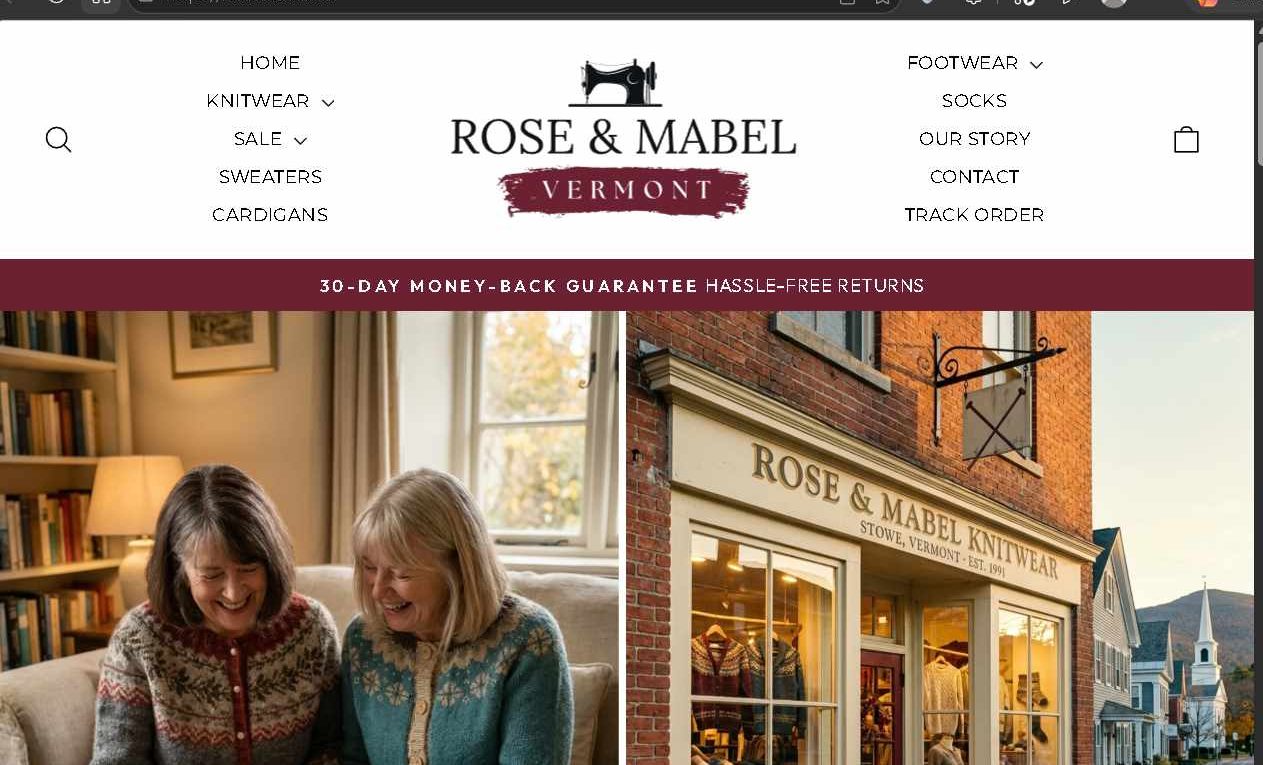
Rosemabel Review: Artisan Heritage Boutique or Deceptive Dropshipping Scam?
If you recently came across social media promotions or search listings for Rosemabel, our direct investigation reveals that this storefront is an illegitimate impersonator/scam website using a fabricated artisan backstory to sell cheap wholesale goods at premium markups. Online apparel shoppers looking for handmade knitwear and traditional craftsmanship are increasingly targeted by deceptive platforms that fabricate multi-generational heritage to trigger emotional impulse purchases.
Understanding how these narrative-driven storefronts operate is essential for protecting your money and private payment information. This investigative report analyzes the operational mechanics of Rosemabel, deconstructs its fictional backstory, examines its product claims versus delivery reality, outlines five critical warning signs, and details immediate steps to take if you already completed an order on the site.
Suspicious Link or Courier SMS?
Verify URLs, APKs, or parcel alerts against our threat database before clicking.
The Fabricated Artisan Backstory: Anatomy of Heritage Fraud
An illegitimate impersonator/scam website does not always copy a famous multinational brand name. In the apparel and home goods sectors, a growing syndicate of deceptive storefronts relies on heritage fraud—fabricating an entire history of multi-generational craftsmanship, small-town roots, and artisanal values out of thin air.
How the Fabricated Heritage Tactic Operates
- The Regional Myth: The operators invent an idyllic, regional brand identity—in this case, claiming to be an artisan shop based in Stowe, Vermont, operating since 1991. Regional labels like Vermont, the Scottish Highlands, or the Irish countryside are deliberately chosen because consumers naturally associate them with premium wool and authentic textile traditions.
- AI-Generated and Manipulated Visuals: The storefront displays photos of charming brick-and-mortar village shops, cozy knitting circles, and elderly craftspeople. In reality, these images are either digitally altered stock photos or generated using synthetic AI image models.
- Emotional Astroturfing: Deceptive ad campaigns flood social media platforms like Facebook, Pinterest, and Instagram with first-person stories. These ads feature scripted claims from fictional owners (e.g., claiming to run a “35th-anniversary sale” or “closing down the family workshop after decades”) to bypass buyers’ natural skepticism.
- Mass-Market Wholesale Fulfillment: Instead of hand-loomed, locally sourced wool garments, buyers receive mass-produced polyester or acrylic sweaters shipped directly from overseas clearance warehouses weeks later.
[Social Media Ad: Emotional "35-Year Anniversary / Closing" Story]
                                │
                                ▼
[Fictional Identity: Rose & Mabel Knitwear - Stowe, Vermont (Est. 1991)]
                                │
                                ▼
[Fabricated Backstory + AI Storefront Composite + Deep Anchor Discount]
                                │
                                ▼
[Customer Checkout on Rosemabel (Standard E-Commerce Gateway)]
                                │
                                ▼
[Reality: Cheap Synthetic Dropshipment or Total Non-Delivery & Hostile Returns]
Case Study: Investigating Rosemabel
The storefront at Rosemabel positions itself under the name “Rose & Mabel – Stowe, Vermont Est. 1991,” complete with nostalgic imagery of classic sewing machines, village shops, and hand-knitted cardigans.
The site claims that each design begins with hand-knitted prototypes and highlights artisanal care. However, cross-referencing public domain registration records and local business databases reveals clear discrepancies:
- Contradictory Creation Date: Domain records confirm that
Rosemabelwas registered on June 19, 2026. A web property registered in mid-2026 directly contradicts marketing narratives claiming 35 years of commercial operation. - No Registered Commercial Entity: Commercial registry searches in Vermont reveal no registered limited liability company, corporation, or physical retail boutique operating under the name “Rose & Mabel” on Main Street in Stowe.
- Recycled Scripts: The narrative used by the site—describing generational traditions and anniversary discounts—matches identical scripts used by other pop-up knitwear domains that cycle through fresh URLs once previous sites accumulate consumer complaints.
What Does Rosemabel Claim vs. What Shoppers Receive?
| Operational Aspect | Rosemabel Marketing Claim | Observed Retail Reality |
| Origin & Heritage | Established Vermont boutique crafting knitwear since 1991 | Disposable domain registered in mid-2026 with no local presence |
| Garment Materials | Artisanal, heirloom-quality wool and traditional knits | Low-cost acrylic, nylon, or polyester synthetic blends |
| Pricing Structure | Significant clearance discounts (e.g., $229.95 reduced to $69.95) | Artificial anchor pricing to make cheap wholesale imports appear valuable |
| Customer Returns | “30-Day Money-Back Guarantee Hassle-Free Returns” | High-friction returns requiring international postage or nominal partial refund offers |
| Merchant Infrastructure | Independent small-batch workshop in New England | Standard offshore dropshipping setup using automated templates |
Email: ApexLegalSolutionsMumbai@gmail.com
Five Critical Red Flags Found on Rosemabel
1. Fictional Storefront and Physical Disconnect
The prominent main street storefront image featuring the carved sign “ROSE & MABEL KNITWEAR – STOWE, VERMONT EST. 1991” is an edited composite. Street-level commercial mapping of Stowe confirms no such storefront exists at the location depicted. Fabricating a physical building is a definitive hallmark of deceptive retail websites.
2. WHOIS Domain Age Contradicts Operating Claims
A legitimate heritage business operating for over three decades maintains historical digital footprints, archival press mentions, or older registry records. The WHOIS registration for Rosemabel dates to June 19, 2026. The sharp contradiction between a brand-new domain and a claimed 35-year legacy is a primary red flag.
3. Deceptive Price Anchoring
The site advertises cardigans and sweaters heavily marked down from over $200 down to $60–$70. This pricing structure relies on psychological anchoring: inflating a non-existent original price to make a standard, mass-produced garment appear like a rare luxury bargain.
4. Boilerplate Support and Absent Corporate Identification
The website provides no company registration number, formal director identification, or direct corporate phone number. The sole contact method is an unverified email address (info@rosemabel.com). True independent artisan producers provide verifiable studio details, direct customer care phone lines, and explicit physical return locations.
5. High-Risk Return Policy Bottlenecks
While displaying prominent “Hassle-Free Returns” badges on its header, customer feedback across identical dropshipping clone setups reveals a standard resolution pattern: when a buyer asks to return an ill-fitting synthetic sweater, support insists the buyer pay steep international shipping fees back to an overseas depot or offers a small 10%–20% refund to keep the item.
Immediate Recovery Plan: If You Placed an Order on Rosemabel
If you submitted credit card information or made a purchase on Rosemabel, take these direct steps:
- Contact Your Card Issuer’s Fraud Department: Call your bank or card company immediately. Inform them that you made a purchase from an unverified merchant operating under deceptive business claims, and request a card cancellation and replacement to prevent unauthorized recurring charges.
- Initiate an Unauthorized Chargeback Dispute: Once the transaction posts, file a formal dispute under consumer fraud protection rules citing “goods significantly not as described” or “merchant misrepresentation.”
- Document All Claims and Correspondence: Save screenshots of the advertised product descriptions, the claimed 1991 founding date, the order confirmation, and any emails exchanged with support. These serve as essential evidence for your bank’s dispute investigation.
- Monitor Your Banking Statements: Check your statements regularly over the next several months for unauthorized micro-transactions or unfamiliar recurring subscriptions.
- Report the Storefront: File an e-commerce fraud complaint with the Federal Trade Commission (FTC at ReportFraud.ftc.gov) or your country’s national consumer advocacy agency to help block fraudulent merchant processing accounts.
Frequently Asked Questions
Is Rosemabel scam?
Yes. Rosemabel exhibits core characteristics of a deceptive dropshipping scam. It relies on a fabricated 35-year Vermont heritage story, edited storefront imagery, and deceptive price markdowns to sell cheap overseas wholesale garments.
Is Rosemabel legit?
No, Rosemabel is not a legit artisan boutique. The website was registered on June 19, 2026, contradicting its marketing claims of operating in Stowe, Vermont since 1991.
Is Rose & Mabel a real physical shop in Stowe, Vermont?
No. There is no registered commercial retail business or physical storefront named “Rose & Mabel Knitwear” operating in Stowe, Vermont. The storefront photography displayed online is an edited or AI-generated composite.
What kind of products will I actually receive from Rosemabel?
Instead of locally crafted, genuine wool garments, buyers typically receive mass-produced polyester or acrylic knitwear dropshipped directly from overseas factories, often with irregular sizing and synthetic materials.
Can I get a full refund from Rosemabel?
Securing a full refund directly through the website’s customer support is difficult. Operators often offer minimal partial discounts or require buyers to pay high international return shipping fees. Filing a direct chargeback through your credit card provider is generally the most reliable recovery route.
Why do deceptive clothing websites create fake small-town backstories?
Fabricating small-town heritage exploits consumer trust in artisanal traditions, making shoppers more willing to pay higher prices for ordinary mass-produced goods under the belief that they are supporting independent craftspeople.
How can I verify a heritage clothing brand before buying?
Check the website’s creation date using a public WHOIS lookup tool, verify the company’s physical address on local street-view mapping services, and look up independent business registries to ensure the corporate entity actually exists.
What should I do if a store refuses my return after advertising a 30-day guarantee?
Take screenshots of the advertised return guarantee and all communications with the merchant, then contact your bank to dispute the charge based on merchant misrepresentation and failure to honor stated policies.
Every safe click counts. If this post helped, a coffee gesture fuels more scam‑busting investigations.

For more shady sites exposed, check our Shopping Scam Directory — your quick guide to staying safe online.
Help Us Spread Awareness
Please share this article to spread awareness. Follow us on social media for more scam alerts.