Realtify.shop Review: How Low-Transparency Digital Template Shops Target Real Estate Agents
When targeted social media algorithms direct real estate professionals toward Realtify.shop, new agents often encounter a classic low-transparency digital products storefront designed to monetize off-the-shelf marketing assets under the guise of an elite coaching ecosystem. Operating on disposable infrastructure, these transactional storefronts wrap generic, mass-distributed templates in high-ticket language to capture impulse purchases from professionals looking to scale their client presentations.
The modern surge in automated digital dropshipping has shifted from physical products to intangible media, making the rapid deployment of digital asset hubs exceptionally common. In this investigative evaluation, we audit the operational infrastructure behind Realtify.shop, deconstruct what it promises versus what it actually delivers, and explain the financial risks associated with purchasing unverified digital downloads from ephemeral merchant portals.
Deconstructing the “Digital Template Arbitrage” Model
A digital template storefront operates by licensing or sourcing low-cost Private Label Rights (PLR) or Master Resell Rights (MRR) design packs, re-bundling them with aspirational branding, and marketing them at marked-up rates via direct-response ads.
“Proprietary Agent Systems”
- • High-converting playbooks
- • Custom brokerage branding
- • Top-producer objection tools
- • Mass-circulated public layouts
- • Generic drag-and-drop elements
- • Recycled, standard sales scripts
The underlying business mechanism relies on several key psychological and operational pillars:
- Aspirational Authority: Instead of marketing simple design files, the platform frames basic files as “Agent Systems That Close” or complete commissions-guarantee playbooks to justify premium pricing.
- Impulse Ad Siphoning: Rather than earning organic search traffic, the merchant relies on hyper-targeted Meta and TikTok ads focused on newly licensed real estate agents experiencing imposter syndrome or presentation hurdles.
- Zero-Fulfillment Overhead: Because fulfillment involves nothing more than sending automated PDF links containing Canva template URLs, the operator incurs zero packaging, warehousing, or manufacturing costs, capturing pure margin with zero accountability.
Email: ApexLegalSolutionsMumbai@gmail.com
Case Study: Investigating Realtify.shop
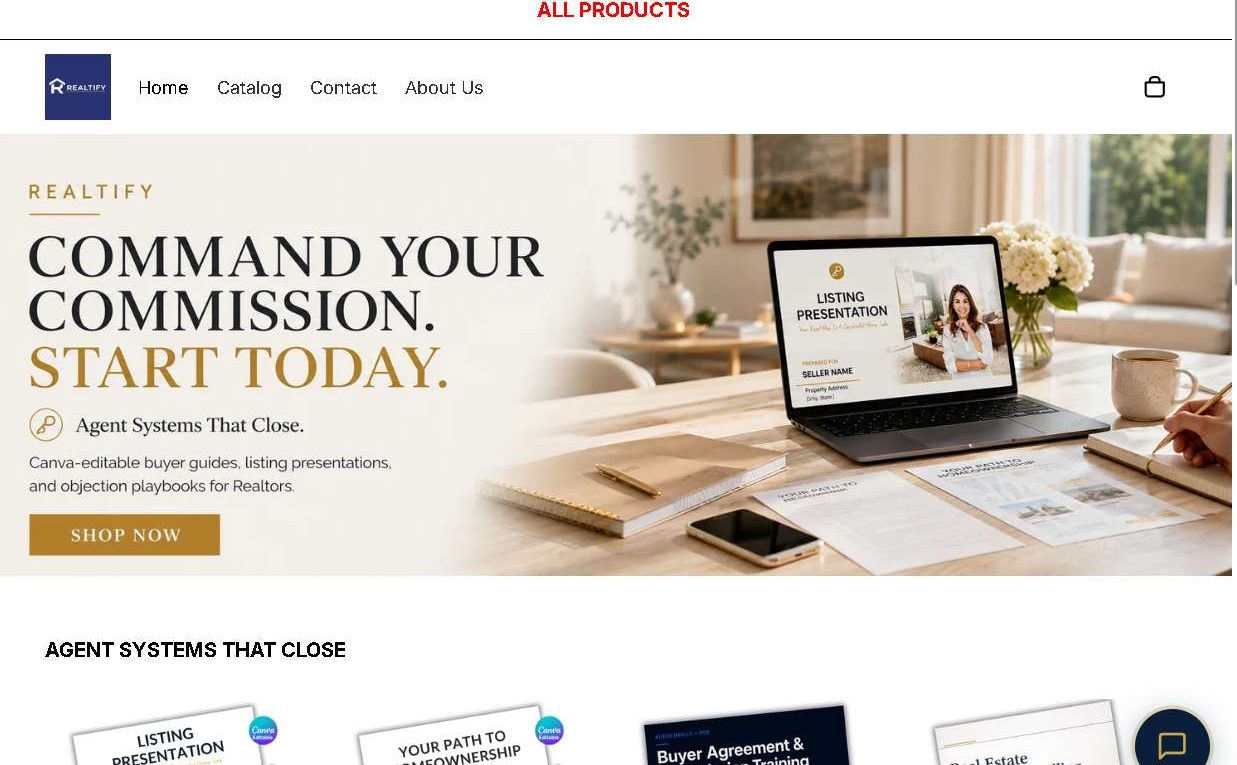
A forensic inspection of Realtify.shop reveals a textbook example of a minimalist, turnkey digital products storefront targeting niche professionals.
Realtify.shop(Non-Reversible Direct Gateway)
What the Website Claims and Offers
Realtify.shop presents itself as a dedicated creator of professional marketing frameworks tailored for licensed Realtors. Its landing page features bold sales copy: “Command Your Commission. Start Today.”
Its featured inventory includes:
- Canva-editable listing presentations
- “Your Path to Homeownership” buyer guides
- Buyer agreement and commission training modules
- Real estate objection handling playbooks
The site targets the common anxieties of solo real estate agents—specifically, overcoming listing objections and proving their commission value in a shifting regulatory landscape.
How the Back-End System Functions
Behind the polished product mockups lies a barebones e-commerce template:
- Off-the-Shelf Architecture: The website operates on a minimalist catalog theme with barebones navigation menus (
Home,Catalog,Contact,About Us). - Third-Party Canva Routing: Rather than providing proprietary software, custom web apps, or licensed publications, the customer receives access to shared Canva link folders.
- Resold PLR Assets: The titles and presentation formats closely mirror mass-circulated template bundles sold on platforms like Etsy for a few dollars, suggesting zero proprietary development by recognized real estate production coaches.
Suspicious Link or Courier SMS?
Verify URLs, APKs, or parcel alerts against our threat database before clicking.
5 Critical Red Flags on Realtify.shop
Dissecting the architecture of Realtify.shop highlights five distinct markers that advise against using the platform:
1. Disposable .shop Domain Architecture
Established professional services, B2B marketing agencies, and real estate development firms almost universally secure primary .com domains. Transient marketing stores favor cheap .shop, .top, or .store top-level domains, allowing operators to retire the domain and launch another with minimal operational friction if public complaints increase.
2. Absence of Identifiable Industry Leadership
Legitimate sales coaching tools and commission frameworks are tied directly to identifiable industry mentors, verified brokers, or established creative agencies. Realtify.shop provides no founder identity, no executive biographies, and no verifiable track record in real estate sales or marketing.
3. Masked Corporate Registration and Ownership
A technical query of the WHOIS registration logs reveals proxy privacy shields masking the registrant’s name, organization, physical headquarters, and jurisdiction. Legitimate businesses maintain transparent corporate disclosures, contact telephone numbers, and identifiable offices on their terms and contact pages.
4. Boilerplate Contact and Support Channels
The storefront omits direct customer support telephone numbers, live chat assistance, or corporate business emails. Instead, customer communication is restricted to basic, generic web forms that allow operators to ignore refund inquiries at will.
5. Weaponized “No Refund” Digital Delivery Clause
The platform relies on restrictive digital goods clauses stipulating that because download links are delivered instantly, all transactions are irrevocable and final. If a buyer opens the Canva links and finds outdated scripts or elementary slide layouts, there is no straightforward path to reimbursement through the merchant.
Every safe click counts. If this post helped, a coffee gesture fuels more scam‑busting investigations.

Digital Product Risks: Comparison of Outcomes
| Evaluation Factor | What the Site Promises | What Is Actually Received |
| Material Exclusivity | Proprietary commission-securing systems | Generic, widely circulated public Canva template links |
| Industry Value | Proven playbooks authored by top-producing brokers | Basic sales scripts available across free marketing blogs |
| Buyer Protections | Direct customer support & satisfaction guarantees | Restrictive non-refundable terms on all digital downloads |
| Platform Longevity | Sustained resource library with ongoing updates | Disposable e-commerce setup prone to sudden domain expiry |
FAQ
Is Realtify.shop a scam?
While Realtify.shop uses standard digital checkout gateways rather than direct identity-theft forms, it operates with deceptive positioning. It markets off-the-shelf, low-value Canva templates as proprietary, high-converting real estate frameworks at marked-up prices.
Is Realtify.shop legit?
No, it does not demonstrate the transparency of a legitimate professional design or coaching business. The website provides no verifiable legal identity, lacks executive leadership profiles, and features no verified testimonials from identifiable real estate agents.
What are the main risks of buying digital products from Realtify.shop?
The primary risks include paying inflated prices for generic Canva designs found cheaply elsewhere, encountering broken share links, and having zero ability to secure a refund under the store’s strict digital return terms.
Can I get a refund on digital downloads from Realtify.shop?
Securing a voluntary refund from unverified template shops is difficult because their terms often exclude digital items once accessed. However, if the files are broken, inaccessible, or clearly misrepresented, you can initiate a dispute with your credit card issuer.
Where do sites like Realtify.shop get their templates?
These platforms typically acquire Private Label Rights (PLR) or Master Resell Rights (MRR) packages from bulk wholesalers, or purchase low-cost Canva bundles on public marketplaces, rebrand the promotional covers, and resell them to niche audiences.
Why do digital arbitrage sites use the .shop extension?
Domains ending in .shop are cheap to purchase and maintain low overhead. They are frequently used by direct-to-consumer digital arbitrage marketers who focus on short-term ad campaigns rather than long-term brand equity.
How can I verify a real estate marketing template seller before purchasing?
Look for verified customer reviews on independent third-party platforms, check whether the creators have public professional profiles (such as an active LinkedIn presence or state real estate licenses), and verify if their contact page lists a physical office and phone line.
Are Canva templates from third-party sites safe to open?
While opening a genuine Canva share link does not typically infect your machine with malware, you should always check the destination URL before clicking to verify it directs safely to canva.com rather than an external credential-harvesting phishing page.
For more shady sites exposed, check our Shopping Scam Directory — your quick guide to staying safe online.
Help Us Spread Awareness
Please share this article to spread awareness. Follow us on social media for more scam alerts.