Before You Buy: How the Getoleada.shop Copycat Trap Hijacks Designer Handbag Labels
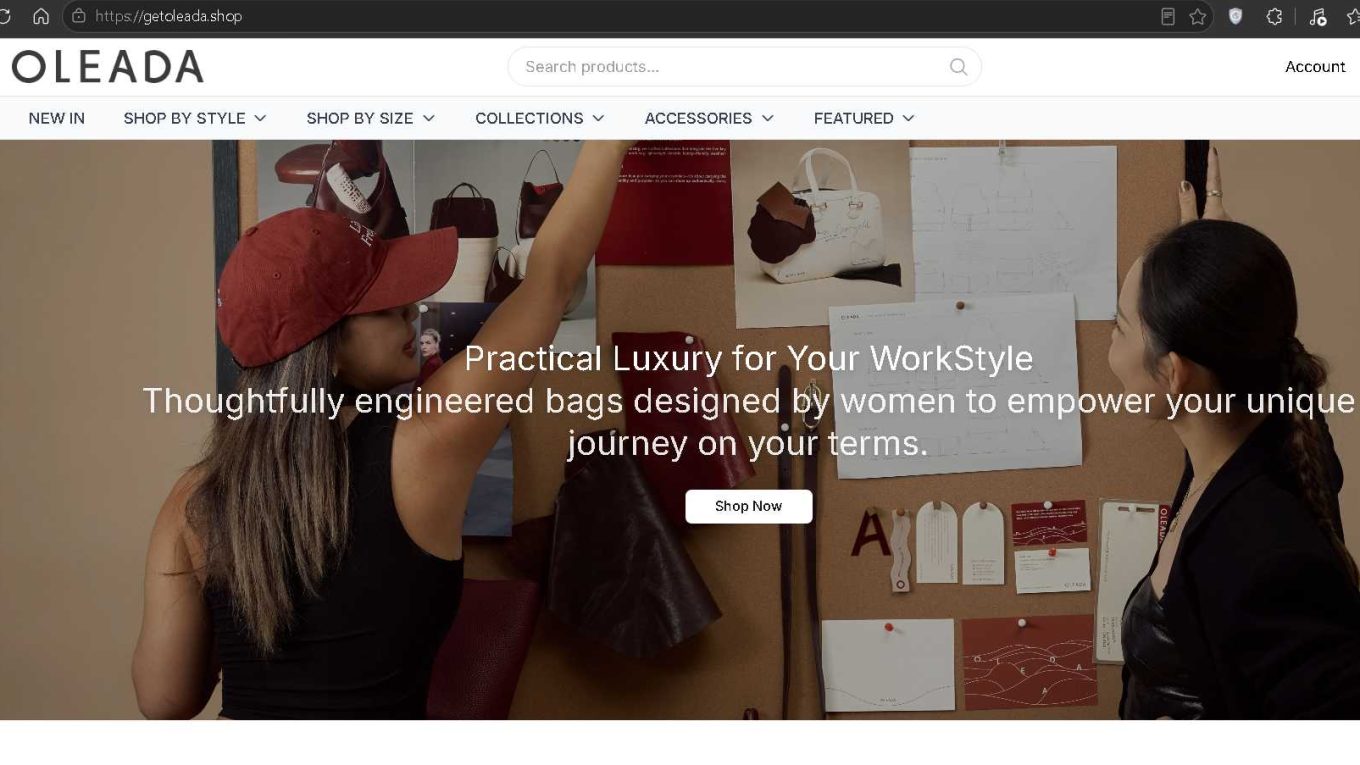
Shoppers stumbling upon Getoleada.shop in search of luxury leather workwear often assume they have uncovered an exclusive seasonal promotion or overstock outlet. Instead, rigorous digital examination reveals that the domain operates as a deceptive fraudulent copycat storefront scam precision-engineered to harvest consumer payment credentials and siphon funds away from legitimate designers.
The proliferation of online consumer fraud has reached unprecedented levels, with sophisticated impersonation schemes cloning niche lifestyle brands to trap unwary buyers. Understanding how bad actors clone corporate assets, bypass digital ad scrutiny, and hijack brand equity is essential for anyone seeking to protect their bank accounts, credit card security, and personal identity from predatory cyber networks.
What Is a Fraudulent Copycat Storefront Scam?
A fraudulent copycat storefront scam is a specialized subcategory of e-commerce identity theft and brand impersonation. Unlike generic counterfeit shops that peddle obvious knockoffs under modified labels, copycat operations duplicate an authentic designer brand’s visual identity down to the pixel.
The primary mechanics driving these schemes involve:
- Complete Asset Scraping: Perpetrators deploy automated scrapers to mirror legitimate product photography, model lookbooks, typography, corporate logos, and editorial copy.
- Typosquatting & Combosquatting Domains: Fraud syndicates acquire cheap, disposable top-level domains (such as
.shop,.top, or.vip) combined with action prefixes like get, shop, official, or outlet to trick consumers glancing at URL bars. - Payment Funnel Hijacking: Instead of passing transactions through standard, audited merchant processors with buyer protections, the checkout portals route card data through high-risk offshore gateways or direct phishing scripts designed to intercept full card numbers, CVVs, and billing addresses.
- The Non-Delivery or Bait Loop: Victims encounter one of two outcomes: complete non-delivery with fictitious tracking numbers, or a cheap, paper-thin polyurethane imitation shipped from an untracked warehouse weeks later.
Suspicious Link or Courier SMS?
Verify URLs, APKs, or parcel alerts against our threat database before clicking.
Case Study: Investigating Getoleada.shop
The digital footprint of Getoleada.shop serves as a textbook example of how modern impersonation networks execute brand cloning.
Stolen Branding and Fabricated Credibility
OLEADA is an established, high-end designer brand recognized for ergonomic, sustainable luxury handbags engineered specifically for modern professional women. The legitimate business conducts its retail operations through its primary, authenticated domain (oleada.com).
A side-by-side assessment of Getoleada.shop exposes wholesale content theft:
- Identical Taglines: The landing page lifts authentic editorial copy verbatim: “Practical Luxury for Your WorkStyle — Thoughtfully engineered bags designed by women to empower your unique journey on your terms.”
- Duplicated Catalog Structure: The navigation menu mimics OLEADA’s official taxonomy (“Shop by Style,” “Shop by Size,” “Collections,” “Accessories”), complete with scraped campaign imagery and promotional mood boards.
- Disposable Namespace: Rather than investing in verified business domain infrastructure, the operators registered under a budget
.shopextension using the prefix get to fabricate an illusion of accessibility.
Operational Funnel: How the Trap Operates
The operators of Getoleada.shop rely on short-term social arbitrage rather than organic visibility:
- Ad Placement: Fraudsters run hyper-targeted image ads on platforms like Instagram, Pinterest, and Meta, touting “70% to 85% Flash Clearance Sales” or “Warehouse Liquidation.”
- Frictionless Handoff: Clicking the ad drives consumers directly into Getoleada.shop product pages, where the copied aesthetic dispels initial skepticism.
- Financial Compromise: At checkout, entering payment information directly exposes debit or credit card details to unverified merchant accounts.
- Disappearance: Once a high volume of orders is collected, the domain is often abandoned or suspended, only for the same actors to reappear under an alternate domain variation.
Email: ApexLegalSolutionsMumbai@gmail.com
5 Critical Red Flags on Getoleada.shop
Analyzing the interface and operational background of Getoleada.shop reveals multiple telltale warning signs of an active copycat scam:
1. Combosquatting Domain Architecture
The authentic brand’s web presence is strictly housed on oleada.com. The registration of getoleada.shop uses the common scam formula [Prefix] + [Brand] + [.shop]. High-risk, disposable top-level domains are favored by transient scam syndicates because they offer inexpensive, bulk registration with minimal identity verification.
2. Complete Absence of Corporate Licensing Disclaimers
Legitimate luxury retailers operate under formal corporate structures with registered legal names, state business registry IDs, and verified tax numbers. Getoleada.shop offers no verifiable corporate ownership background, no physical headquarters location, and zero proof of licensing authorization.
3. Missing Verifiable Customer Support Channels
Authentic designer labels provide active concierge lines, official corporate email addresses linked to the core domain (e.g., @oleada.com), and transparent physical return centers. Copycat storefronts either omit customer service contact points entirely or provide generic contact forms that route to dead webmail servers.
4. Direct Scraping of Intellectual Property & Imagery
Every brand asset featured on Getoleada.shop—from the minimalist brand logo down to studio lookbooks featuring professional models—is copied directly from OLEADA’s media releases. Stolen assets are easily confirmed by comparing image timestamps and compression quality against the original brand’s authenticated social media accounts.
5. Suspicious Payment Gateways and Unrealistically Slashed Prices
Copycat networks operate by undercutting authentic pricing by 60% to 90%. When authentic leather goods retailing between $400 and $800 are offered at $49 to $89 with “Free Worldwide Shipping,” the economics represent a mathematical impossibility for genuine luxury manufacturing, pointing directly to a financial credential harvesting funnel.
Every safe click counts. If this post helped, a coffee gesture fuels more scam‑busting investigations.

Frequently Asked Questions
Is Getoleada.shop scam or safe?
Getoleada.shop is an unsafe fraudulent operation. It is an unauthorized copycat domain that clones the visual identity and marketing materials of the real OLEADA handbag brand. Interacting with the site exposes your financial data to theft, recurring unauthorized charges, and complete non-delivery of orders.
Is Getoleada.shop legit?
No, Getoleada.shop is not legitimate. The authentic brand conducts business exclusively through its verified domain, oleada.com. Getoleada.shop is an unverified clone domain registered anonymously without corporate licensing, merchant verification, or brand affiliation.
What is a fraudulent copycat storefront scam?
A fraudulent copycat storefront scam is a deceptive retail scheme where fraudsters mirror a legitimate brand’s logo, images, catalog, and product descriptions to deceive shoppers into purchasing non-existent, substandard, or counterfeit items while stealing payment credentials.
How do I recover money lost to a fake online boutique?
Contact the issuing bank or financial institution tied to the card used for the transaction. Request a formal credit card chargeback under “Merchant Fraud,” “Item Not Received,” or “Counterfeit Merchandise.” Furnish screenshots of the copycat site and payment receipts to accelerate resolution.
Why do clone sites use domains ending in .shop or .top?
Disposable top-level domains like .shop, .top, and .site are cheap to register in bulk and often impose fewer identity verification hurdles than traditional .com registries. Scam networks cycle through dozens of these extensions to outrun fraud alerts and web security blacklists.
What happens if I input my credit card number on a copycat website?
Your payment credentials—including the card number, expiration date, and CVV code—can be intercepted by bad actors. These details are frequently resold on dark web forums or used to execute unauthorized micro-charges and fraudulent online transactions.
How can I verify that a brand outlet or sale site is authentic?
Cross-reference the URL with the brand’s verified social media channels (such as Instagram or TikTok blue-badge accounts) and verify domain registration details via WHOIS lookups. Authentic designer labels publish their authorized retail partners and primary domain directly on their official corporate pages.
Will I receive anything if I order from a copycat storefront?
In most cases, buyers receive nothing at all, while the site issues a fabricated tracking code from an obscure tracking courier. In other instances, victims receive a low-cost, plastic or nylon knockoff that bears no resemblance to the advertised leather product
For more shady sites exposed, check our Shopping Scam Directory — your quick guide to staying safe online.
Help Us Spread Awareness
Please share this article to spread awareness. Follow us on social media for more scam alerts.