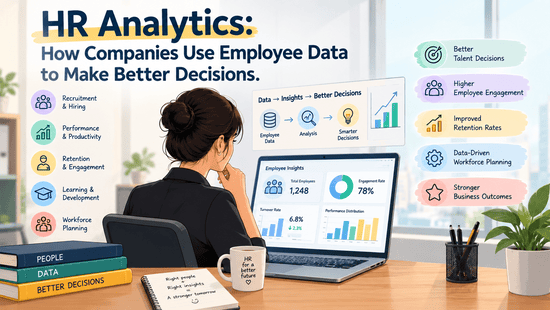
HR Analytics: How Companies Use Employee Data to Make Better Decisions
Imagine being able to predict which employees are likely to resign six months before they submit their resignation letter. Modern HR analytics makes this possible. Organizations today are using employee data not only to track workforce performance but also to predict turnover, improve hiring decisions, identify future leaders, and enhance employee engagement. As businesses become increasingly data-driven, HR analytics has evolved from a reporting tool into a strategic business function that directly influences organizational success.
Modern organizations no longer rely solely on intuition when making human resource decisions. Instead, they use employee data analysis, predictive models, and workforce metrics to identify trends, solve problems, and create more effective HR strategies. As competition for talent increases, the role of HR analytics has become essential for organizations seeking sustainable growth and workforce excellence.
This article explores the concept of HR analytics, its importance, benefits, key applications, challenges, and how companies use employee data to make better decisions.
Why HR Analytics Matters More Than Ever?
HR Analytics, also known as People Analytics or Workforce Analytics, refers to the process of collecting, analyzing, and interpreting employee-related data to improve human resource management and organizational performance.
The primary objective of HR analytics is to support evidence-based decision-making by identifying workforce trends, measuring HR effectiveness, and predicting future outcomes.
Rather than relying on assumptions, HR professionals use analytics to answer important questions such as:
- Why are employees leaving the organization?
- Which recruitment channels generate the best hires?
- What factors influence employee performance?
- How effective are training programs?
- Which employees have leadership potential?
By answering these questions through data, organizations can improve workforce management and align HR strategies with business goals.
Why HR Analytics is Important
The modern workplace is becoming increasingly data-driven. Organizations that use HR analytics gain deeper insights into employee behavior, performance, and engagement.
- Some key reasons why HR analytics is important include:
- Rising employee turnover costs
- Skills shortages across industries
- Remote and hybrid workforce challenges
- Increased focus on employee experience
- Growing adoption of AI in HR
Types of HR Analytics
Understanding the different types of analytics helps organizations leverage employee data more effectively.
1. Descriptive Analytics
Descriptive analytics focuses on historical workforce data and answers the question:
“What happened?”
Examples include:
- Employee turnover rate
- Recruitment statistics
- Absenteeism data
- Diversity reports
Descriptive analytics provides a clear picture of workforce trends and current HR performance.
2. Diagnostic Analytics
Diagnostic analytics examines why specific workforce outcomes occur.
“Why did it happen?”
Examples include:
- Reasons for increased turnover
- Causes of low employee engagement
- Factors affecting team productivity
This type of analysis enables organizations to identify root causes and develop targeted solutions.
3. Predictive Analytics
Predictive analytics uses historical employee data to forecast future workforce outcomes.
Examples include:
- Predicting employee resignations
- Forecasting hiring needs
- Identifying future leaders
Predictive analytics is becoming one of the most valuable tools in modern HR management.
4. Prescriptive Analytics
Prescriptive analytics recommends actions based on analytical insights.
Examples include:
- Retention strategies for high-risk employees
- Personalized learning plans
- Workforce optimization recommendations
This advanced form of analytics helps organizations make proactive decisions.
Key Sources of Employee Data in HR Analytics
Effective HR analytics depends on collecting relevant and accurate data from multiple sources.
Recruitment Data
- Applications received
- Recruitment channel performance
- Interview scores
- Candidate assessment results
Employee Demographics
- Age
- Gender
- Educational qualifications
- Work experience
- Location
Performance Data
- Performance reviews
- KPI achievement
- Productivity metrics
- Manager feedback
Learning and Development Data
- Training completion rates
- Skills assessments
- Certifications
- Learning engagement
Employee Engagement Data
- Employee surveys
- Pulse checks
- Feedback systems
- Recognition programs
Workforce Management Data
- Attendance records
- Leave patterns
- Overtime statistics
- Work schedules
Collecting and integrating data from these sources provides a comprehensive view of organizational health.
How Companies Use Employee Data to Make Better Decisions
1. Using HR Analytics to Improve Recruitment
One of the most common applications of HR analytics is improving recruitment and hiring processes.
Organizations analyze hiring data to evaluate:
- Time-to-hire
- Cost-per-hire
- Quality-of-hire
- Offer acceptance rates
- Recruitment source effectiveness
For example, if employee referral hires consistently outperform hires from job portals, companies may increase investment in referral programs.
Recruitment Benefits
- Better candidate selection
- Lower hiring costs
- Faster recruitment cycles
- Improved workforce quality
Using recruitment analytics helps organizations attract and retain top talent more effectively.
2. Reducing Employee Turnover Through Analytics
Employee turnover is expensive and disruptive for businesses. HR analytics helps organizations identify patterns associated with employee resignations.
Common turnover indicators include:
- Low employee engagement
- Limited career growth
- Compensation concerns
- Poor managerial relationships
- Work-life balance issues
By analyzing historical employee data, companies can predict which employees may be at risk of leaving.
A software company discovered through employee data analysis that most resignations occurred between the second and third year of employment. Further investigation revealed limited career progression opportunities during that period. After introducing internal promotion pathways, the company significantly improved retention.
Retention Benefits
- Lower attrition rates
- Reduced hiring expenses
- Improved workforce stability
- Enhanced employee satisfaction
Employee retention analytics plays a crucial role in workforce planning and talent management.
3. Improving Employee Performance
Employee performance analytics enables organizations to understand what drives success in the workplace.
Companies analyze:
- Individual productivity
- Team performance
- Goal completion rates
- Skill development progress
- Competency assessments
Advanced analytics can reveal which behaviors and work practices contribute to superior performance.
For instance, organizations may discover that employees who complete leadership training demonstrate higher productivity and stronger collaboration skills.
Performance Analytics Benefits
- Improved productivity
- Data-driven performance management
- Better coaching strategies
- Increased organizational effectiveness
Performance analytics allows managers to make informed decisions regarding promotions, development, and rewards.
4. Workforce Planning and Talent Management
Strategic workforce planning is another major benefit of HR analytics.
Organizations use workforce analytics to:
- Forecast future staffing needs
- Identify skill shortages
- Plan succession strategies
- Build leadership pipelines
- Support organizational growth
For example, if analytics predicts an upcoming shortage of data scientists, HR can begin recruitment and reskilling initiatives well in advance.
Workforce Planning Benefits
- Better talent availability
- Reduced skill gaps
- Improved succession planning
- Enhanced business continuity
Organizations that invest in workforce planning are better prepared for future business challenges.
5. Measuring Employee Engagement
Employee engagement directly impacts productivity, retention, and workplace culture.
HR analytics helps organizations measure engagement using:
- Employee surveys
- Pulse surveys
- Sentiment analysis
- Feedback systems
Data-driven engagement insights help identify departments or teams experiencing challenges.
For example, if engagement scores decline after organizational restructuring, HR can implement targeted communication and support initiatives.
Engagement Analytics Benefits
- Stronger workplace culture
- Higher employee morale
- Increased productivity
- Better employee experiences
Companies with highly engaged employees often achieve stronger business performance and lower turnover rates.
6. Driving Diversity, Equity, and Inclusion (DEI)
Many organizations use HR analytics to support Diversity, Equity, and Inclusion (DEI) initiatives.
Analytics can help measure:
- Workforce diversity
- Representation in leadership positions
- Promotion rates
- Pay equity
- Recruitment fairness
Data-driven insights enable organizations to identify potential biases and develop corrective actions.
For example, if women are underrepresented in leadership roles, HR may implement mentorship and leadership development programs.
DEI Analytics Benefits
- Fair employment practices
- Greater innovation
- Improved employer branding
- More inclusive workplaces
Diversity analytics is increasingly becoming an essential component of modern HR strategies.
7. Evaluating Training and Development Programs
Employee training requires substantial investment. HR analytics helps determine whether learning programs generate measurable business outcomes.
Organizations analyze:
- Training completion rates
- Learning engagement
- Skill acquisition
- Performance improvement after training
By measuring training effectiveness, companies can focus investments on programs that deliver the highest return.
Learning Analytics Benefits
- Improved training ROI
- Better skills development
- Enhanced employee capabilities
- Stronger business performance
Learning analytics ensures that organizational training efforts contribute to long-term success.
Benefits of HR Analytics for Organizations
The adoption of HR analytics offers numerous advantages.
Better Business Decisions
Data-driven insights improve the quality and accuracy of decision-making.
Reduced Costs
Organizations can optimize recruitment, training, and retention expenses.
Increased Productivity
HR analytics identifies factors that contribute to employee success and operational efficiency.
Improved Employee Retention
Companies can proactively address issues before employees decide to leave.
Competitive Advantage
Organizations that effectively utilize people analytics often outperform competitors in talent management and workforce productivity.
Challenges of Implementing HR Analytics
Despite its benefits, organizations may encounter several challenges when adopting HR analytics.
Data Quality Issues
Inaccurate or incomplete data can affect analytical outcomes.
Privacy Concerns
Employee data must be collected and used responsibly while complying with data protection regulations.
Skills Gap
HR professionals may require training in data analysis, visualization, and statistical techniques.
Technology Integration
Combining data from multiple HR systems can be complex.
Resistance to Change
Managers and employees may resist transitioning from traditional decision-making methods to data-driven approaches.
Overcoming these challenges requires leadership support, technology investments, and strong data governance practices.
The Future of HR Analytics
The future of HR analytics is being shaped by technologies such as Artificial Intelligence (AI), Machine Learning (ML), and predictive workforce modeling.
Emerging trends include:
- AI-powered recruitment
- Predictive employee retention models
- Real-time people analytics dashboards
- Personalized employee development plans
- Workforce sentiment analysis
- Predictive workforce planning
As organizations continue their digital transformation journeys, HR analytics will become increasingly important in creating agile, productive, and employee-centric workplaces.
Conclusion
HR Analytics is transforming the way organizations manage people and make workforce decisions. By leveraging employee data, companies can improve recruitment, enhance performance management, strengthen employee engagement, reduce turnover, optimize workforce planning, and support diversity initiatives.
As businesses increasingly adopt people analytics, workforce analytics, and predictive HR analytics, the ability to convert employee data into actionable insights will become a critical competitive advantage. Organizations that embrace data-driven HR strategies today will be better positioned to attract top talent, retain high performers, and achieve long-term business success.
What is the difference between HR Analytics and People Analytics?
HR Analytics primarily focuses on HR processes and workforce metrics, while People Analytics takes a broader approach by analyzing employee behavior, performance, and organizational outcomes to drive strategic decisions.
How does HR Analytics help reduce employee turnover?
HR Analytics identifies factors that contribute to employee attrition, such as low engagement, limited career growth opportunities, poor management, or compensation concerns. Organizations can then implement targeted retention strategies.
Is HR Analytics a good career option?
Yes. As organizations increasingly rely on data-driven HR decisions, professionals with skills in HR Analytics, Power BI, Excel, SQL, data visualization, and workforce analytics are in high demand across industries.
What skills are required to learn HR Analytics?
Key HR Analytics skills include:
Advanced Excel
Data analysis
HR metrics and reporting
Power BI or Tableau
Statistical analysis
Workforce planning
Critical thinking and problem-solving
What is the ultimate goal of HR Analytics?
The ultimate goal of HR Analytics is to transform employee data into actionable insights that improve organizational performance, employee experience, and overall business success.
Sweta Rawat is an HR professional with over 2.5 years of experience and an MBA in Human Resources. She writes on modern HR practices, employee engagement, and workplace culture, blending professional expertise with creative insight.